



Promotions
MINICOMPUTERS
The development of electronics is inseparably connected with progressing miniaturization and it would be difficult today to indicate an area of technology that would benefit from it to a greater extent than ICT equipment. Modern computers are no longer just stationary "PCs" and laptops - today an efficient computer with a multi-core processor and at least a few gigabytes of RAM can be part of another device. What's more - it does not require high costs, and many models of single board minicomputers (SBC) are within reach of electronic amateurs and makers. The Botland store is a leading distributor of both the main modules and their overlays, cameras, displays, housings and numerous accessories supporting the use of minicomputers.
Subcategories

Products
See also
Minicomputers - FAQ
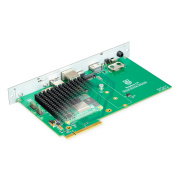
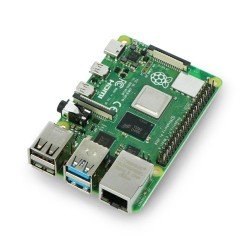
A microcomputer (also called a minicomputer) is nothing more than a device with the functionality of a classic, full-sized computer, but enclosed in a strongly miniaturized form. A special variety are single-board minicomputers (SBC - e.g. Raspberry Pi ), whose construction is based on a single printed circuit board, usually with dimensions not exceeding a dozen or so centimeters and containing all the necessary base components.
A microcomputer can be used for the same purposes as ordinary desktop computers and laptops - e.g. for office work, internet browsing, or ... software development and testing. The advantage of miniature computers, however, is also the possibility of embedding them in a larger device, as the main controller (driver) or a human-machine interface .