



New arrivals


On Sale
Wheels with tires
Products

See also
Choice of wheel size
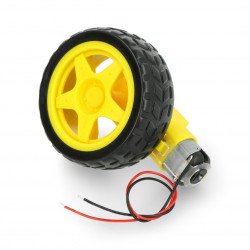
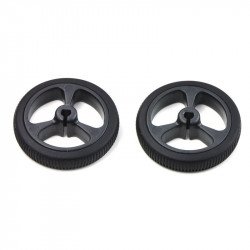
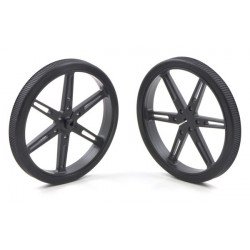
Robots moving on large wheels, usually attract more attention of the observer, compared to robots on small wheels, but appearance is not everything. Choosing the correct wheel size is very important for the speed of the robot. A larger radius and the angular velocity imparted to the wheel means a proportionally higher robot speed, while the force exerted by the wheel on the surface will increase with the torque imparted to the wheel axis of a certain radius. This means that if your robot is traversing elevated terrain, the wheels will exert a horizontal component of force on the surface. Then, with the robot's own weight in mind, you need to increase the torque or use wheels with a smaller radius. Increasing the torque, however, pays for an increase in battery consumption of the robot (including its motors), and an increase in wheel radius means an increase in weight and a decrease in maximum speed. Also, do not use very small wheels, as this is impractical.
Selecting the type of tread
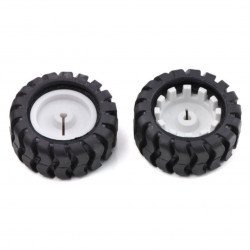
Selecting the correct tread in robot tires dictates its contact surface. If your robot is only going to drive on flat surfaces such as wood and ceramic floors, a tire with a flat tread will provide enough grip, while for driving on carpets, it is advisable to put tires with a slightly grooved tread on it. For reliable movement of the robot on difficult, muddy terrain, the best tires will be those with a deeply profiled tread, which allows efficient rejection of mud when traversing the terrain. Using such tires on flat surfaces is cumbersome due to the reduced ground contact area and can cause problems in maintaining track stability. In the opposite case, a robot equipped with flat-tread tires, despite their large contact area, will get stuck when moving through muddy terrain.