







Promotions







PT100 temperature probes
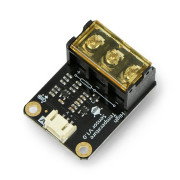
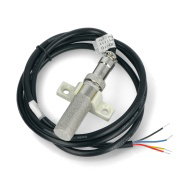
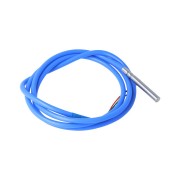
PT100 probes are popular temperature meters – resistance thermometers. These devices are most often used in various industries. They are characterized by an operating mechanism that allows you to change the resistance. PT100 temperature sensor changes its resistance as a function of temperature. This means that as the temperature increases, the resistance of such a sensor also increases. It is a very simple, handy and precise converter of temperature into electrically measurable value. Although it is a fully professional device with a very important function, the undoubted advantage of buying the PT100 sensor in the Botland store is the low price of the product. An additional advantage is that the sensors operate in a very wide range of operating temperatures. The PT100 temperature sensor can be the ideal solution for a project where temperature testing is required. Check all products in this category now, choose the best temperature sensor that works as an electrical converter!
Products

See also
PT100 temperature probes - FAQ
Pt100 is a resistance thermometer, a temperature probe made of platinum (hence the chemical symbol Pt before the number) with a resistance value of 100Ω at a temperature of 0 °C. In an inert atmosphere, platinum can be used up to 1000 °C, however Pt100 is used in the range of -200 to 800 °C. A particular sensor often has a lower maximum temperature due to the different materials used.
Pt1000 is a sensor , whose resistance at 0°C is 1000Ω. The distorting effect of resistance in the leads will be less significant than with Pt100 because it contributes to a lower percentage of resistance compared to the circuit. The Pt100 probe has lower resistance and therefore less stress on the wires.
The Pt100 probe uses platinum thermoresistors. The key to the concept of Pt100 operation is the concept of resistance - it measures temperature by using the change in resistance to determine the temperature value. For Pt100, the resistance at 0°C is 100Ω and at 100°C 138.5Ω, therefore the change in resistance per degree Celsius is 0.385Ω.