



New arrivals


On Sale
Arduino displays
Displays play a very important role in electronic projects, especially if we want fast and clear feedback. The LCD display will be very easy to connect to the board with which it will work. It needs to be properly programmed to be adapted to the role assigned to it. LCD displays for Arduino have found application in many areas. In some projects they are even necessary and only with their use you can create a specific device. The displays are needed to design and create a mobile computer game as well as an advanced weather station. It is also a good solution for a digital camera. Experienced electronics engineers also use them in extensive and very complex projects of humanoid robots. In our offer you will find a wide range of Arduino displays, differing in technical parameters. There are models designed for e-book readers, equipped with special technology that ensures safety for the user's eyes.
Products

See also
Displays for Arduino
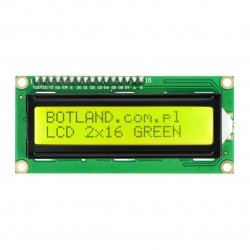
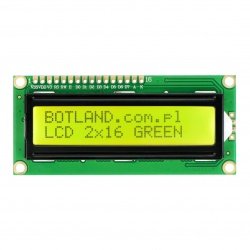
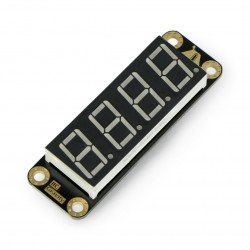
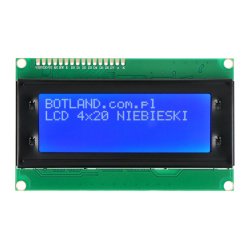
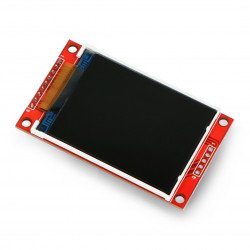
Arduino displays can perform many functions. Such a device can provide quick and clear feedback to an electronics or robotics engineer working on a project. It can be either a temporary or permanent element of the device, but it is always worth choosing the right equipment for the intended use. Segment displays are only able to display characters based on eight segments (single lines from the digit 8) - they can be used, for example, to present the values of various parameters. Arduino LCD displays can display a much larger number of characters (including letters from the alphabet). They can be used to present various types of commands, information or, for example, display a menu through which the device user can navigate. Most of them are two-color (green screen and black letters or blue screen and white letters), but some allow displaying a color image (for example, a 2.2" TFT LCD display). This type of devices allows you to build, for example, a more advanced and impressive mobile game, and at the same time has most of the advantages of less complex displays, including the ability to display numbers and characters.
Arduino - LCD display compatible with minicomputer modules - What do we offer?
This category offers a wide selection of simple segment displays designed for simple tasks. We also have small, two-color LCD displays, allowing for the display of more complex messages, and more advanced TFT LCD screens with a color image. We also offer unique displays made using the so-called e-paper technology. This is a technology that, to put it simply, bases its operation on the material between two foils, which consists of small particles of light and dark colors. Under the influence of appropriate electrical impulses, they change color from light to dark (rotate) and thus create an image. Thanks to this technology, energy is consumed only when the image state changes - the device does not consume electricity when displaying a fixed image. With its help, you can build your own e-book reader, which will not be healthy for your eyes. Most displays connect to Arduino via GPIO pins, with the help of I2C, SPI and even USB interfaces. We have equipment from manufacturers such as Adafruit, DFRobot, OEM, OpenPlatform, Seeedstudio, SparkFun and Waveshare.
Displays for Arduino - FAQ
The easiest way to connect a display to Arduino is to choose the Arduino Shield shield, which contains a screen appropriate for a given application and - possibly - additional elements, e.g. buttons, a joystick , and even a small sound signal. Both overlays with LED and alphanumeric LCD displays, as well as high-quality graphic screens (LCD or OLED ), often equipped with a touch panel, are available.
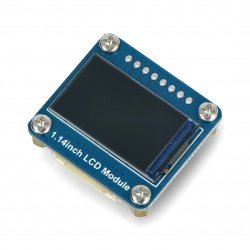
In the simplest applications, a small, seven-segment LED or LCD display with an HD44780-compatible controller (so-called alphanumeric display) will be completely sufficient. If a given device should be able to display simple graphics, you can choose either a monochrome graphic LCD display or... a color TFT/IPS or OLED LCD screen, even allowing the presentation of color photos. It is also worth paying attention to e-paper displays - they offer very low power consumption and excellent visibility in strong outdoor light.