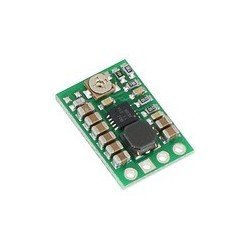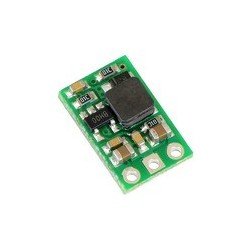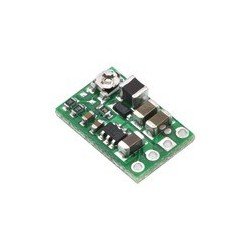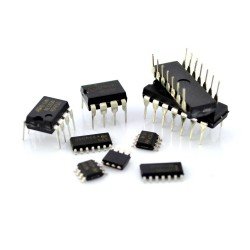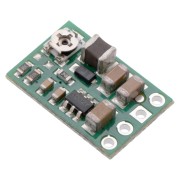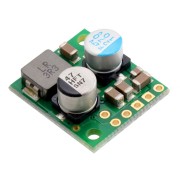


Cars are becoming an increasingly common means of transport. In fact, every person at some stage in their life has experience with using a car and must learn how to operate it at least in the basic sense. Many of us can refuel the car, change oil and windscreen washer fluid. We can also handle the radio receiver in the car and we know how to lower or raise the windows. But let's try to remember all the situations when something in our car didn't work and we had no idea what it was about. In such situations we need the support of a specialist. In the long run, however, it is worthwhile to take an interest in deepening our knowledge of how the car works. One of the most important elements in the car is voltage regulator, which is responsible for battery charging systems. Learning about voltage regulators can have a significant impact on your car's handling skills.
Voltage regulators
AZO Digital DC / AC Step-Up Voltage Regulator IPS-2000 - 12VDC / 230VAC 2000W - car
The converter allows you to use devices that require AC 230 V using batteries or car installations with DC 12 V. Ideally suited for powering laptops, USB devices, printers,...- Sale
- SPECIAL OFFERS
AZO Digital DC/AC Step-Up Voltage Regulator IPS-3200 - 12VDC / 230VAC 3200W - car
The converter allows you to use devices that require AC 230 V using batteries or car installations with DC 12 V . Ideally suited for laptops, USB devices, printers, cash...- Sale
- SPECIAL OFFERS
Step-Down Voltage Regulator XL4015 - 1,3V-36V 5A
Module with XL4015 step-down pulse inverter. Input voltage from 3.3 V to 36 V. Maximum continuous output current 5 A. Output voltage adjustable from 1.3 V to 36 V.Step-Up Voltage Regulator 50W adjustable 12-35V/6A
Upgrade inverter with adjustable output voltage from 12 to 35 V. The permissible input voltage range is 10 V - 32 V and maximum power is 50 W .Step-Up Voltage Regulator U3V70F15 - 15V 10A - Pololu 2896
Step-up converter with 15 V output voltage. Maximum current up to 10 A. Supply voltage from 2.9 V to 15 V.Step-Up Voltage Regulator Boost - 2,5-9,5V 2A - Pololu 791
Converter with adjustable output voltage from 2.5 V - 9 V. Maximum current up to 2A. Input voltage 1.5 V - 9.5 V.Step-Down Voltage Converter D36V28F6 - 6V 2,7A - Pololu 3783
A step-down converter with a supply voltage of 6.3 V to 50 V . The output voltage is 6 V and the current capacity is 2 A to 4 A, typical is 2.7 A. The module dimensions are...- Reduced price
- SPECIAL OFFERS
Step-Down Voltage Regulator with Display LM2596S - 3.2V-35V 3A
Module with LM2596S step-down switching converter. Input voltage from 3.2 V to 35 V. Maximum continuous output current 3 A. Output voltage adjustable from 3.2 V to 35 V....Linear voltage regulator LDO 3,3V LD1117A - THT TO220 - 5 pcs
Low-Dropout linear stabilizer. Output voltage: 3,3 V. Maximum output current: 0.95 A. TO220 housing. Sold for 5 pieces.DFRobot DC-DC Step-Up Voltage Regulator - Boost Module with USB Connector FIT0471 - 0,9-5V 0,6A
The circuit stabilizes the input voltage from 0.9 V to 5.0 V from PH2.0 or the terminal socket to 5 V, which is fed to the USB output. The maximum output current is 0.6 A,...Step-Up Voltage Regulator U3V50AHV - 9-30V 5A - Pololu 2571
Upgrade inverter with adjustable output voltage of 9 - 30 V. The permissible input voltage range is 2.9 - 30 V and the maximum input current that the system can process is 5 A.Step-Down Voltage Regulator D24V22F12 - 12V 2,2A - Pololu 2855
Step-down converter with 12 V output voltage. The maximum current is 2.2 A. The supply voltage is in the wide range from 12.7 V to 36 V. The module dimensions are 18 x 18 mm.Step-Up Voltage Regulator U3V50F24 - 24V 5A - Pololu 2569
Inverter to increase the voltage to 24 V. The permissible input voltage range is 2.9 - 24 V and the maximum input current that the system can process is 5 A.- Reduced price
- SPECIAL OFFERS
Step-Down Voltage Regulator D24V5F6 - 6V 0,5A - Pololu 2844
A step-down pulse inverter module with an efficiency of 80 % - 93 %. Converts the input voltage from 6.1 V to 36 V to an output value of 6.0 V. The maximum continuous current...Step-Up Voltage Regulator U3V7015 - adjustable- 4,5-20V 10A - Pololu 2890
Upgrade inverter with adjustable output voltage from 4.5 V to 20 V. The permissible input voltage range is 2.9 V to 20 V, and the maximum input current that the system can...Step-Down Voltage Regulator D24V25F9 - 9V 2,5A - Pololu 2854
Step-down converter with an output voltage of 9 V. The maximum input current depends on the input voltage and load. The supply voltage is in a wide range from 10.5 V to 38 V....- Reduced price
- SPECIAL OFFERS
MPM3610 - Step-Down Voltage Regulator 6V-21V / 1,2A - Adafruit 4739
Step-down converter based on MPM3610 chip. Input voltage range is from 6 V to 21 V, the output voltage is 5 V and the current capacity is 1.2 A . The module...Step-Down Voltage Regulator D36V50F12 - 12V 4,5A - Pololu 4095
A step-down converter with 12 V output voltage, operates on an input voltage from 13.3 V to 50 V . Current capacity is from 2.3 A to 6.5 A.Step-Down Voltage Regulator D24V22F7 - 7,5V 2,4A - Pololu 2860
Step-down converter with 7.5 V output voltage. The maximum current is 2.4 A. The supply voltage is in the wide range from 8 V to 36 V. The module dimensions are 18 x 18 mm.Step-Up Voltage Regulator U1V11F3 - 3,3V 1,2A - Pololu 2561
A step-up converter with a 3.3 V output voltage. Maximum input current up to 1.2 A. Supply voltage in the range 0.5 V - 5.5 V. The system has a standby mode.Step-Down Voltage Converter D36V28F3 - 3,3V 3,6A - Pololu 3781
A step-down converter with a 3.3 V output voltage and current capacity from 3.2 A to 4.5 A (typical 3.6 A). The supported input voltage is 4.5 V to 50 V. Module dimensions...Step-Down Voltage Regulator D24V5F9 - 9V 0,5A - Pololu 2845
A step-down pulse inverter module with an efficiency of 80 % - 93 %. Converts the input voltage from 9.1 V to 36 V to an output value of 9.0 V. The maximum continuous current...See also
- Computer accessories
- Automobile accessories
- Cooling
- Diodes
- Sound and acoustics
- Mounting components
- Passive elements
- Wearables (e-textiles, smart clothes)
- Cameras and recorders
- Memory cards & disks
- Communication
- Converters
- Electronics courses
- Microcontrollers
- Animal repellers
- LED lighting
- Programmers
- Relays
- Artificial intelligence
- Motor drivers and servos
- Integrated circuits
- Displays and screens
- Consoles
How does a voltage regulator work?
Voltage regulators are used to maintain a constant voltage level produced by the alternator or generators. They operate within a certain voltage range and operate correctly when the voltage should be the same regardless of engine operation - whether at low or high speeds. A properly functioning alternator regulator means that the difference should not be greater than 0.5 V. A great example would be taking several actions at the same time, e.g. turning on the air conditioning, turning on the dipped headlights and connecting the phone to charging in the car. All this together can cause fluctuations in the voltage level in the regulator.
Check if the voltage regulator is working properly
First of all, checking the correct operation of the voltage regulator must be done with the engine running. It seems obvious and simple, but you can paint yourself into a corner. To check, we will need equipment such as a multimeter or a voltmeter. It may sound like black magic, but once we delve deeper into the topic, everything will turn out to be as simple as pie. Namely, we need to check, for example, using the mentioned multimeter, whether the current (correct voltage, i.e. supply voltage) is reaching from the alternator to the voltage regulator. If so, the charging system is operational. Too low supply voltage will usually indicate a failure, then it may be necessary to replace the voltage regulator.
Symptoms of a damaged voltage regulator - other information
The next step is to verify whether the voltage transmitted by the regulator is appropriate. If this stage does not work, it means that the regulator has failed. However, if no current flows from the alternator, it means that it is damaged.
Regulator hunter
In order not to risk a quick failure or too large a voltage difference, it is worth purchasing a voltage regulator from a proven source. This is the best guarantee of trouble-free operation. Our store offers the highest quality products because we are electronics enthusiasts and we don't use just anything. You will find step-up, step-down, step-up/step-down systems, shunt voltage regulators, and many others. What's more, we have products such as converters whose output is a USB socket, so you can also use them as a phone charger.
Voltage regulators - FAQ
Voltage regulators are used to maintain the voltage produced under all operating conditions at a constant level. It regulates the voltage during power fluctuations and load changes, and can regulate both AC and DC voltage.
The answer to the question about the voltage regulator most often concerns the car. A faulty voltage regulator affects the operation of the engine. For example, you may notice that the engine stalls from time to time. You may have problems with acceleration while driving, lights or warning lights flashing. To check the regulator, all you need to start with is a multimeter .