



New arrivals
On Sale
Lenses for cameras
Camera lenses - official dedicated camera for the Raspberry Pi has lenses permanently built in so that depending on your needs, you don't have the option of removing them yourself and fitting other lenses in their place. If you're into macro photography and your requirement is to get close-up detail while maintaining high resolution and a wider field of view, for this purpose it's worth reaching for camera lenses from Arducam, which greatly expand the standard capabilities of the brand's cameras for Raspberry Pi. As a result, you'll get better control over your images, whether you're taking photos or videos.
Products


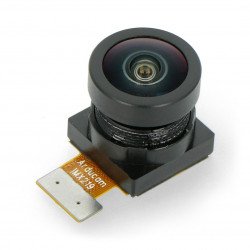
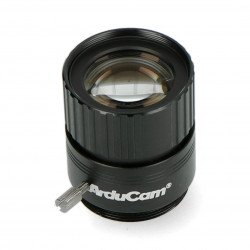

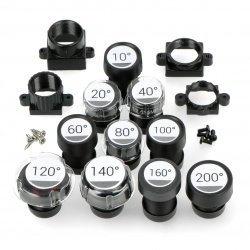


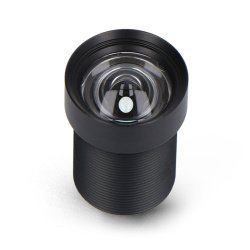

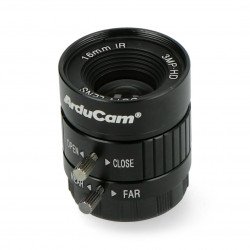
Smart lenses think for you
To meet market demands and incorporate new features in lens technology, the designers at ArduCam have developed a set of M12 thread-mounted lenses for the Raspberry Pi that enable long-focus video recording as well as fisheye mode. Each of the ten lenses included in the kit has a diameter designation, making it easy to quickly find and replace the lens according to your needs.
Most important parameters of camera lenses
To choose the right lens for your needs, it's worth looking at the theoretical side of the lens, which significantly translates into its practical applications. The basic parameter of a lens that determines its focusing ability is its focal length, i.e. the distance from the geometric center of the lens to the geometric center of its matrix. A characteristic feature of varifocal lenses is the ability to adjust their zoom. The zoom of the lens is calculated as the ratio of the focal length at the narrower end of the telephoto lens, to the focal length at its wider end. Then the lens can change the size of the image seen appearing on the screen, depending on the zoom setting. An important parameter worth paying attention to is the field of view of the lens - it depends on the focal length and determines the maximum angle of coverage of the image by the lens, depending on its diameter. The angle of view is usually measured assuming infinite focusing capability of the lens and can be easily calculated if the focal length and image size are known.