



On Sale

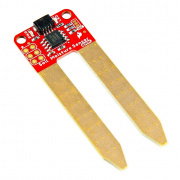
Gravity - medical sensors
Products


See also
Heart rate activity measurement with DFRobot Gravity sensors
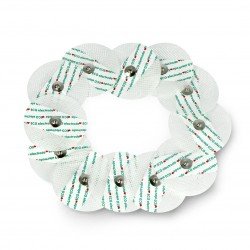
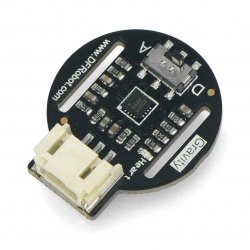
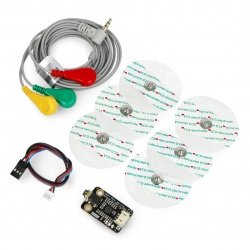
Offered by Botland store human heart rate sensor built on a specialized AD8232 IC, which collects electrical impulses from three adhesive electrodes. The range of output voltage changes includes values from hundreds of microvolts to one millivolt. The Gravity series pulse meter is compatible with Arduino boards and licensed Arduino clones. The output of the sensor produces an appropriately filtered and amplified analog signal that linearly represents changes in ECG pulses in the time domain. The sensor's output should be connected to one of the analog inputs on the Arduino ("A0" - "A5"). Based on the readout voltage values, we can obtain an electrocardiogram, i.e. an image of the time domain changes of the electrical impulses controlling the heart. ECG is a non-invasive measurement method, which means that it does not have any harmful effects on living organisms. For safety reasons, connect the power supply to the module from a source with galvanic isolation from the 230V mains (e.g. power bank or transformer power supply). The measuring electrodes dedicated to Gravity Pulse Oximeter are coated with an electrically conductive gel adhesive layer. To ensure good adhesion of the electrodes to the body, it is recommended to shave the contact surface of the electrode with the skin. It should still be borne in mind that the Gravity series human heart rate sensor has been designed for amateur and educational use and must not be approved for use in professional medical diagnostics.
Just right for the athletic - measuring muscle activity with OYMotion
Medical diagnostics is not only about electrocardiography. In addition to the examination of vital functions for periodic checkups and in the treatment of cardiovascular disease, it is often necessary to measure the bioelectrical activity of abdominal and chest muscles, as well as upper and lower limbs. This is particularly important in the case of people who intensively practice sports. One of the most commonly used diagnostic methods to study the activity and assessment of the state of human muscles is electromyography. To perform an electromyography test, you don't need to invest in expensive equipment - just choose the OYMotion sensor from DFRobot, which is compatible with Arduino base modules and allows you to build a simple electromyography measurement device! The OYMotion attachment is also a great option for all those who are interested in the construction and principle of operation of medical electronic devices.