- Sale
Over 500,000 customers already trust us. With us you get:
same-day shipping for products marked “24h shipping”
our own service centre in Poland
30 days to return and free delivery in Poland from PLN 500
4.9/5 on TrustMate and 4.9/5 on Google (almost 4,000 reviews)
VAT invoice, leasing and instalments for businesses
For businesses
individual quote for larger quantities
VAT invoice
For schools and universities
orders based on requests for quotation
help with choosing kits for your lab
Send an inquiry - we reply quickly.

Arduino Modulino Vibro - vibration motor - Qwiic - ABX00130
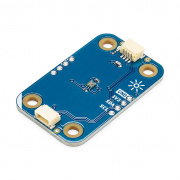
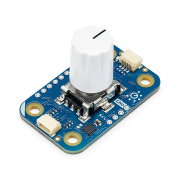
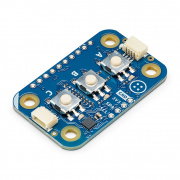
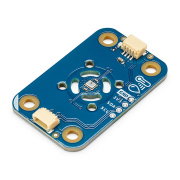
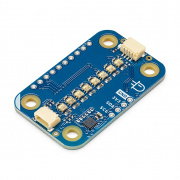
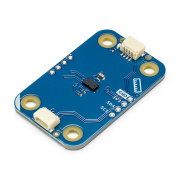
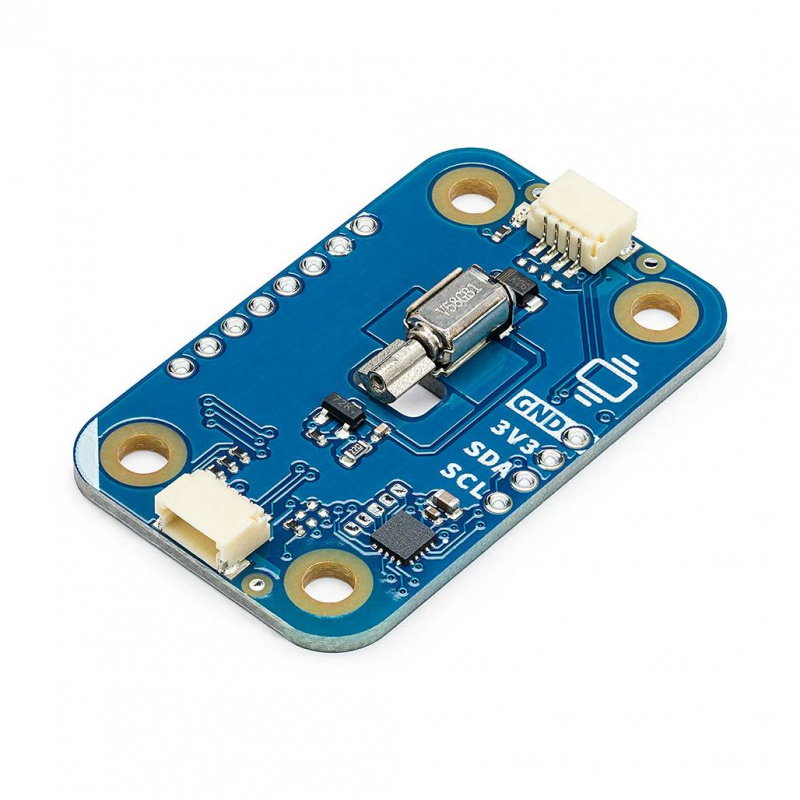
The Modulino Vibro is a compact vibration module designed for projects requiring haptic feedback. It features a VZ43FM1B8230001L vibration motor and an STM32C011F4 microcontroller supporting I2C communication. Thanks to Qwiic connectors and a pre-built design, the module can be quickly connected to Arduino UNO R4 WiFi, UNO Q, and other devices compatible with the 3.3V I2C bus. It's ideal for wearable devices, notification systems, game controllers, and interactive projects.
We could not load the price.
The promotional price does not combine with quantity discounts.
Product description: Arduino Modulino Vibro - vibration motor - Qwiic - ABX00130
Modulino Vibro is a family of intelligent modules designed for rapid prototyping and the development of advanced IoT systems. The module utilizes a vibration motor capable of speeds up to 12,000 rpm , providing clear and easily felt haptic feedback. Communication is via an I2C bus , requiring only two signal lines for control. The embedded STM32C011F4 microcontroller allows for PWM vibration intensity regulation and software-based I2C address changes . The module is fully integrated with the Arduino ecosystem and works with both the Arduino IDE and MicroPython.
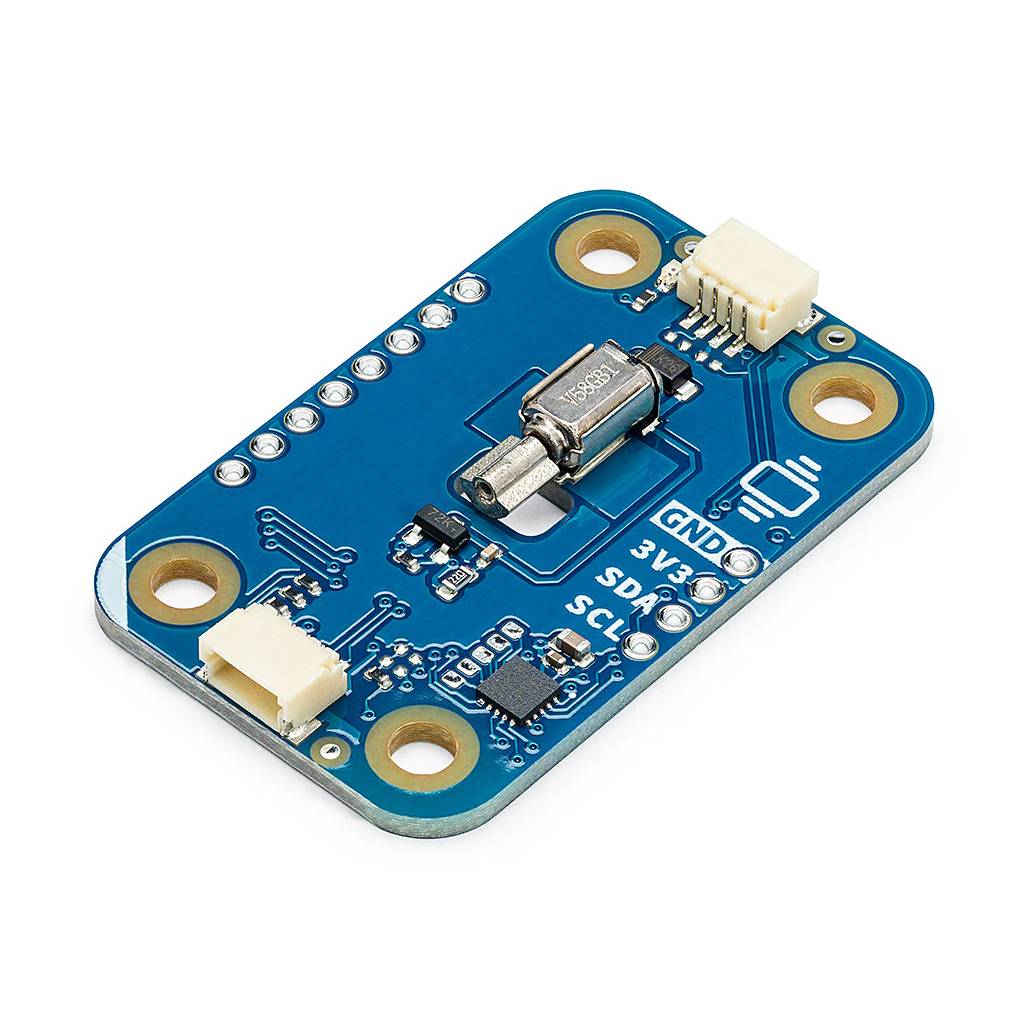
Arduino Modulino Vibro - vibration motor - Qwiic - ABX00130.

Botland is an official distributor of the Arduino development platform in Poland. We offer a wide choice of boards, modules and accessories from this popular brand, along with tutorials and a knowledge base for users. All Arduino products presented here are original.
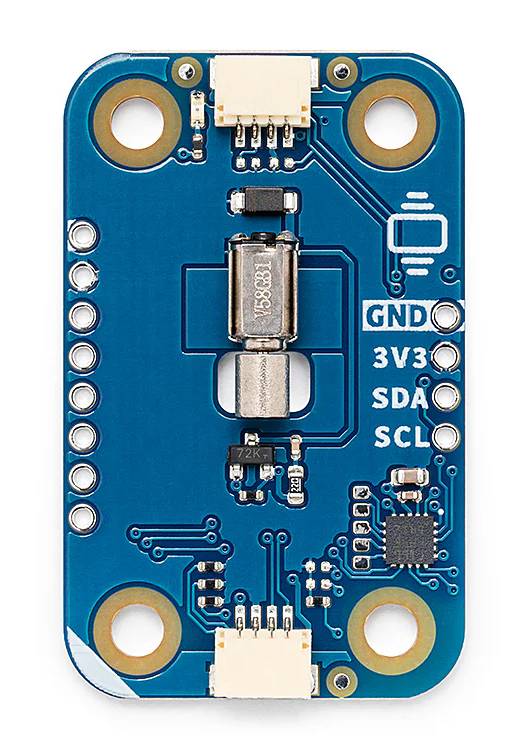
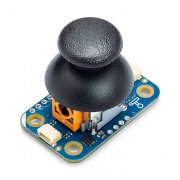
The module uses a vibration motor that reaches speeds of up to 12,000 rpm.
Main features of the Modulino Vibro module
- VZ43FM1B8230001L vibration motor : generates clear haptic feedback at speeds up to 12,000 rpm
- I2C communication : simple I2C bus control via Qwiic connectors
- Adjustable vibration intensity : allows you to create different patterns and signal levels
- Built-in STM32C011F4 microcontroller : supports communication and PWM motor control
- Programmatic change of I2C address : possibility of operating multiple modules on one bus
- Compact design : small size makes it easy to integrate with existing devices
- Plug and play technology : quick start-up without the need to design additional electronics
- Arduino IDE and MicroPython compatibility : convenient programming for beginners and advanced users
Vibro Module Pinout, Connectivity and Compatibility
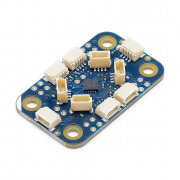
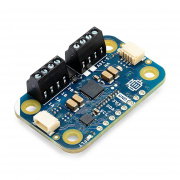
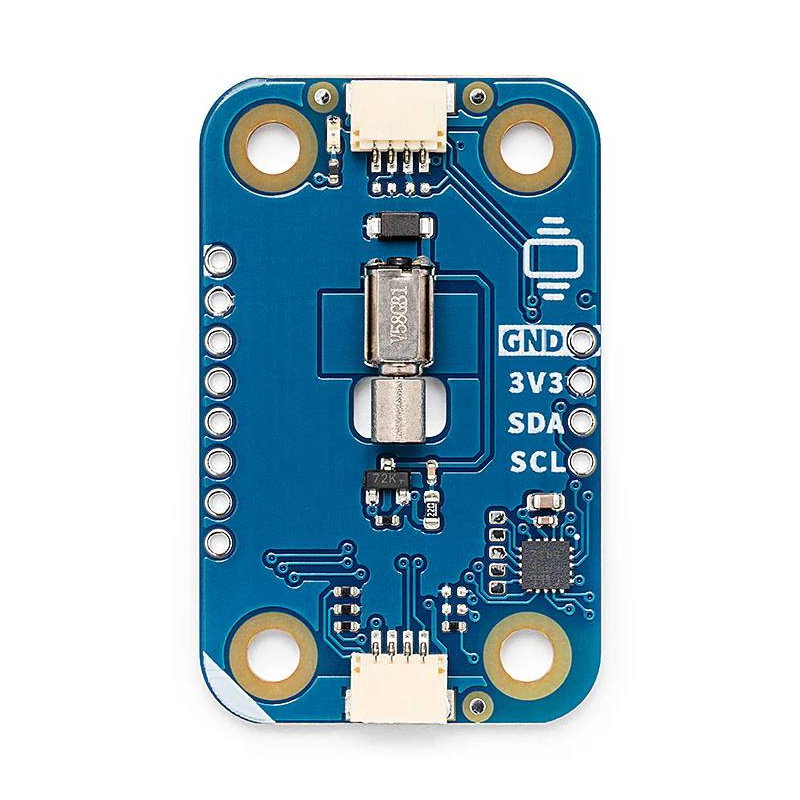
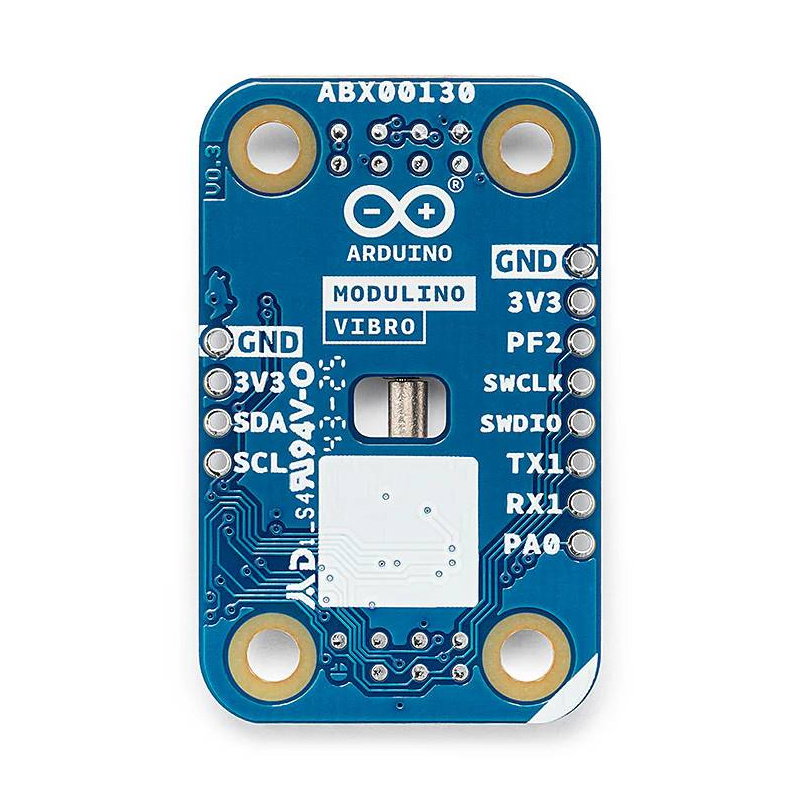
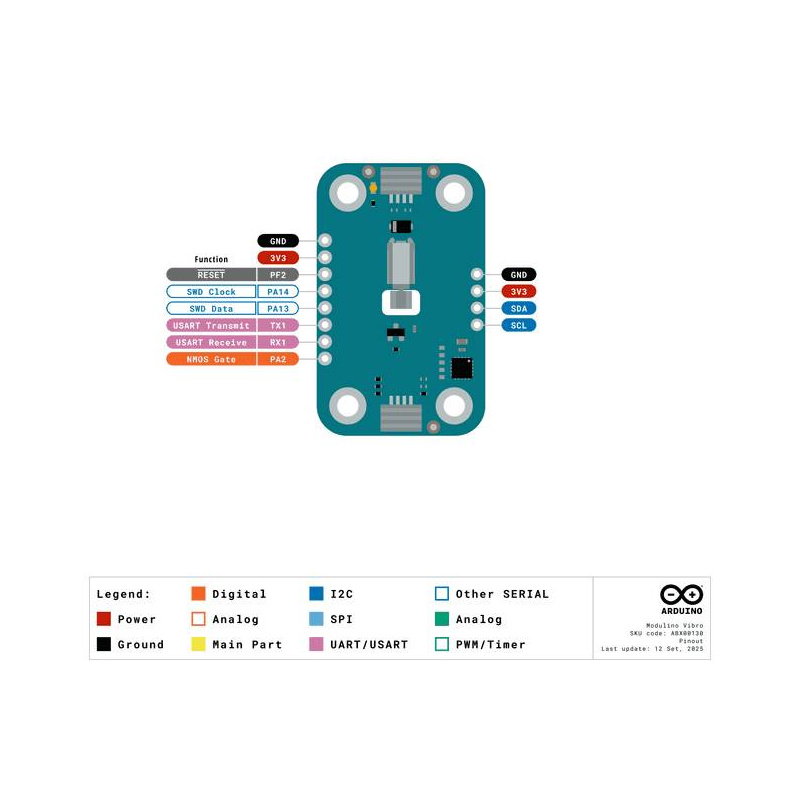
The Modulino Vibro communicates via an I2C bus accessible through two Qwiic connectors and additional solder pads . The interface uses the SDA and SCL lines, a 3.3V power supply, and ground , allowing for easy creation of complex sensor and actuator systems connected on a single bus. The default device address is 0x3A , but it can be changed software-defined , allowing multiple Vibro modules to be connected to a single microcontroller simultaneously . The module works with the Arduino UNO R4 WiFi, Arduino UNO Q, Nano ESP32, Nano 33 IoT, Nano RP2040 Connect, Nano Matter , and other Qwiic-compliant devices operating at 3.3V. Additional pins provide access to the SWD and UART interfaces, as well as the STM32C011F4 microcontroller signals, which can be useful during advanced modifications or your own hardware projects.
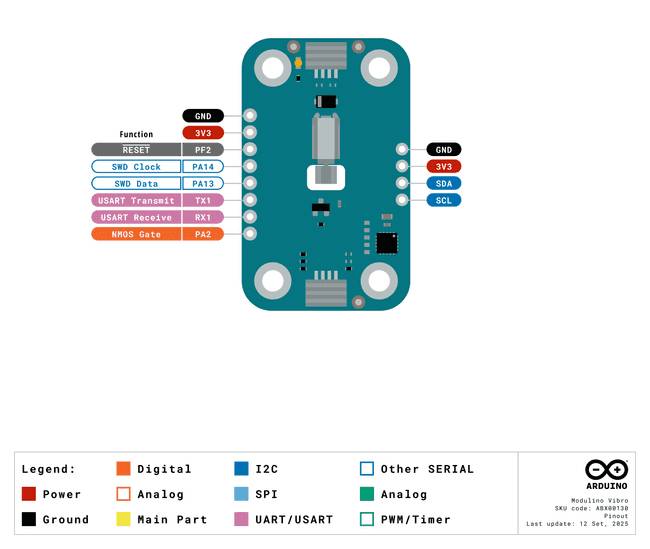
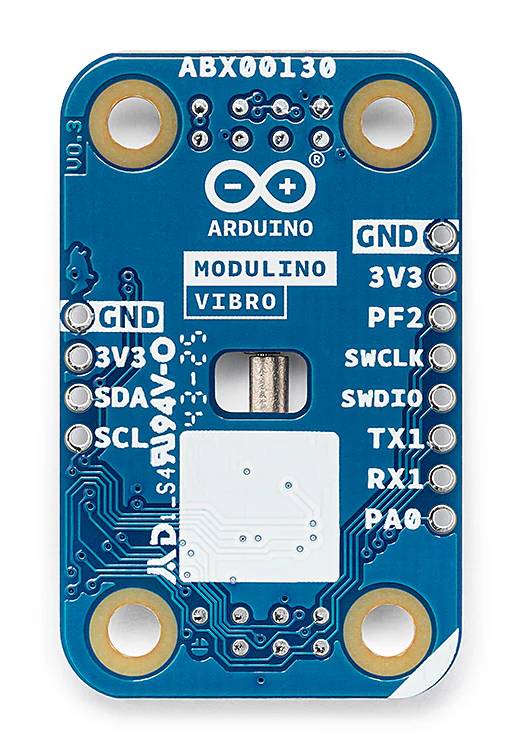
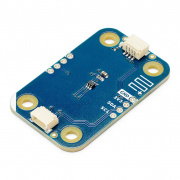
Thanks to its small size, the module can be easily integrated into mobile projects.
Programming the Modulino Vibro module
Using the module is made extremely simple thanks to the dedicated Arduino Modulino library . After installing the library, you can control the motor's operating time and power level, and create your own haptic sequences with a few simple functions. Modulino Vibro also supports the MicroPython environment, making it suitable for both educational and professional prototyping projects. Developers can create short vibration notifications, alarms, warning signals, or complex feedback patterns used in user interfaces. The included code examples allow you to quickly get started with the module and learn about I2C communication, PWM control, and the design of interactive electronic devices.
Technical specifications of the vibration motor module
- Actuator: vibration motor VZ43FM1B8230001L
- Microcontroller: STM32C011F4
- Communication interface: I2C
- Connectors: 2x Qwiic
- Default I2C address: 0x3A
- Possibility to change I2C address: yes, programmatically
- Operating voltage: 3.3 V
- Engine speed: 12000 rpm
- Current consumption in idle mode: approx. 3.4 mA
- Typical operating current consumption: 67 mA
- Maximum current consumption: 85 mA
- Compatibility: Arduino UNO R4 WiFi, UNO Q, Nano ESP32, Nano 33 IoT, Nano 33 BLE, Nano 33 BLE Sense, Nano RP2040 Connect, Nano Matter,Nano Connector Carrier
- Dimensions: 41 x 25.36 mm
- Weight: 4.4 g
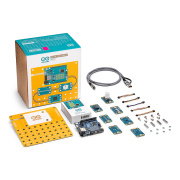
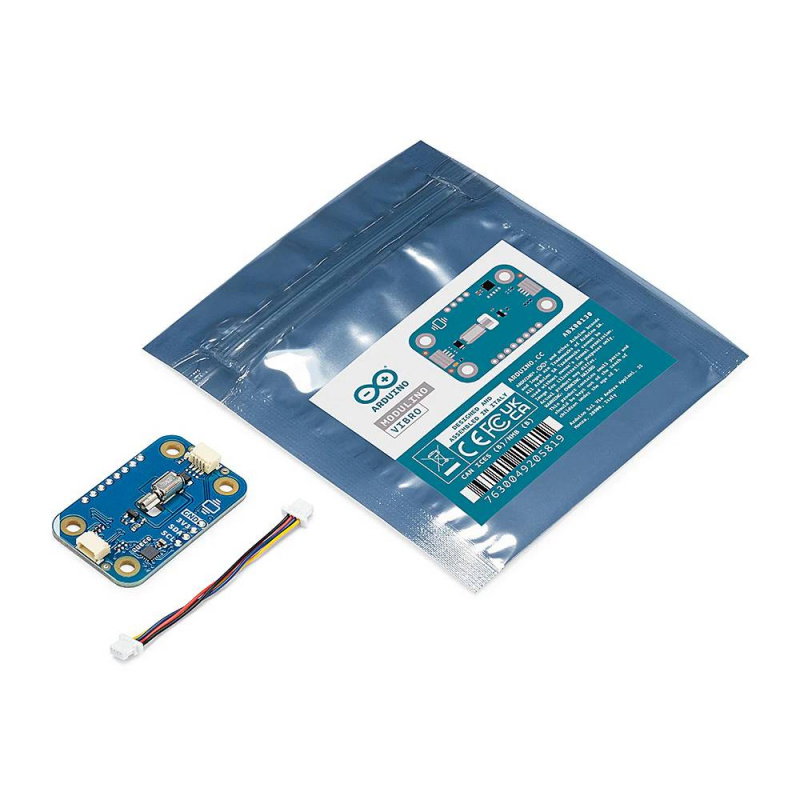
Contents of the set
- Modulino Vibro Module
- 5 cm long Qwiic cable
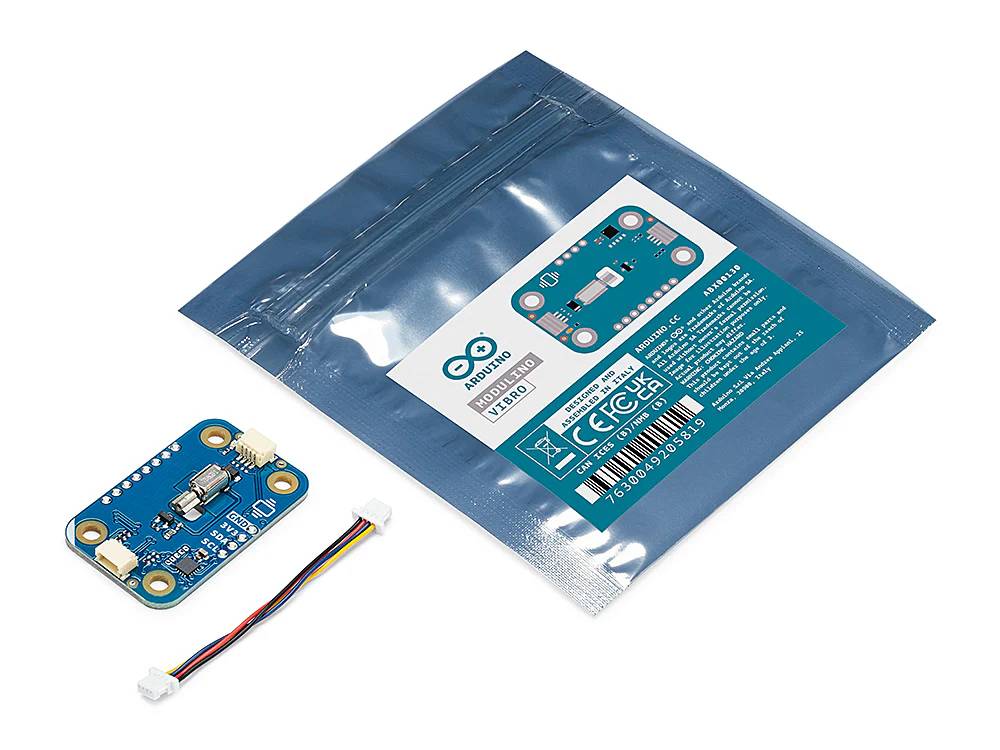
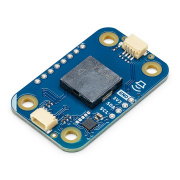
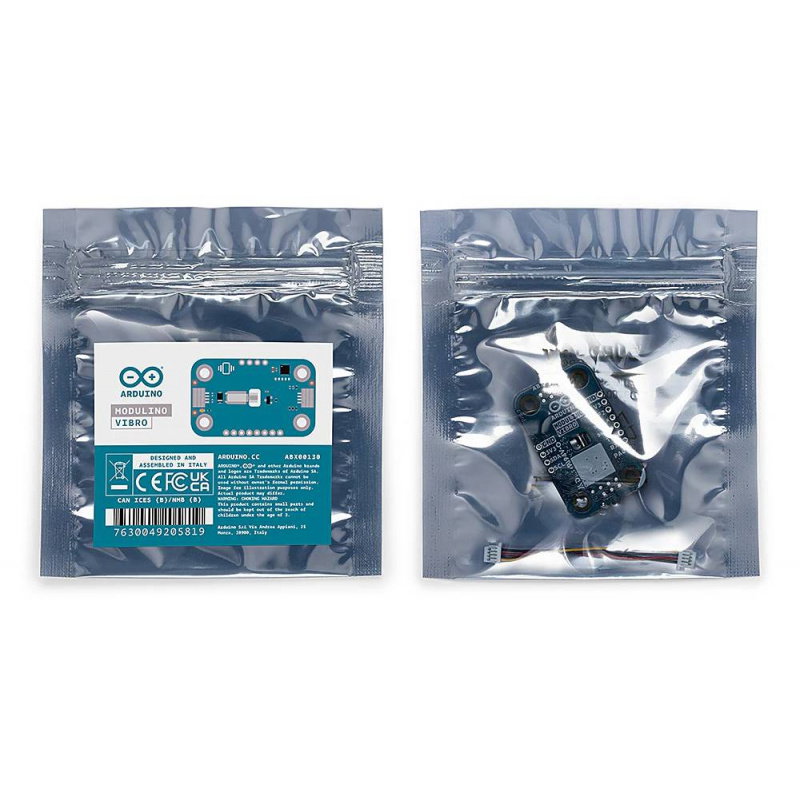
Elements included in the set.
Useful links
| Name | Value |
|---|---|
| Width | 8.5 cm |
| Height | 10 cm |
| Depth | 0.5 cm |
| Weight | 0.009 kg |
 GLS
Shipping in 24 hours
from €8.07
GLS
Shipping in 24 hours
from €8.07
 Raben - pallet delivery
Delivery in 3–5 days, no inside delivery
from €96.75
Raben - pallet delivery
Delivery in 3–5 days, no inside delivery
from €96.75
The full delivery terms are on the page Delivery and payment.
30 days to return, without giving a reason
If the product does not meet your expectations, you have 30 days from receiving the parcel to withdraw from the contract. The product only has to be complete. The right of return belongs to consumers (a purchase unrelated to business activity).
Complaints
If the product turns out to be faulty, you can make a claim under the guarantee or the statutory warranty. We handle claims without delay, at the latest within 14 working days of receiving the report together with the goods.
Be the first to ask a question about this product!
Instructions and documents
GPSR data
Product information
This product is a component intended for further assembly or prototyping. It is not a finished product within the meaning of the product safety regulations.
Products from the same category
See all