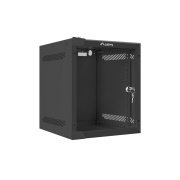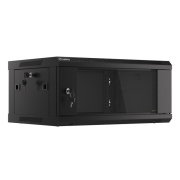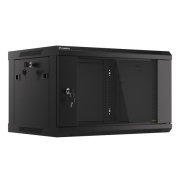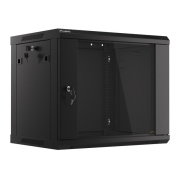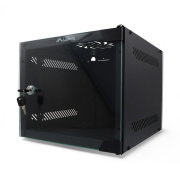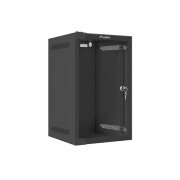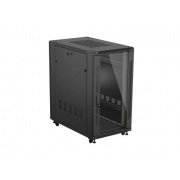


Types of rack cabinets: wall-mounted, floor-standing, 10'' and 19''
This category includes various models of rack-mount cabinets. Depending on your needs, you can choose from compact wall-mount cabinets, larger floor-standing cabinets, and models of various heights and depths. Both 10-inch and 19-inch designs are available, making it easy to match the cabinet to the type of equipment being installed, the amount of available space, and any planned expansion of the installation.
This category includes installation cabinets for mounting switches, routers, patch panels, monitoring recorders, UPSs, and network accessories. A server cabinet allows for the installation of devices in a single, organized location, simplifying management of the entire installation and reducing the risk of accidental damage to cables or equipment. This is especially important where the infrastructure requires long-term stability.
The most important parameters: U height, width and depth
One of the most important parameters when choosing a rack is its height, expressed in U units. One U corresponds to a height of 1.75 inches, or approximately 44.45 mm. In practice, this means that a 4U, 6U, 9U, 12U, or 22U rack allows for mounting a specific number of rack-compatible devices. Smaller models are suitable for small network installations, while larger floor-standing racks are designed for more complex systems.
The width and depth of the structure are equally important. The popular 10-inch telecommunications cabinet is suitable for applications requiring compact size and the installation of basic network components. The 19-inch rack cabinet is the standard used in more complex installations, server rooms, and IT systems. Models available include 310 mm, 450 mm, 1000 mm, and 1200 mm depths, allowing for the cabinet to be adapted to devices of various sizes.
Construction, load capacity and door selection
When choosing the right model, it's also worth considering the maximum load capacity, mounting method, and door type. Wall-mounted cabinets are a good solution for small offices, distribution centers, and home installations because they don't take up floor space. Free-standing cabinets offer more installation space and are better suited for server rooms or extensive network installations. Glass doors facilitate device status monitoring, while perforated doors improve airflow.
Effective ventilation and cooling of devices
Proper ventilation is crucial for stable equipment operation. Routers, switches, servers, and power supplies generate heat during operation, so a rack cabinet should allow for efficient air circulation. Depending on the model, ventilation holes, perforated panels, or the option of installing additional fans are available. A well-chosen rack cabinet helps maintain proper operating conditions for devices and reduces the risk of overheating.
Who are telecommunication cabinets intended for?
Rack cabinets are designed for computer network installers, IT administrators, companies, offices, schools, workshops, and home users who want to organize their network infrastructure. They are also ideal for CCTV monitoring systems, where a recorder, PoE switch, patch panel, and power supply can be mounted in one place. The lockable design provides better protection against unauthorized access, dust, and accidental damage.
Summary
The Rack Cabinets category includes solutions for a variety of applications – from small wall-mounted cabinets for simple network installations to larger server cabinets for professional IT systems. Whether you need a compact telecommunications cabinet, a classic 19-inch rack, or a larger server cabinet for an extensive infrastructure, the available models allow you to choose the right design for your installation requirements and available space.