












Ni-MH batteries are precisely nickel-metal-hydride batteries. They are composed of a cathode, which has the form of a nickel plate, and also an anode made of a metal alloy. Ni-MH accumulators are characterized by long discharge time. During this process there is a slight decrease in voltage at the output. In the case of a low level of charge there is a sharp drop in voltage. For Ni-MH accumulators we use special chargers, only in this way we can make up for energy shortages in them. The battery is free of the harmful substance cadmium. It is also characterized by a relatively high energy density. It is used in the production of hybrid cars, but its potential is so great that it will also work well in smaller projects and electronic devices.
- New
- Sale
- Sale
- Reduced price
- Sale
- Sale
- Sale

Ni-MH batteries
Products: 1
Loading...
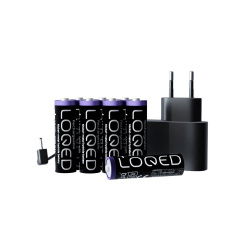
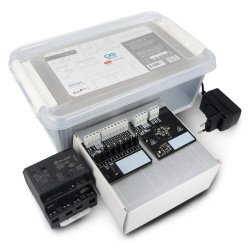
Shelly LOQED Power Kit - set of 8x AA Ni-MH batteries + power supply - for LOQED smart lock
The LOQED Power Kit is an eco-friendly and efficient power supply designed specifically for the LOQED Touch Smart Lock . It includes 8 AA batteries, an AC adapter, and a...
Index: INN-27516
Index: INN-27516
See also
Ni-MH batteries - Nickel-metal hydride battery
The Ni-MH nickel metal hydride battery (nickel metal hydride) has recently been the most frequently used energy source for most phones. Toyota has been producing hybrid vehicles with built-in Ni-MH batteries since 2013. Ni-CD batteries work on a similar principle - they differ mainly in the anode structure and physical properties. Ni-MH have approximately twice the energy density in relation to mass (NiMH 60 to 120 Wh/kg) and have a much lower memory effect. However, in order to make the best possible use of the capabilities of batteries, when using this type of cells, it should be taken into account that this phenomenon occurs and remember the appropriate rules when charging. The minimum charging time for such batteries is approximately one hour (depending on the case). The principle of discharging the cell to an appropriate level before recharging should be applied - this, in turn, should not end before it is fully charged (due to the memory effect). Too high or too low a temperature negatively affects the life of these batteries, and keeping the cell connected to the charger for too long may reduce its capacity. If treated properly, Ni-MH batteries should operate efficiently for approximately 1,000 charging cycles. Ni-MH batteries (also known as Ni-MH batteries) are one of the most popular types of power batteries.
Rechargeable batteries, NiMH cells - What do we offer?
Battery packs are available in sets of one to eight cells. We have, among others, 9 V, 7.2 V and 1.2 V batteries, and their capacities are 250 mAh, 320 mAh, 550 mAh, 750 mAh, 800 mAh, 950 mAh, 1000 mAh, 1500 mAh, 1600 mAh, 2000 mAh , 2500 mAh, 2600 mAh, 3500 mAh, 4000 mAh, 4500 mAh, 5000 mAh or even 10000 mAh. The offered products come only from renowned manufacturers - NiMH batteries by Esperanza, everActive, GP Powercell, GPX Extreme, Panasonic, Redox, Varta. When purchasing, it is worth paying attention to the casing used for the cells - especially if you need a power source for ready-made equipment. We have NiMH PP3 - 9V batteries, large AA sticks, small AAA sticks, 2S package, R14 and R20. The latter items are particularly often used by electronics engineers (and roboticists) as power supplies for prototype small electronic devices. A NiMH cell appropriately selected for the system can be an ideal voltage source for various types of electronic projects.
Ni-MH batteries - FAQ
Nickel-metal hydride (NiMH) batteries are a type of rechargeable battery (rechargeable) used in laptops, cell phones, cameras, and other electronic devices. The negative electrode of a NiMH battery is made of a hydrogen-absorbing alloy and sometimes many different intermetallic compounds.
Ni-MH Ni-Cd batteries are charged with constant current (constant intensity). The simplest charging method is to simply connect the charged cell to a C/10 current source for approximately 14-16 hours. Always calculate the optimal charging time necessary, as today's Ni-MH batteries vary greatly in capacity.
Using and storing it at extremely high (above 60°C) and low (below -20°C) temperatures has a particularly negative impact on the Ni-Mh battery. This leads to them wearing out much faster. It must be a dry place with low humidity and no corrosive gases.