



New arrivals

On Sale
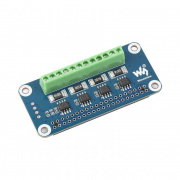
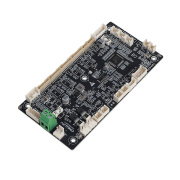
A/C and C/A Converters
When WiFi technology appeared, it was a total revolution, which definitely improved the management of many devices and systems. It is a technology designed to send and receive information from communication devices. It is designed to provide access to the Internet, without which today it is difficult to imagine normal functioning in reality. WiFi network is used today in many ways. It is primarily known as a technology that allows you to use the Internet for entertainment and interesting leisure activities, as well as to communicate with other users or supplement your knowledge in a specific area. WiFi is also great for managing and controlling various devices. This is what WiFi modules, which you will find in our offer, are used for. They differ in frequency range, power voltage and type of microcontroller. Check our recommendations and use the WiFi module to control your PCB.
Products







See also
A/D and D/A converters - Basic concepts and parameters
D/A and A/D converters work in two opposite directions. The former (also known as DAC , i.e. digital-analog ) allow the generation of constant or variable voltages (sometimes also currents) based on the numbers fed to them in binary form. In turn, analog-to-digital converters (also A/D or ADC converters) convert continuous (analog) signals into digital form, i.e. numbers corresponding to the input voltages (or currents) on a specific scale. Each converter is characterized by the number of bits that determine the resolution (e.g. an 8-bit converter supports 28, i.e. 256 levels of analog signal). In addition to resolution, AC converters are described by many other parameters, including: sampling speed (e.g. 1 kSps means 1000 samples/second), input (output) voltage range and power supply, number of channels and noise level. The conversion of an analog signal into a digital one is carried out in a simple way that is useful for an electronics engineer.
D/A and A/D converter - As many applications, as many converters
It is clear that there is no single type of transducer suitable for all possible applications . In simple measurement or control devices, 8- or 10-bit transducers are often sufficient, but in precise measurement or audio systems, 16-, 18- and even 24-bit transducers are required. While audio converters (both A/D and D/A) are characterized by quite high sampling rates of 44 kSps or more, specialized measurement converters with the same resolution usually operate at much lower speeds, but offer a much higher accuracy and very low noise. In some systems, multi-channel transducers are highly desirable, e.g. when two, four, or even a dozen or so analog channels need to be measured simultaneously (or alternately). An analog-to-digital converter is equipment available in various options for various specialized applications .
A/D and D/A converters available at the Botland store
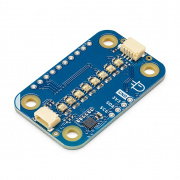
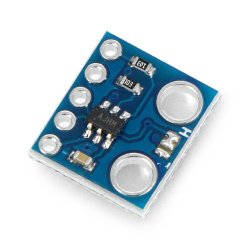
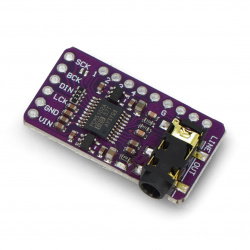
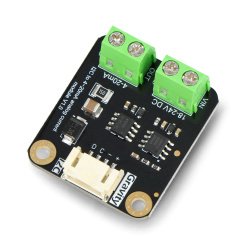
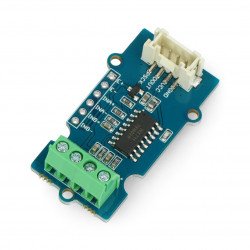
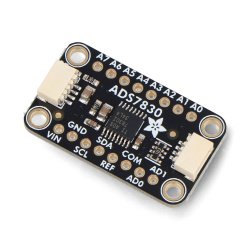
You can find an AC or CA converter as part of more complex modules. Our offer includes a number of universal modules containing A/D and D/A converters, which are perfect for both measurement and control systems, as well as high-quality audio devices. We offer the now iconic PCF8591 systems containing 8-bit A/D and D/A converters in the form of modules, containing - in addition to the converter itself - also the necessary power supply circuits and connectors, enabling convenient connection with the target system. We also have caps with 16-bit A/D converters, designed to work with Raspberry Pi minicomputers, and high-class hat caps, equipped with A/D and D/A converters with 24- and 16-bit resolutions. Here you will also find several transducer models sold as single integrated circuits, e.g. MCP3204 or MCP3008. A digital-to-analog converter is basic electronic equipment used by professional electronics engineers and hobbyists.
A/D and D/A converters - FAQ
An analog-to-digital A/D converter converts an analog signal, such as sound picked up by a microphone, into a digital signal. An analog-to-digital converter (ADC) can also provide an isolated measurement, such as an electronic device that converts an analog input voltage or current into a value that represents the magnitudes of voltage and current.
The D/A converter , or digital-to-analog converter, also known as DAC, works in the opposite direction to the A/D converter. It allows you to generate constant and variable voltages based on numbers provided in binary form. In the form of audio, it converts the digital signal into an analog signal so that the headphones can reproduce sound.