


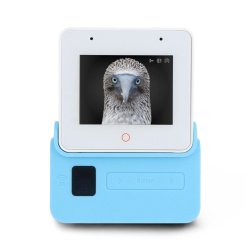









How to encourage young people to learning programming languages and to familiarize them with the opportunities of new technologies? The creators of the Polish education the Photon, chose the best possible roads: fun. Also recognized that science should not hesitate, therefore a device designed even for children of preschool age. However, students of classes 1 – 3 and 4 – 6 will not be bored in the company of a Photon robot. Moreover, he may accompany them in school events (for schools prepared components) as one's own, home electronic experiments.
- Sale
- Sale
- Sale
- Sale
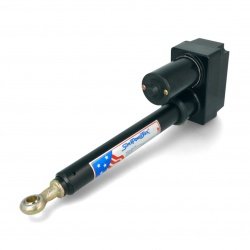
Siłownik elektryczny Super Power Jack 2000N 7,5mm/s 24V - wysuw 15cm
Index: ELB-19268
- Reduced price
- Sale

Photon
See also
- Siemens LOGO!
- Esperanza compressed air
- 4-core cables
- Wireless mice
- Anet 3D printers
- DJI Mavic drones
- Syma drones
- Power supplies 12v 10a
- Fluorescent filament
- DJI Inspire drones
- 2-core cables
- Conductive paint
- 24v relays
- DJI Phantom drones
- Zortrax Filaments
- Outdoor LED lighting
- Tablets
- Intel modules & kits
- Hexbug toys
- PLA Pro filaments
- DJI Mavic drones - drones and accessories
- Magnetic balls
- Compressed air to clean the keyboard
- Encoders
- Car fuses
- Membrane keyboards
- RPi Wi-Fi cards
- Raspberry Pi CM3
- Odroid cases
- Intel starter kits
- Keyboards for Arduino
- Android Box Smart TV
- 2D printers and pens
- Banana Pi
- Photo traps
- GPS trackers
- Resistors SMD 1206
- Smart ABS filaments
- Intel expansions & hats
- Headphones
- Odroid accessories
- Books about Raspberry Pi
- Chargers
- Vacuum forming
- STM32 books
- String bags (zip bags)
- Dobot 3D printers
- Intel - module accessories
- Car handles
- Refill filaments
- Electrolytic capacitors SMD
- BCN3D 3D printers
- Odroid
- AGM batteries
- BeagleBone power supply
- Flsun 3D printers
- Sensors and alarms
- Alarm sirens
- Tantalum capacitors SMD
- Khadas VIM
- Arylic sound modules
- Laminators
- Zortrax 3D printers
- Doorbells and peepholes
- Motor capacitors
- RC cars and models
- Flexible filaments
- Goofoo 3D printers
- Bluetooth Speakers
- Control equipment
- Linear actuators
- Trilab 3D printers
- LED lighting
- Spare parts
- Webcams
- Urbicum 3D printers
- Mycusini 3D printers
- Weight meters
- ATMAT 3D printers
- Raspberry Pi 2B+
- TinkerGen
- Makeblock 3D printers
- DJI educational robots
- Orange Pi
- Fingerbot - home automation
- MakerPi 3D printers
- Transport cases
- Silk Filaments
- Sparky
- Abilix Krypton
- 3D printer Artillery
- Air conditioning and heating
- SkriWare - educational robots
- Gas soldering irons
- Air purifiers
- Exta Free - sensors and modules
- USB Numato Lab GPIO drivers
- LittleBits
- Netronix RFID modules
- Rock Pi
- Spresense Sony
- Clementoni
- AST lighting drivers
- CubieBoard
- WowWee
- Coolseer home automation
- AMK - automation and control
- Smartwatches
Show the world to your robot
The creators of the Photon educational robot based their device on an original idea. Instead of preparing another version of a device with many functions for children and encouraging them to discover these functions, they put the youngest children in the role of teachers. Everything Photon needs to "learn" about the surrounding reality must be taught to it by small users. The device itself, right after the first launch, is just starting to learn about reality. The youngest will be able to handle all the tasks on their own - the subsequent stages of the adventure with the Photon set are adapted to the age and cognitive abilities of the user. The creators of the application to control the educational robot used as many as 4 interfaces with different appearances and levels of complexity. Photon Robot and Photon Coding is an application intended for children. The additional Photon EDU application was created for schools - with teachers in mind who will conduct lessons using the Polish robot.
Child's play programming
The saying "child's play" works perfectly in this case. The youngest can program their Photon educational robot either through story puzzles in which real concepts from the basics of programming are cleverly hidden, or through a simple, graphical programming language. The second option is also intended for children who like to create their own algorithms for the operation of electronic toys. The resulting program gives the youngest users of the Photon robot a wide range of possibilities, encouraging them to develop logical thinking and non-standard solutions.
Additional accessories for schools
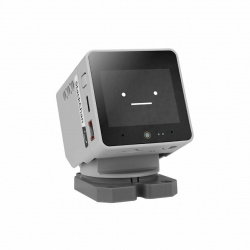
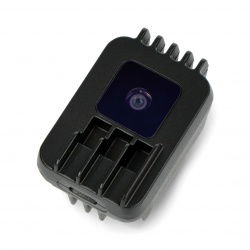
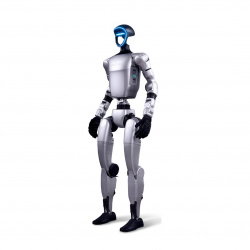
Photon, as an educational robot, looks and works the same both in the version for individual users and for schools. Special sensors allow it to react to light, touch and changes in the color of the surface, and also enable, among others, measuring distance, assessing one's position or signaling emotions. However, the sets intended for educational institutions have been enriched with a special, large-sized (190 x 130 cm) educational mat and orientation cards, facilitating the implementation of even more creative scenarios. Together with the educational robot, teachers also receive ready-made lesson plans, which can become an inspiration for conducting robotic workshops during classes. These materials have been adapted to the age of students.
Photon - educational robot - FAQ
Photon is a small educational robot of Polish production, in a nice, streamlined housing, whose task is to teach children to think logically and create simple algorithms. The device is supported by a complete programming environment, intended for both the youngest and slightly older users.
The price of a set with one robot and complete additional equipment is below PLN 1,500, while for school laboratories the manufacturer offers double thematic sets at very attractive prices (below PLN 2,500).
The Photon educational robot moves on two rubber wheels and is controlled by an efficient microcomputer equipped with a set of sensors (light, touch, distance, sound and markings on the ground).