



New arrivals
On Sale

STM32 boards
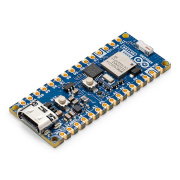
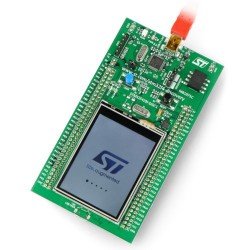
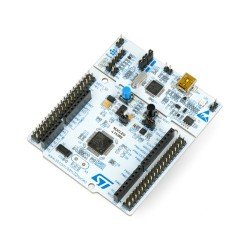
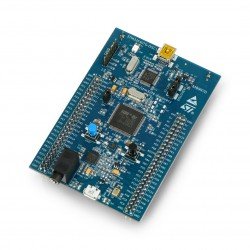
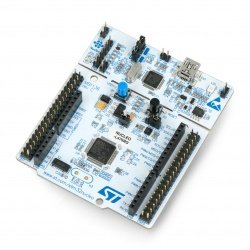
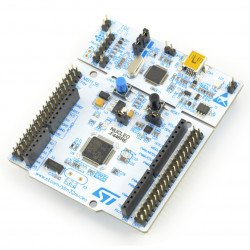
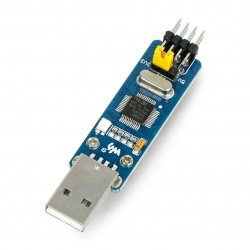
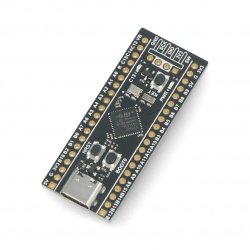
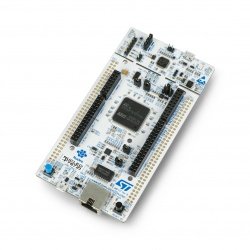
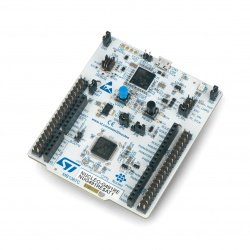
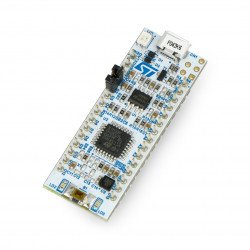
There is almost no way to design a user-friendly and modern looking electronic device without use of a microcontroller. Currently there is a lot of MCU families dedicated for various applications. Although for many simple devices 8-bit microcontrollers (such as AVR) or 16-bit MCUs (like PIC or MSP430) are usually sufficient, there is a well-known trend of moving to more advanced processors even when designing less complicated circuits. For example, many ARM Cortex-M3 or ARM Cortex-M0 microcontrollers are enough cheap to use them in cost-sensitive products. STM32 family is one of the most popular series of microcontrollers fitting almost any design needs, from simple consumer devices and gadgets to ultra high performance multimedia and medical applications. In this category you will find many great evaluation boards and modules for development of STM32-based designs. You can choose from wide range of official modules made by ST Microelectronics (Nucleo and Discovery boards) as well as some other brands like DFRobot, Particle, Waveshare or SparkFun.
Subcategories
Products



See also
STM32 – a wealth of peripherals and enormous computing power
STM32 microcontrollers use 32-bit ARM cores. The first family of these processors introduced to the market - STM32F1 - is based on the ARM Cortex-M3 architecture, the subsequent ones - on newer cores, e.g. ARM Cortex-M4 or M0 and M0+. The most modern systems from the STM32F7 family are based on the ARM Cortex-M7 core, which is currently one of the most efficient and technically advanced architectures used in microcontrollers. STM32 systems offer a wide selection of analog peripherals, including fast ADCs with 12-bit resolution and sampling rates of 1 Msps or more, DACs (also 12-bit) and fast hardware comparators. Digital peripherals include, for example, extremely flexible (and numerous!) hardware timers, a rich set of communication interfaces (USART, UART, SPI, I2C, I2S, CAN, USB - including OTG - or Ethernet). Universal blocks of memory controllers, DMA, clock and reset control (RCC) and system clock monitoring (CSS) systems, as well as advanced LCD and camera controllers and graphics accelerators are invaluable.
STM32 housings and memories – there are plenty to choose from!
A particularly important advantage of the STM32 family is the richness of both housings and built-in Flash and RAM memories. Some groups (e.g. STM32F0) offer tiny, 20-pin TSSOP20 or WLCSP25 housings, but the most popular are the LQFP32, LFQP48, LFQP64 and LFQP100 housings - these are available in virtually all product lines of the STM32 family. The most complex systems - in particular those belonging to the STM32F4 and STM32F7 families - are also available in LQFP144, 176 or 208 housings, as well as UFBGA and TFBGA. Even microcontrollers from the same series and in the same housing can usually be purchased in several variants, differing in the amount of memory (Flash, RAM) and - of course - price.
STM32 microcontrollers available at the Botland store
In this category you will find several very popular models of STM32 microcontrollers, eagerly used both in evaluation boards and in end devices, mass-produced by many companies. Our offer includes immediately available microcontrollers from the STM32F1 family, belonging to various subgroups of this series: F100 and F103, equipped with large amounts of Flash memory (from 16, through 64 to 128 kB) and RAM (4, 8 or 20 kB) . We chose versions in two of the most commonly used housings: LQFP48 and LQFP64. It is worth knowing that in other categories of our store you will also find programmers/debuggers dedicated to STM32, evaluation boards and books that will allow you to quickly start your adventure with these excellent systems.
STM32 microcontrollers - FAQ
STM32 is a family of 32-bit microcontrollers based on the Arm Cortex-M processor. It offers high performance, real-time capabilities, digital signal processing, low power/low voltage operation and connectivity. It maintains compatibility and ease of design.
The question of choice is most often a question of which STM32 to start with. We definitely recommend FORBOT sets and courses, including a set for the STM32L4 course with the NUCLEO-L476RG board, a traditional 490-page book edition of the STM32L4 course and invaluable electronic boards for the STM32L4 course .
Before you actually use a specific microcontroller in your project, you should at least look at its data sheet. The next step is to choose a programming language - the STM32 courses mentioned above are based on STM32CubeIDE, but an equally good option is the C language.
Learn something about C. For many reasons, the vast majority of embedded systems are designed with C as their primary language. Then learn the basics of electronics , get your first STM32 hardware and finally choose a microcontroller and a toolkit or, if you prefer, an STM32 course that will take you through the initial stages of learning.