Over 500,000 customers already trust us. With us you get:
same-day shipping for products marked “24h shipping”
our own service centre in Poland
30 days to return and free delivery in Poland from PLN 500
4.9/5 on TrustMate and 4.9/5 on Google (almost 4,000 reviews)
VAT invoice, leasing and instalments for businesses
For businesses
individual quote for larger quantities
VAT invoice
For schools and universities
orders based on requests for quotation
help with choosing kits for your lab
Send an inquiry - we reply quickly.

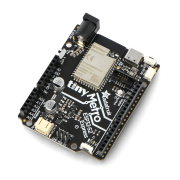
QT Py - CH32V203 dev board - STEMMA QT - Adafruit 5996
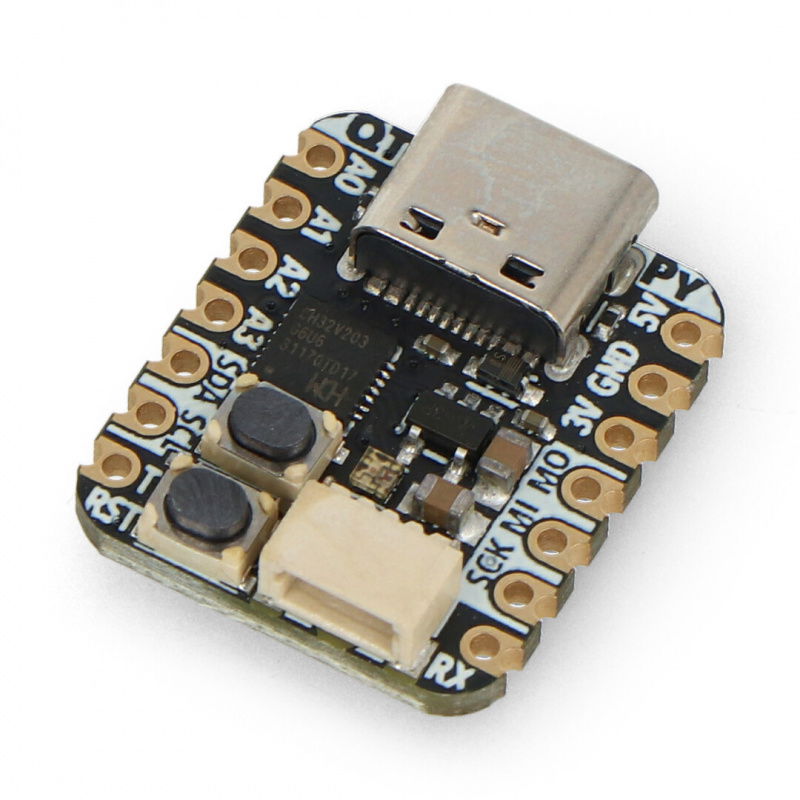
The Adafruit QT Py CH32V203 is a compact development board based on the RISC‑V CH32V203G6 processor running at up to 144 MHz, with 10 KB of SRAM, 32 KB of Flash, and an additional 224 KB of XIP Flash . Featuring a USB Type-C connector, a STEMMA QT port , an on-board NeoPixel LED, Reset and Bootloader buttons, it's ideal for advanced hobbyists working with Makefiles, Git, and configurations.
We could not load the price.
The promotional price does not combine with quantity discounts.
Product description: QT Py - board with CH32V203 microcontroller - STEMMA QT - Adafruit 5996
The QT Py CH32V203 from Adafruit is a small but powerful board designed in the Seeed Xiao form factor . It features a USB Type-C connector for power and programming, a STEMMA QT connector ideal for I2C sensors , an addressable NeoPixel RGB LED, and pushbuttons for easy bootloader entry without an additional programmer. The CH32V203G6 processor offers a 32-bit architecture, single-cycle multiply/divide, 10KB of SRAM, and 256KB of Flash (32KB internal + 224KB external)—enough for many advanced USB-based projects.
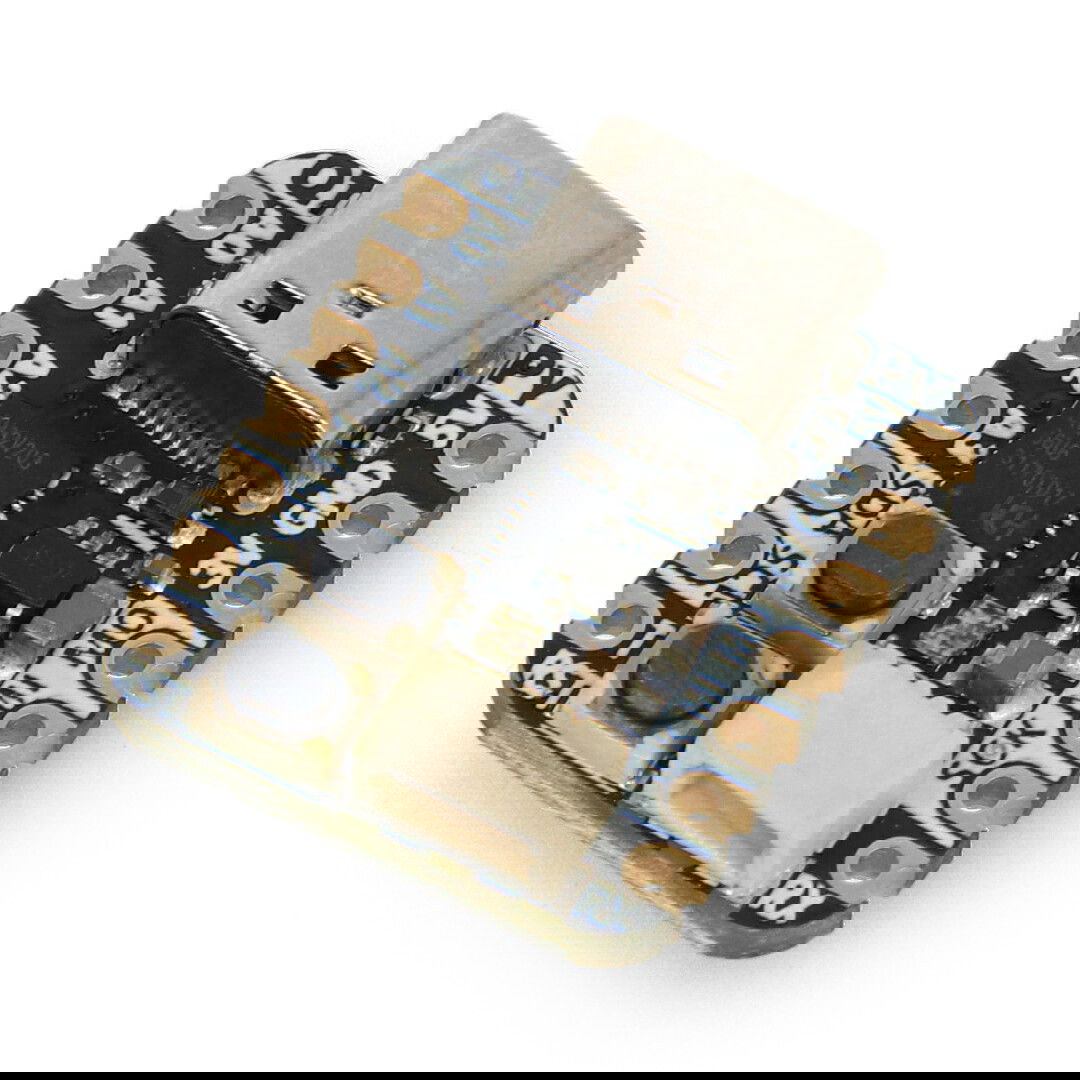
QT Py - board with CH32V203 microcontroller - STEMMA QT - Adafruit 5996.

Botland is an official distributor of Adafruit electronics. These dependable American solutions cover sensors, controllers, Arduino shields, educational systems, smart building and a wide range of accessories. The Botland range holds original Adafruit products only.
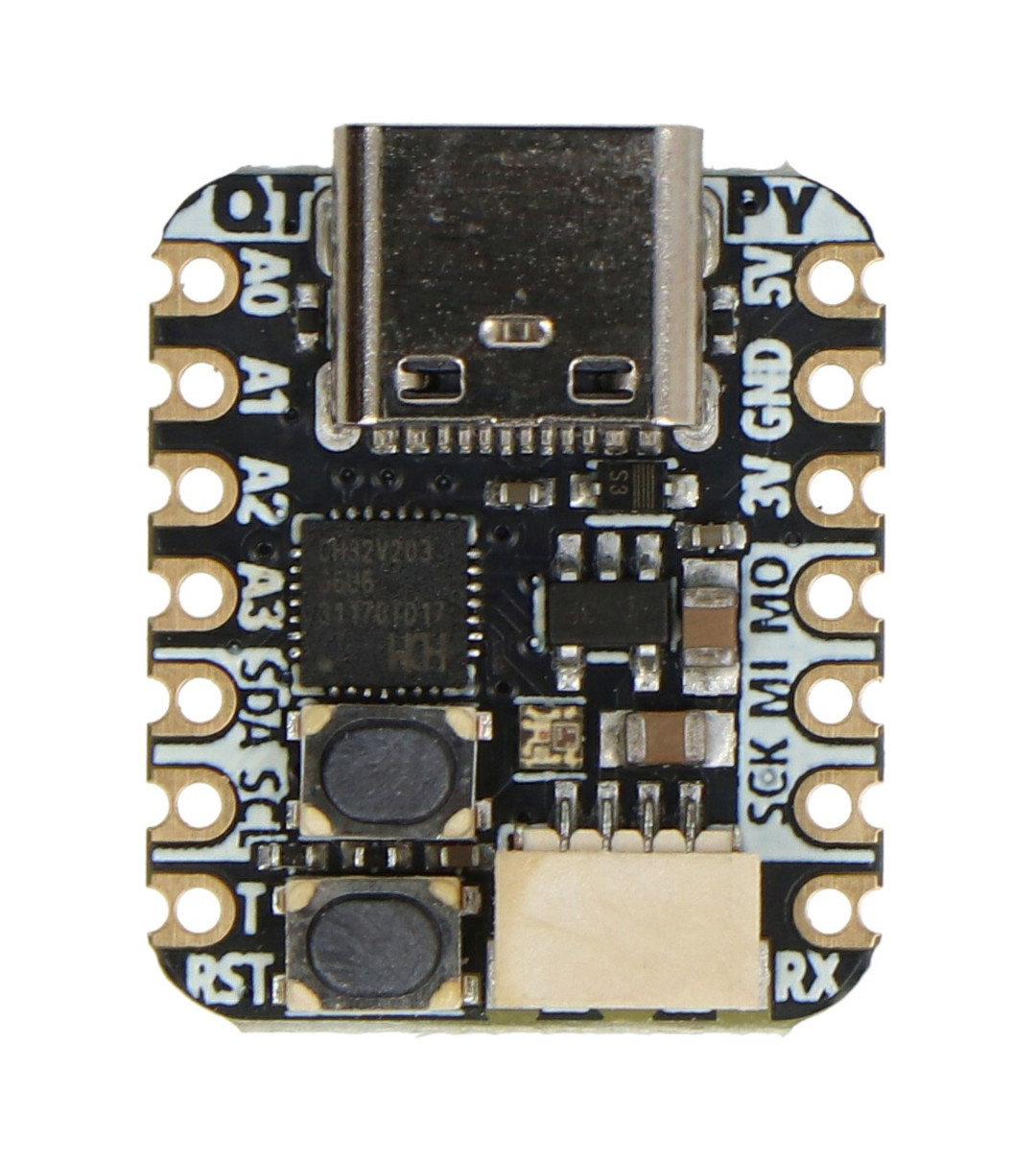
The board has a CH32V203 processor based on the RISC-V architecture.
Adafruit QT Py Main Features
- 144 MHz RISC‑V processor : Powerful 32-bit CH32V203G6 chip with single-cycle multiplication and division, ideal for complex calculations
- USB Type-C connector : enables fast power and data transfer without the need for older connectors
- STEMMA QT : a convenient, ready-to-use I2C connector that allows you to quickly connect your board to sensors and modules without soldering
- 10 GPIO pins with ADC : all digital pins have analog input functionality, which expands the range of possible applications
- NeoPixel RGB LEDs : Addressable RGB LED allows you to create signaling, lighting effects, or status indicators
- Onboard 3.3V regulator : Provides up to 600mA of current - enough to power peripherals and sensors
- Reset and Bootloader buttons : facilitate programming and testing - allow easy entry into software update mode
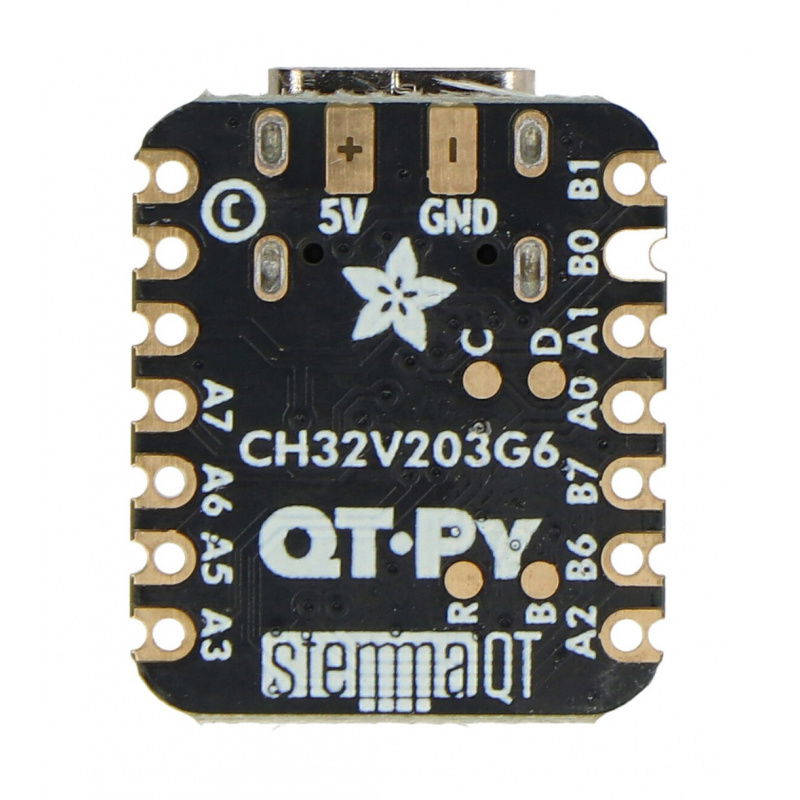
- SWD pins : Debug pins on the bottom of the board allow access to advanced code debugging
QT Py pinout description
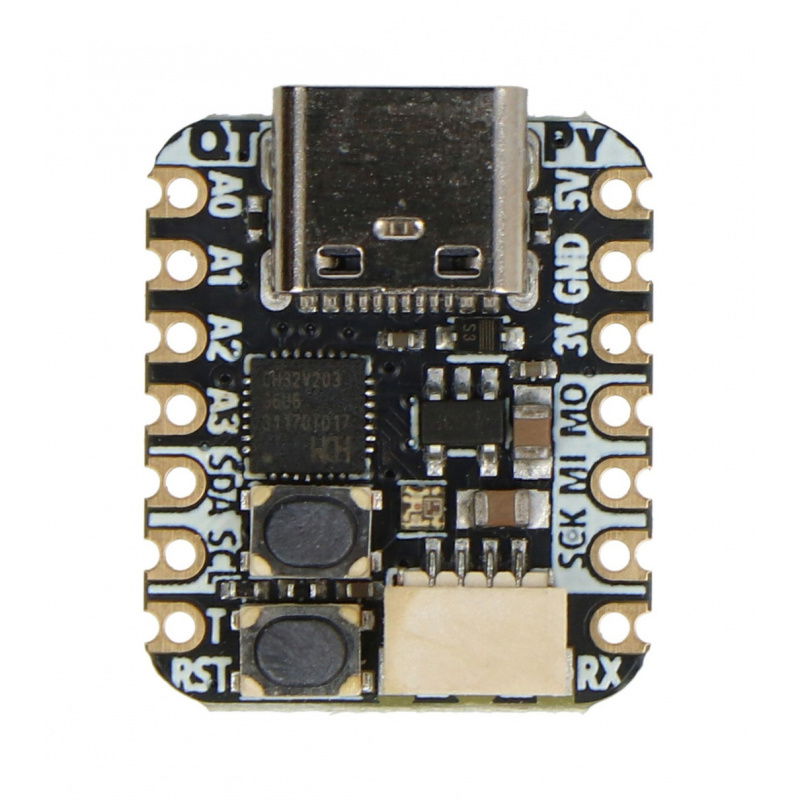
The Adafruit QT Py CH32V203 board is designed with pinout compatible with the Seeed Xiao format . It features 10 universal GPIO pins , each of which supports an analog input (ADC) function . The main signal lines are as follows:
- I2C: SCL (PB6) and SDA (PB7) - used for communication with I2C sensors and modules; they are also connected to the STEMMA QT connector
- UART: TX (PA2) and RX (PA3) - serial data transmission lines, useful for communication with Bluetooth or GPS modules, among others
- SPI: SCK (PA5), MI/MISO (PA6), MO/MOSI (PA7) - complete SPI outputs for fast communication with memories or displays
- NeoPixel: PA4 - controls the built-in addressable RGB diode
- Power and ground: 5 V (from USB), 3.3 V (from the regulator), GND - basic power lines for peripheral systems
- SWD: special pins on the bottom of the board for debugging and low-level programming
All pins are available as through holes with tin plating, which allows surface soldering directly to another PCB.
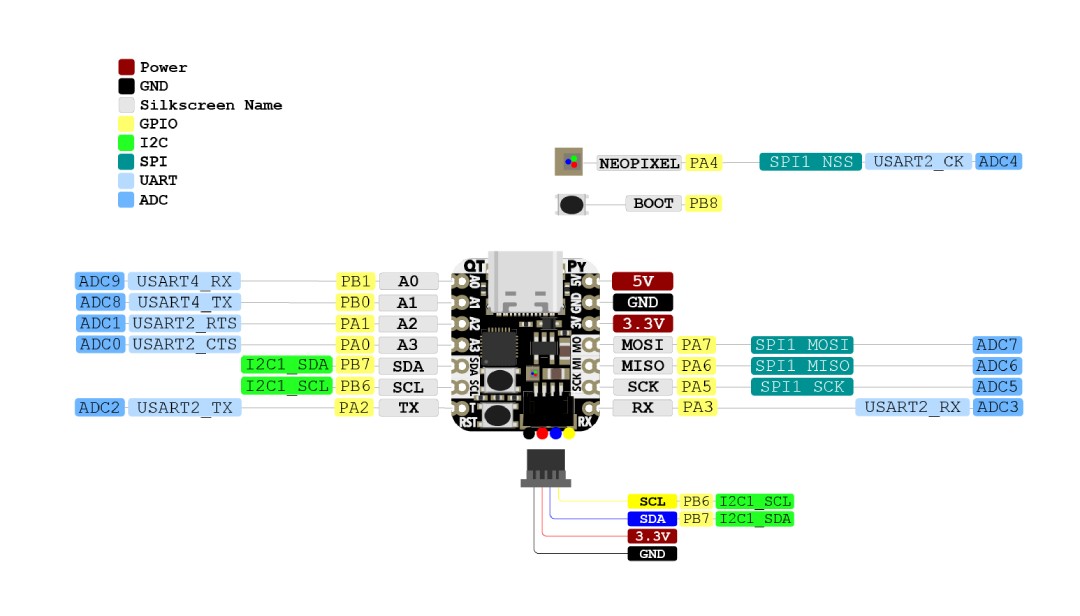
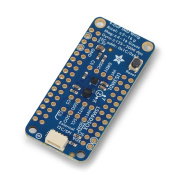
Pinout diagram.
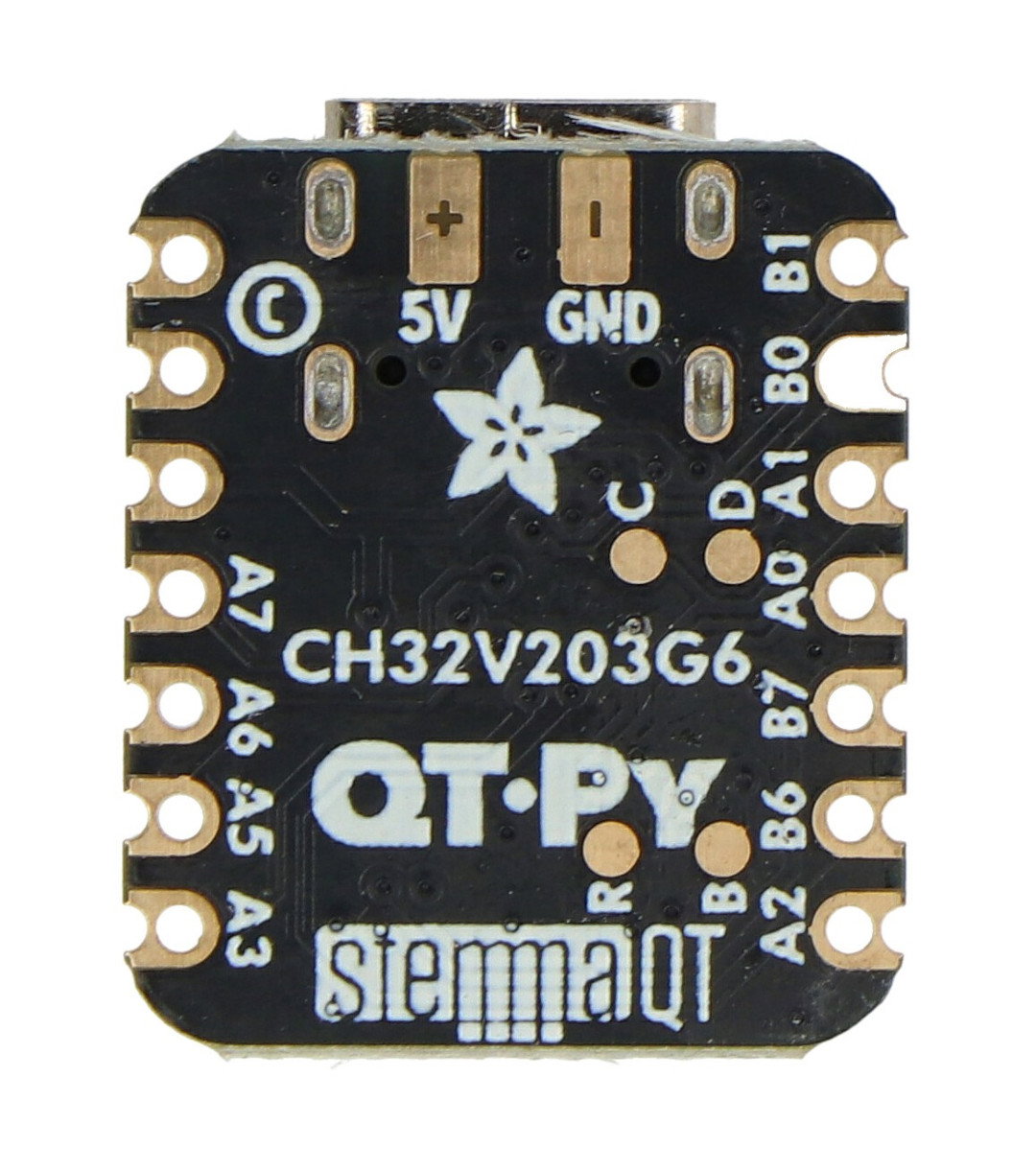
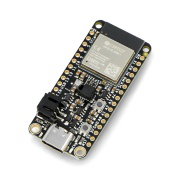
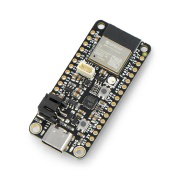
The module is equipped with a STEMMA QT connector.
Programming and Arduino IDE
The board doesn't support CircuitPython or MicroPython, and support for the Arduino IDE is in its early stages . Programming is primarily done using tools like Makefiles, Git, and manual configuration files . TinyUSB allows code transfer over USB, and a dedicated bootloader allows you to enter programming mode without the need for an external programmer. Adafruit provides guides to help you set up the environment , test I2C, run NeoPixel effects, and support HID (e.g., keyboards).
Technical specifications of the board
- Microcontroller: CH32V203G6, 144 MHz, RISC‑V
- Memory: 10 KB SRAM, 32 KB Flash + 224 KB Flash XIP
- Power supply: 3.3 V regulator (600 mA), 5 V from USB
- GPIO: 10 pins, all with ADC input
- Interfaces: I2C, SPI, UART, USB Type-C
- LED: built-in RGB NeoPixel (PA4)
- Connectors: STEMMA QT, USB Type-C
- Buttons: Reset and Bootloader
- Debugging: SWD pins on the bottom of the board
Contents of the set
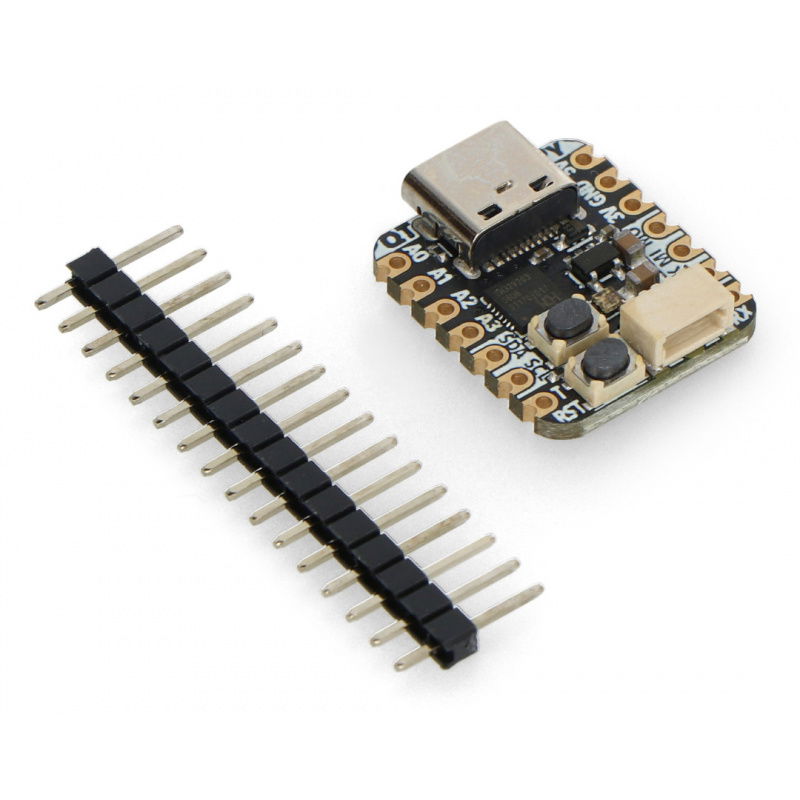
- 1x Adafruit QT Py CH32V203 Board
- 1x 16-pin goldpin connector with 2.54 mm pitch
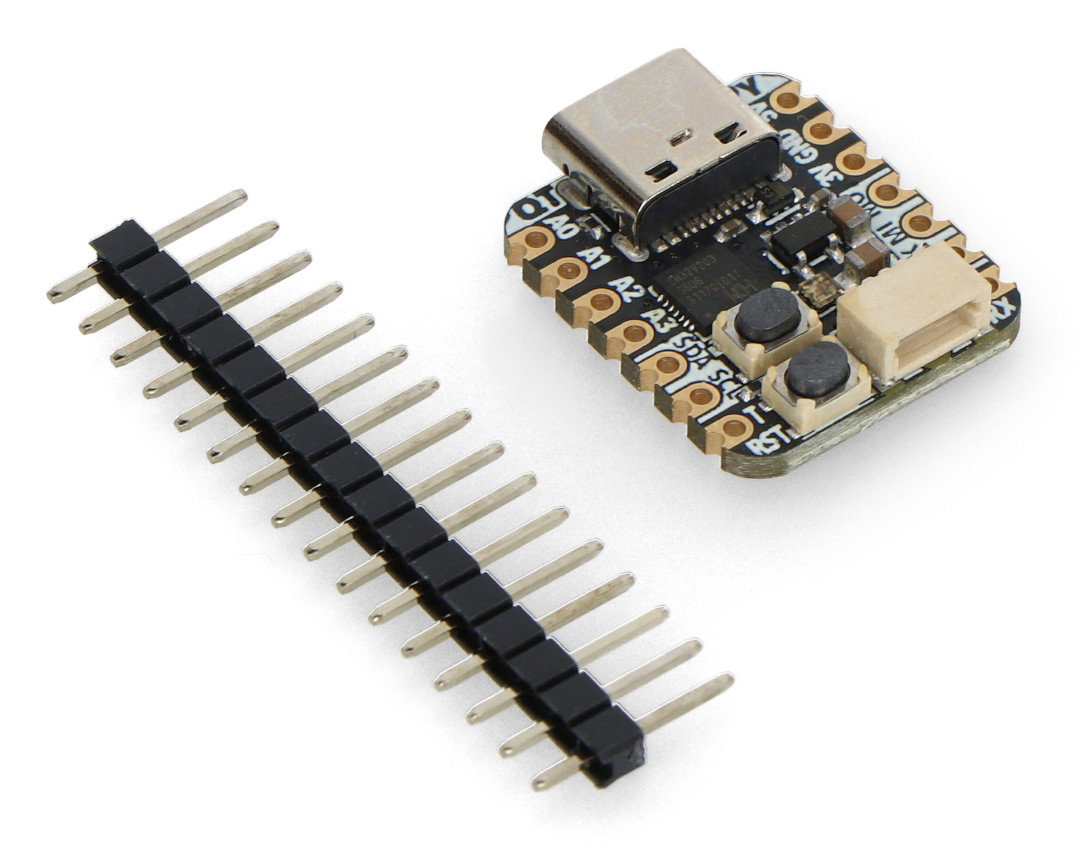
Elements included in the set.
Useful links
| Name | Value |
|---|---|
| UC - Microcontroller | CH32V203G6 |
| UC - Core | 32-bit RISC-V |
| UC - Flash | 32 kB |
| UC - RAM | 10 kB |
| UC - Digital pins | 10 |
| UC - freq | 144 MHz |
| UC - USB | USB C |
| UC - I2C | yes |
| Width | 7.8 cm |
| Height | 12 cm |
| Depth | 1 cm |
| Weight | 0.004 kg |
 GLS
Shipping in 24 hours
from €8.07
GLS
Shipping in 24 hours
from €8.07
 Raben - pallet delivery
Delivery in 3–5 days, no inside delivery
from €96.75
Raben - pallet delivery
Delivery in 3–5 days, no inside delivery
from €96.75
The full delivery terms are on the page Delivery and payment.
30 days to return, without giving a reason
If the product does not meet your expectations, you have 30 days from receiving the parcel to withdraw from the contract. The product only has to be complete. The right of return belongs to consumers (a purchase unrelated to business activity).
Complaints
If the product turns out to be faulty, you can make a claim under the guarantee or the statutory warranty. We handle claims without delay, at the latest within 14 working days of receiving the report together with the goods.
Be the first to ask a question about this product!
Instructions and documents
GPSR data
Product information
This product is a component intended for further assembly or prototyping. It is not a finished product within the meaning of the product safety regulations.
Products from the same category
See all