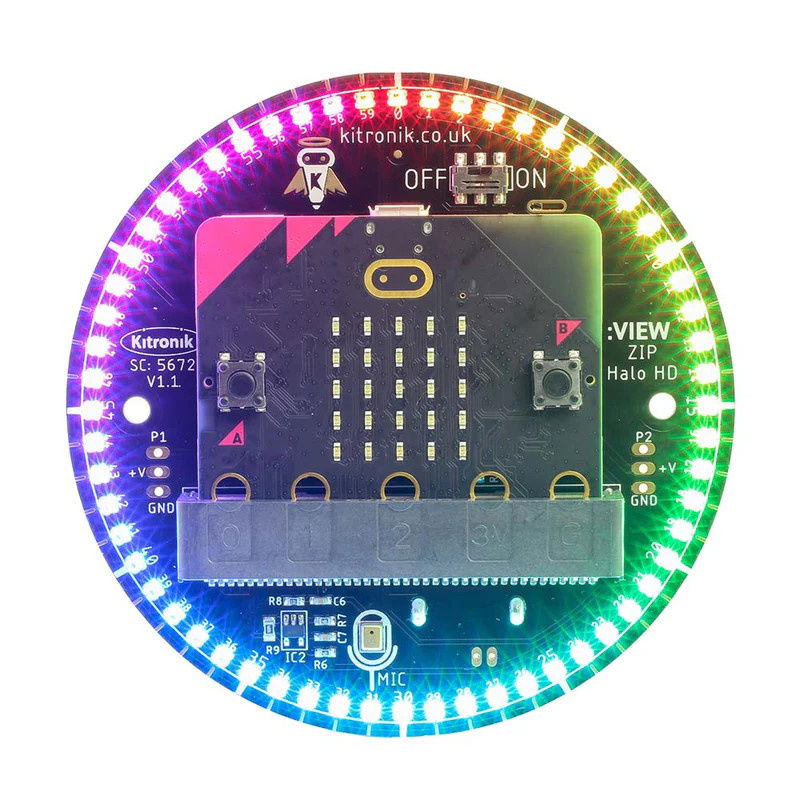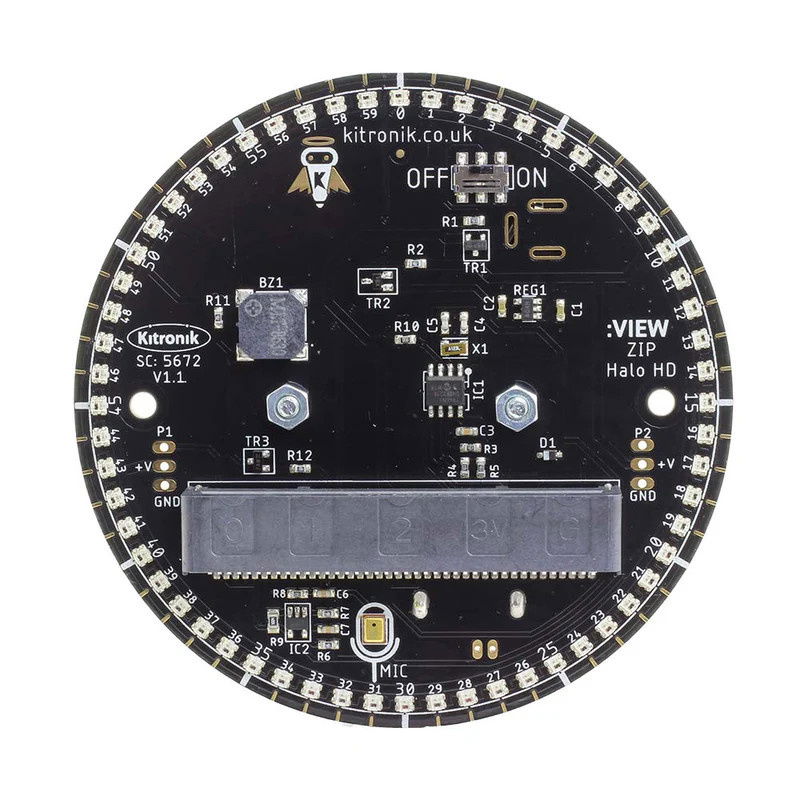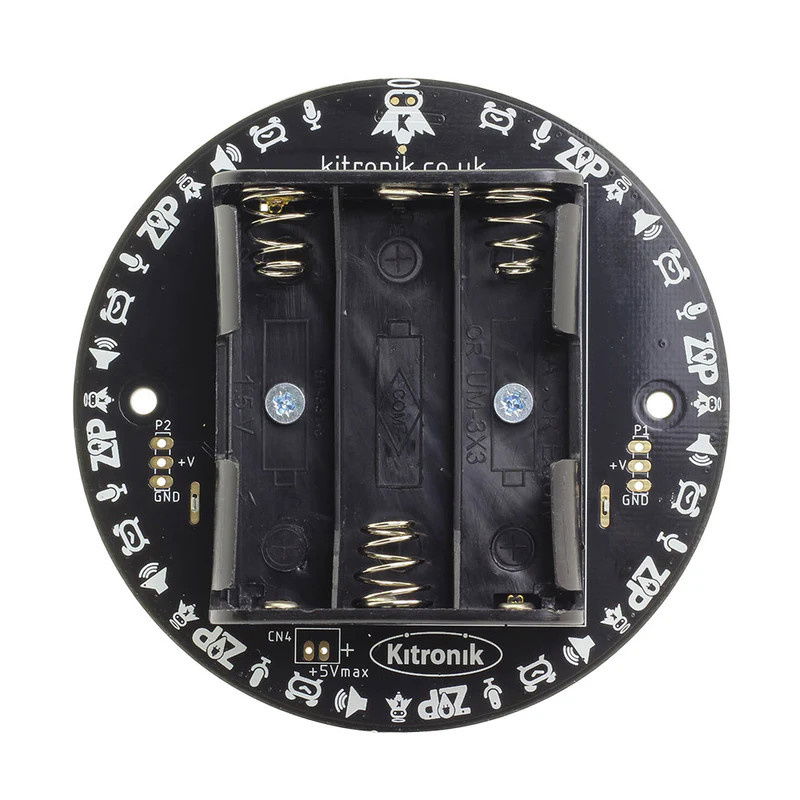












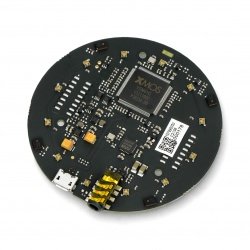
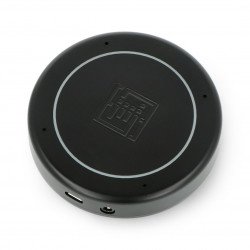

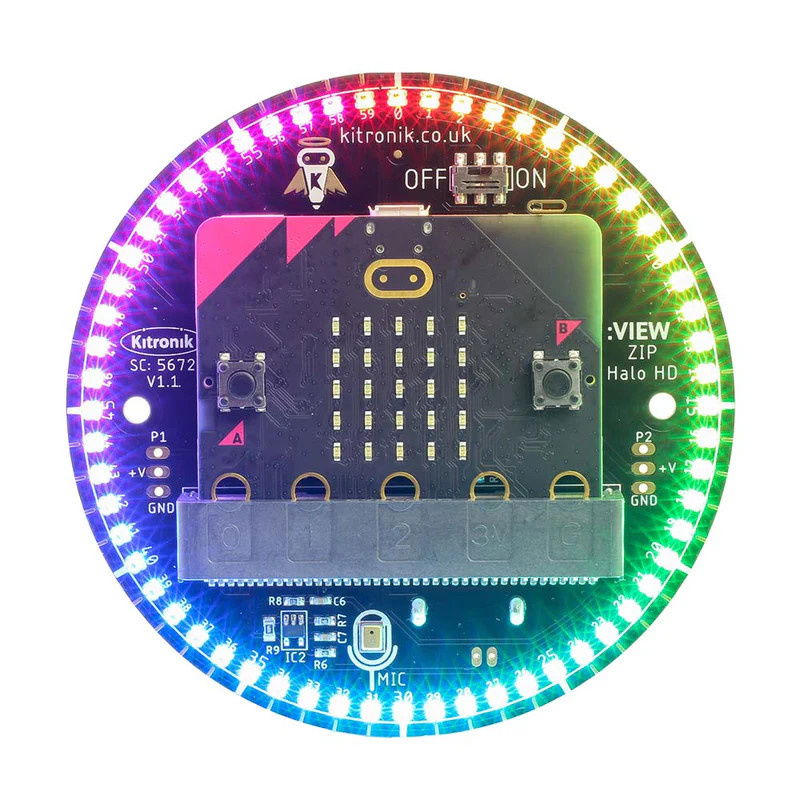


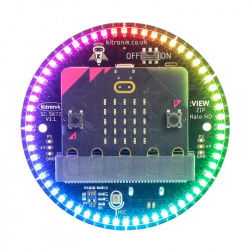
Round board for micro:bit module equipped with 60 addressable RGB LEDs, RTC circuit, 3 AA battery holder, MEMS microphone, buzzer and additional I/O ports. The diameter of the board is 87 mm.
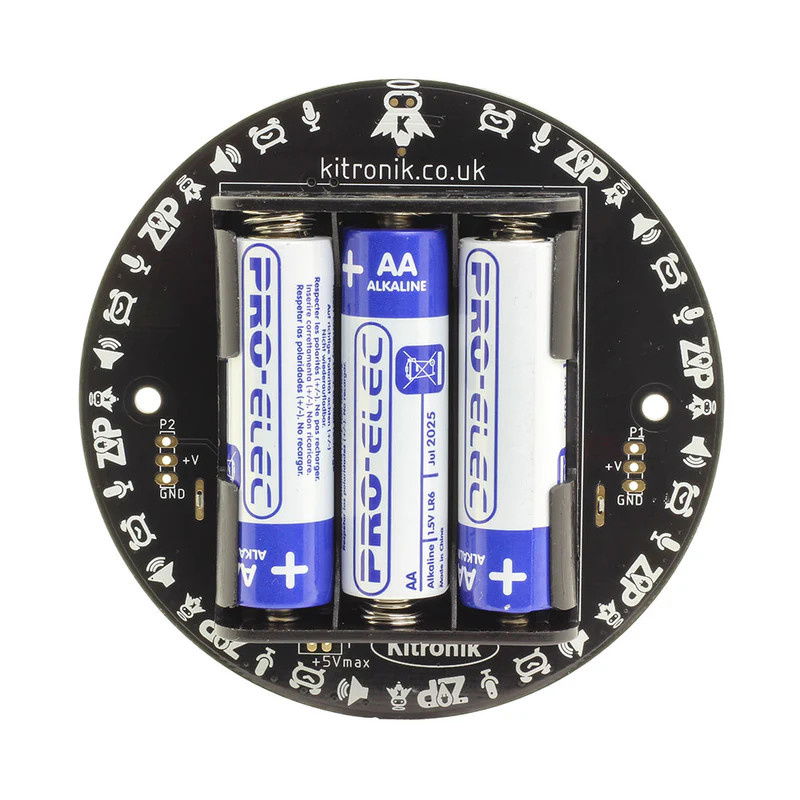
A round board for the micro:bit module equipped with 60 addressable RGB LEDs. It also has P1 and P2 pins in a standard 2.54 mm pitch, a MEMS microphone for detecting sounds and a piezo buzzer for making sounds. The board also includes a real-time RTC system controlled by the I2C line of the micro:bit module. The board has 2 M3 mounting holes. The module is powered by 3 AA batteries (not included).
Attention! The BBC micro:bit board is not included, but can be purchased separately. |
Kitronik has created custom blocks for the Halo HD ring that you can use in MakeCode. To add these blocks, go to makecode.microbit.org and create a new project. Under the "Advanced" section, click "Extensions." Then, in the search box, type "Halo HD," and click the title to import them into MakeCode. The blocks will be divided into three categories: ZIP LED, microphone, and clock. More information about the MakeCore editor and writing code with MicroPython can be found in the documentation .
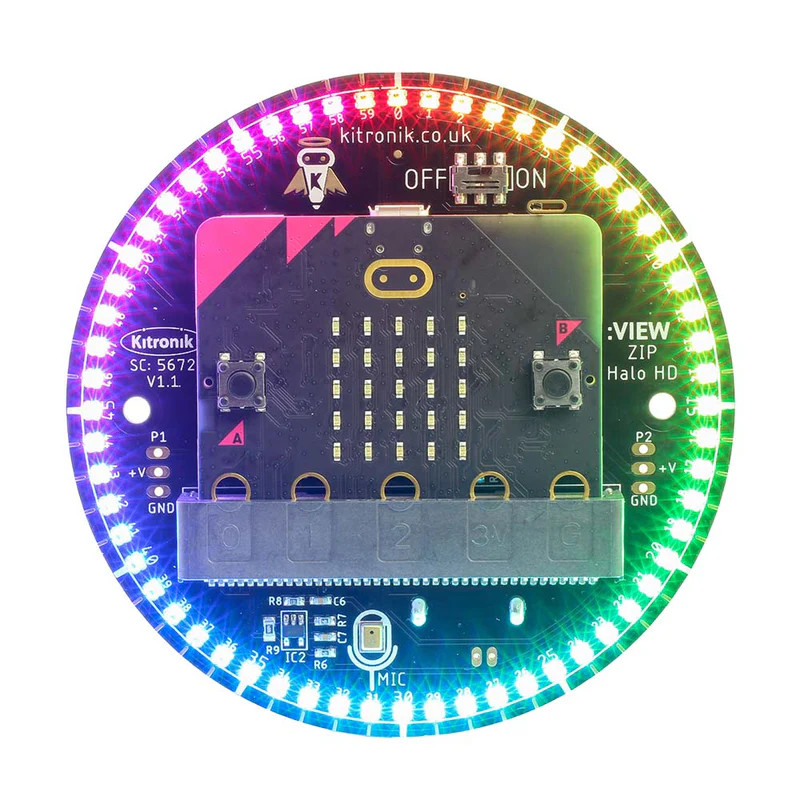 ZIP Halo HD RGB LED ring, micro:bit module can be purchased separately.
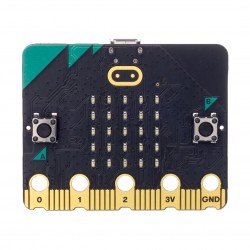
Product compatible with BBC micro:bit |
| Comparison | ||
|---|---|---|
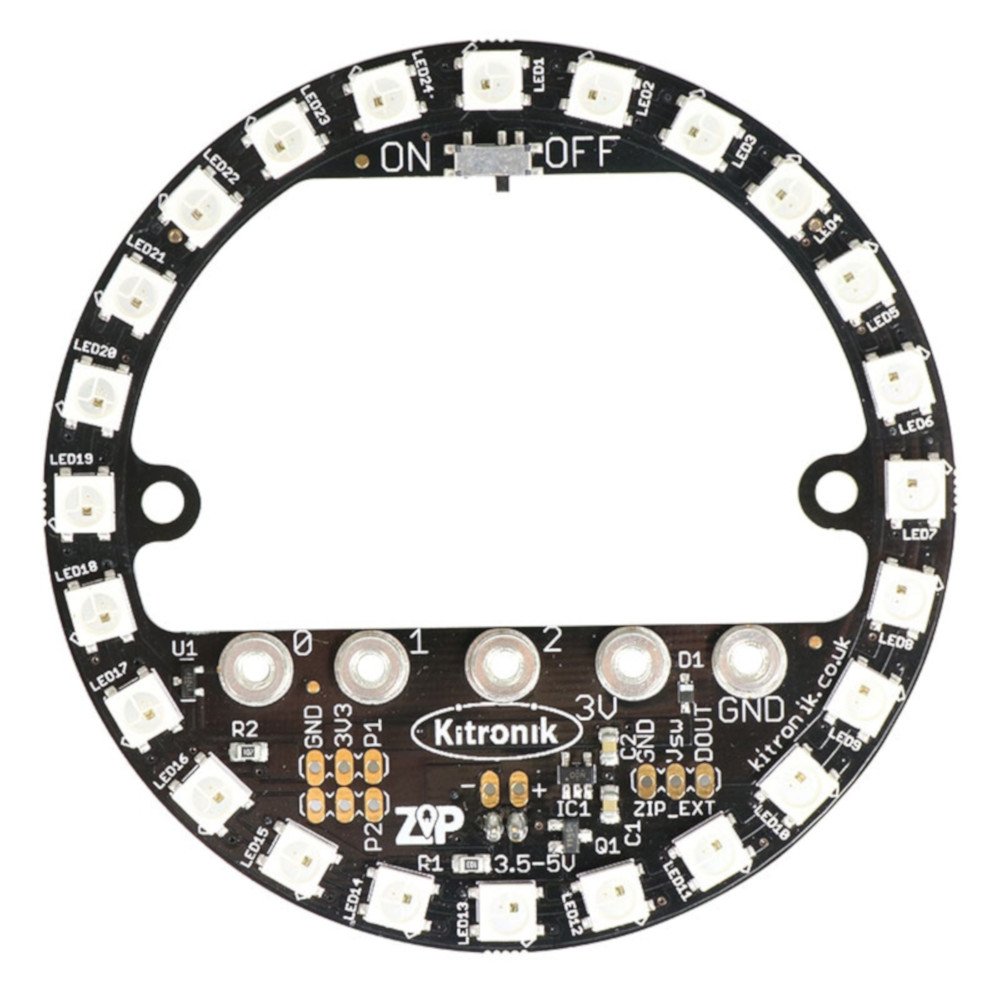 | 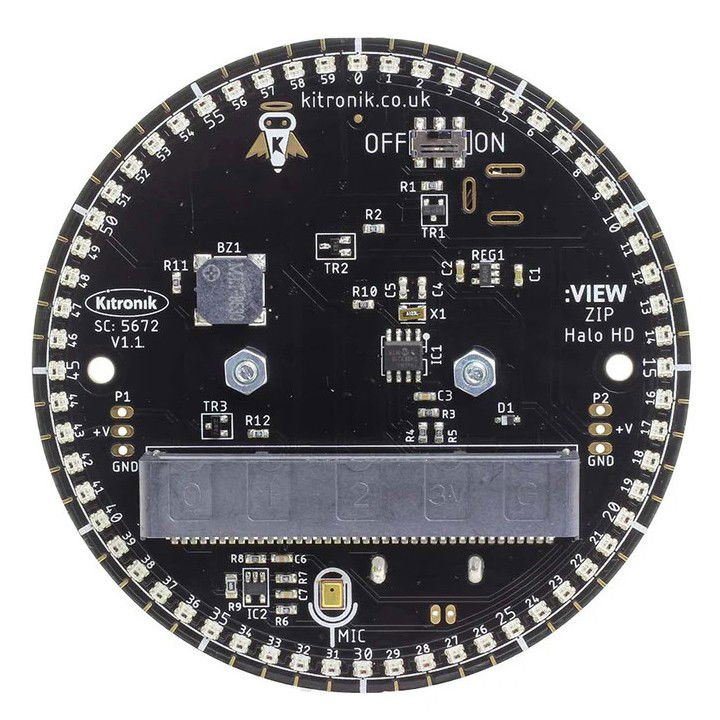 | |
| Model | ZIP Hello | ZIP Hello HD |
| Number of diodes | 24 | 60 |
| Screw connector for micro:bit | ✓ | x |
| Socket for micro:bit | x | ✓ |
| Power switch | ✓ | ✓ |
| Battery basket | x | ✓ |
| JST connector | ✓ | x |
| Real Time Clock (RTC) | x | ✓ |
| Buzzer | x | ✓ |
| Microphone | x | ✓ |
| Power regulator for micro:bit | ✓ | ✓ |
| I/O Expansion | ✓ | ✓ |
| ZIP LED Pads | ✓ | x |
| Mounting holes | ✓ | ✓ |
| Examples / Sources | ✓ | ✓ |
The ZIP Halo LED ring is built on the basis of RGB LEDs. Each of the diodes has a total of 256 brightness levels, thanks to which we can obtain over 16 million different color combinations. Built-in reverse polarity protection of the power source protects the module's driver from damage.
The RGB LEDs in the Kitronik 5672 module are connected to each other using a 3-wire bus. The individual RGB LEDs in this topology have a supply voltage (from 3.5 to 5.3V), ground (GND) and an input/output data bus (DIN/DOUT) connected. The control data is transmitted in 24-bit resolution and is fed to the first RGB LED in the connection. When the next data portion is received, the data portion preceding it is sent to the next RGB LED in the chain. The individual data portions are separated by short reset pulses.
Useful links |
| Voltage to | 3.5 V |
| Voltage from | 5.0 V |
| LED - color | RGB |
| LED - digital | yes |
| LED - LEDs | 60 |
| LED lens | clear |
| LED wavelength | RGB |
| Package width | 9.5 cm |
| Package height | 3 cm |
| Package depth | 11.5 cm |
| Package weight | 0.044 kg |
Be the first to ask a question about this product!
Country of Origin: United Kingdom
Manufacturer Contact Details: Kitronik Ltd, Unit 12a, Glaisdale Point, Glaisdale Parkway, Nottingham, UK. NG8 4GP. [email protected]
EU Marketer Contact Details: BOTLAND B. DERKACZ SP. K. Gola 25A - 63-640 Bralin