





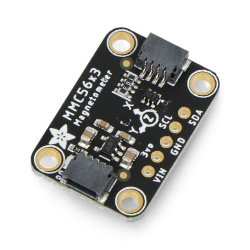










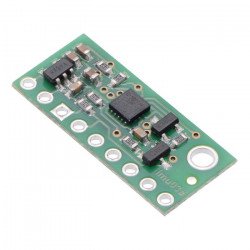
Product description: Sparkfun GPS module ZOE-M8Q - Qwiic
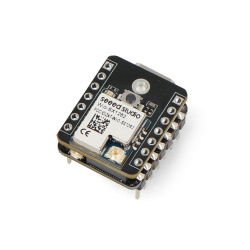
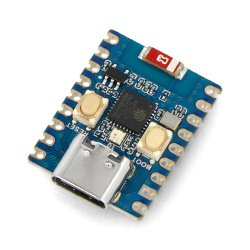
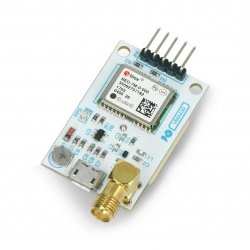
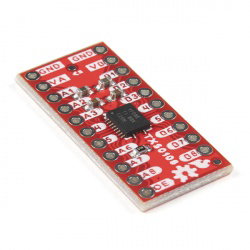
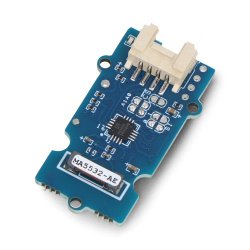
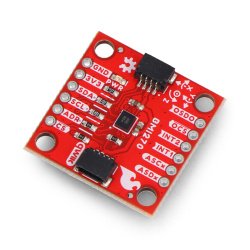
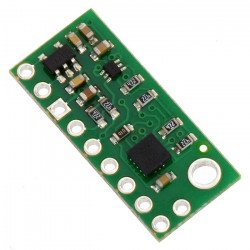
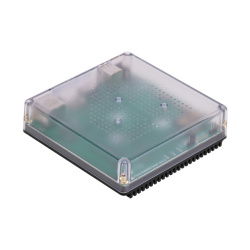
ZOE-M8Q is a highly accurate, miniature tile with a72 channel GNSS receivercapable of receiving signals fromGPS, GLONASS, BeiDouandGalileo. It communicates viaSPI / I2CorUART. It has aQwiicconnector. There is a rechargeable RTC battery on the board, which reduces time-to-first-fix. Power supply voltage is3.3 V.

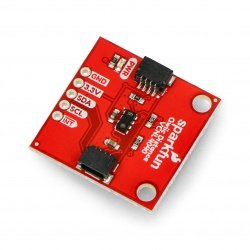
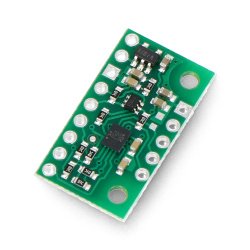
On the back of the board there are three jumpers: I2C used when using multiple I2C devices. The LED jumper deactivates the power LED when connected. The SPI jumper activates SPI communication after a short circuit, by default the module works in communication with I2C.
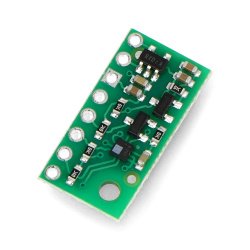
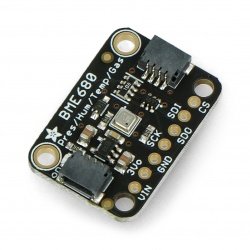
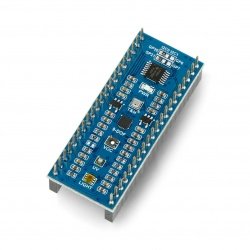
GPS module outputs ZOE-M8Q
The module communicates via the I2C / SPI or UART interface. In addition, the module has a Qwiic connector for direct connection toQwiic overlays.

| Pin | Description |
|---|---|
| CS | SPI - Chip Select. |
| CLK | SPI bus clock line. |
| GND | The weight of the system. |
| NC |
Not connected. |
| 3V3 |
Supply voltage 3.3 V. |
| MOSI |
SPI bus data line. |
| MISO |
SPI bus data line. |
| NC |
Not connected. |
| NC |
Not connected. |
| TXO |
UART data line. |
| RXI |
UART data line. |
| 3V3 |
Supply voltage 3.3 V. |
| NC |
Not connected. |
| GND |
The weight of the system. |
| SCL |
I2C bus clock line. |
| SDA |
I2C bus data line. |
| INT |
External interruption. |
| RST |
Reset the system. |
| PPS |
Number of pulses per second (Pulse Per Second). |
| SFBOOT |
Safe booting (Safeboot). |
SparkFun GPS module specification
- Number of GPS receiver channels: 72
- Horizontal accuracy: 2.5 m
- Maximum update frequency: 18 Hz
- TTFF (Time-To-First-Fix)
- Cold: 26 sec
- Hot: 1 s
- Maximum height: 50 000 m
- Maximum G: ≤ 4
- Maximum speed: 500 m/s
- Speed accuracy: 0.05 m/s
- Course accuracy: 0.3 degree
- The accuracy of the time pulse: 30 ns
- Power supply: 3.3 V
- Power consumption: ~29 mA (GPS + GLONASS tracking)
- Configurable software:
- Geofencing
- Odometer
- External Interrupt
- Pin Control
- Low power mode
- many more!
- Supports NMEA, UBX and RTCM protocols via UART or I2C interfaces
Useful links |