






- Sale
- SPECIAL OFFERS
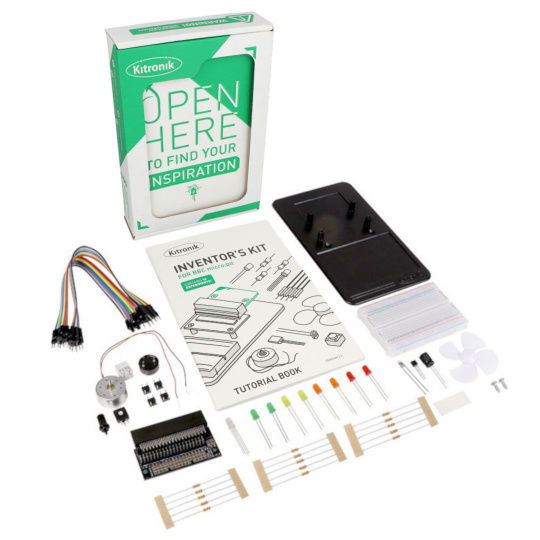


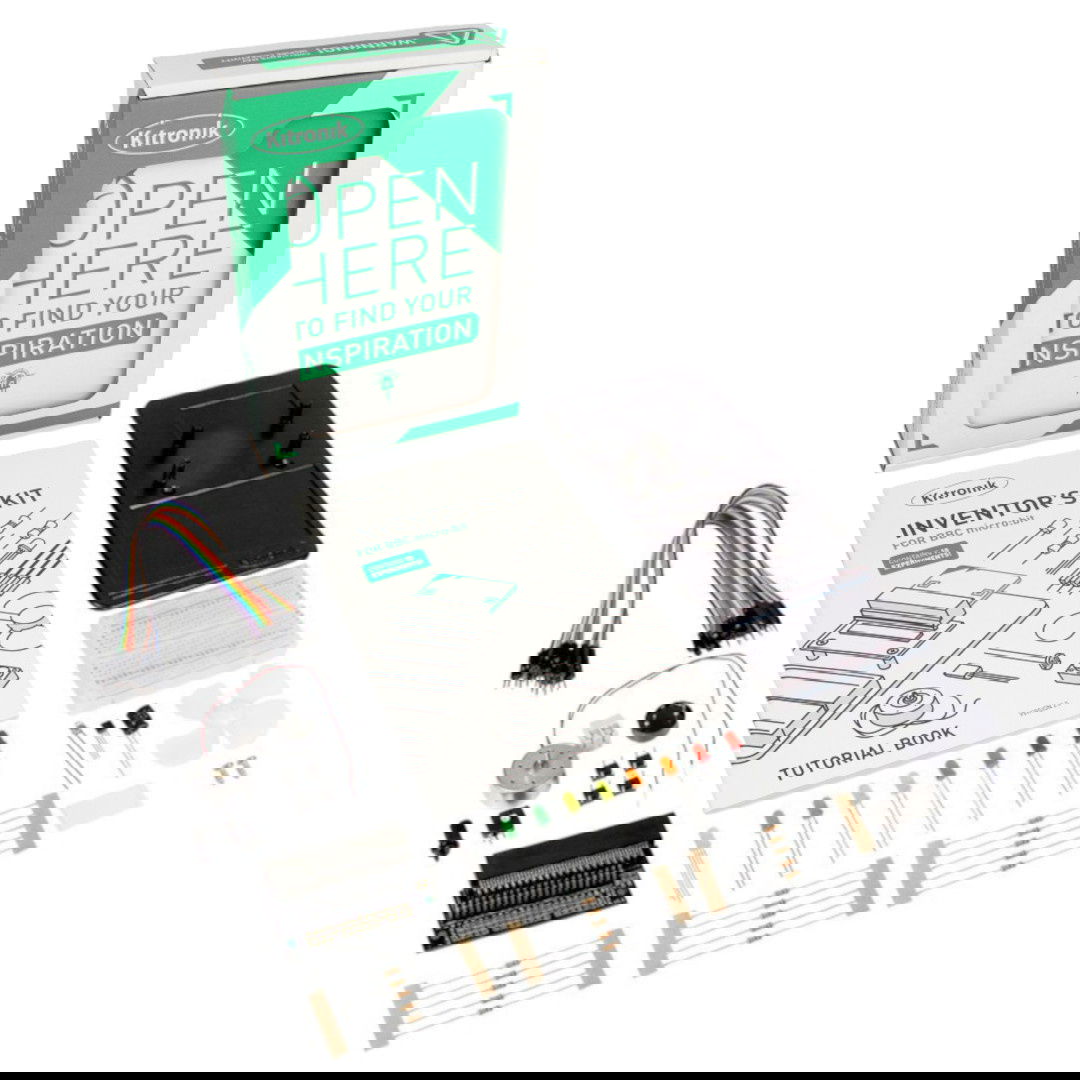
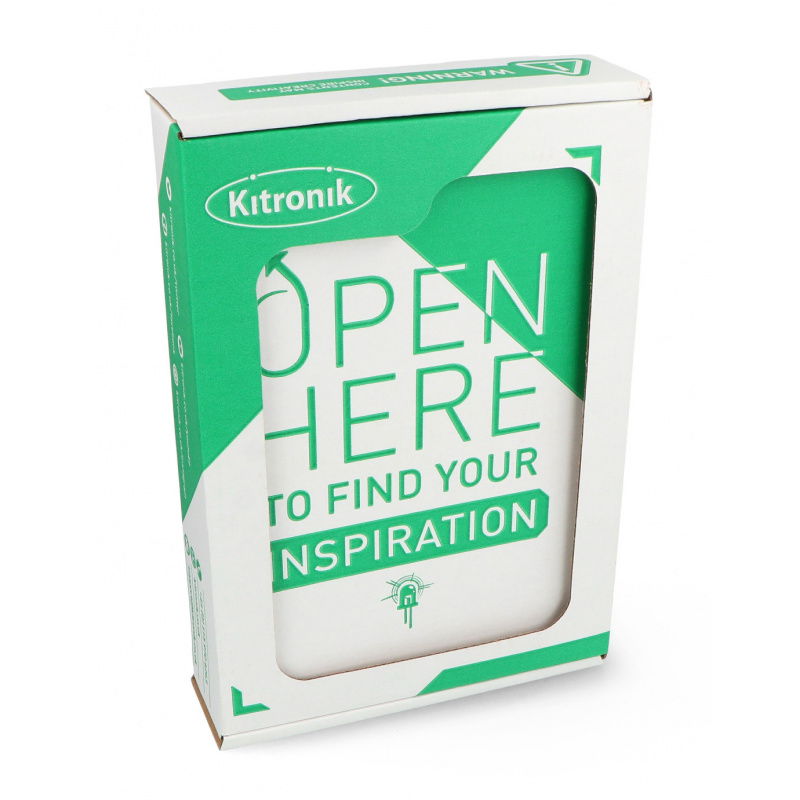
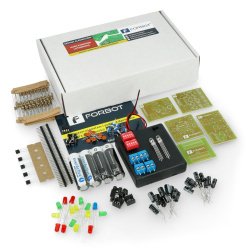
A set of electronic components to help you get started with the BBC micro:bit . The set includes LEDs, a motor, connecting cables, buttons, resistors, and more. The set allows you to perform 10 experiments included in the accompanying book. The BBC micro:bit module is not included in the set.
A set of electronic components that make it easy to start working with the BBC micro:bit . The set includes LEDs, a motor, connecting cables, buttons and resistors, thanks to which we can perform 10 ready-made experiments described in the book. The book contains information that illustrates in a simple and accessible way how to use the elements included in the set and how to program the BBC micro:bit module.
Attention! The kit does not include a micro:bit BBC. The device can be purchased separately . |
| List of experiments | |
|---|---|
| 1 | " Say Hello to the BBC micro:bit " - An introduction to using the BBC micro:bit. |
| 2 | " Using a Light Sensor & analog inputs " - Using a light sensor and analog inputs. |
| 3 | " Dimming an LED using a potentiometer " - Dimming an LED using a potentiometer. |
| 4 | " Using a transistor to drive a motor " - Controlling a motor using a transistor. |
| 5 | " Using the accelerometer to control motor speed " - Controlling motor speed using the accelerometer. |
| 6 | " Setting the tone with a piezo buzzer " - Adjusts the buzzer tone. |
| 7 | " Wind Power " - Measurement of wind force. |
| 8 | " Making a game using the compass " - Creating a compass. |
| 9 | " Capacitor charge circuit " - Capacitor charging circuit. |
| 10 | " Using a RGB LED " - Using an RGB LED. |
| 11 | " Making a pedestrian crossing " - Creating a pedestrian crossing. |
| 12 | " Making a random dice " - Creating a dice. |
 The set does not include a BBC micro:bit module. It must be purchased separately.
| Function | Inventor's Kit | |
|---|---|---|
| Number of elements | 50+ | 20+ |
LEDs | Yes | Yes |
| Buzzer | Yes | Yes |
| Engine | Yes | NO |
| Buttons | Yes | NO |
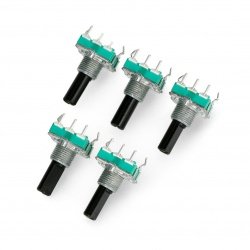
| Potentiometer | Yes | NO |
| Resistors | Yes | Yes |
| Transistor | Yes | NO |
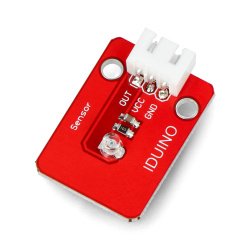
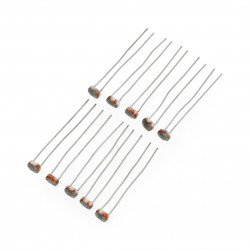
| Light sensor | Yes | NO |
| Capacitor | Yes | NO |
| Prototype board | Yes | NO |
| Adapter for micro:bit | Lead Expander | Adapter for contact board |
| Contact plate | Yes | Yes |
| User Guide | Yes | Yes |
| Storage container | NO | Yes |
| Requires assembly | Yes | NO |
| Number of projects | 12 (10 in the guide, 2 on the page) | 5 |
| Possibility of expansion | Yes | NO |
The Kitronik Inventor's Kit is a great option for anyone who would like to learn about the world of electronics in a practical way. All experiments that can be performed using this kit have been designed with hobbyists in mind, as well as those who link their professional future with electronics. Based on the exercises included in the Inventor's Kit, we will learn, among other things, how to measure non-electric physical quantities, as well as what are the methods of controlling electric motors.
Electronic systems, both those found in devices that we deal with every day and in automated machines and robots for professional use, use exactly the same laws and principles. What's more, many of the individual components on the PCBs of these devices overlap with each other. By performing experiments from the Inventor's Kit, you can learn in a miniature version the principle of operation of various electronic systems that we can very often encounter indirectly in everyday life!
<Useful links |
| Package width | 23.2 cm |
| Package height | 16.5 cm |
| Package depth | 4.8 cm |
| Package weight | 0.365 kg |
Be the first to ask a question about this product!

Country of Origin: United Kingdom
Manufacturer Contact Details: Kitronik Ltd, Unit 12a, Glaisdale Point, Glaisdale Parkway, Nottingham, UK. NG8 4GP. [email protected]
EU Marketer Contact Details: BOTLAND B. DERKACZ SP. K. Gola 25A - 63-640 Bralin