



New arrivals
On Sale


Filament dryers
Filament dryers are devices that maintain the "condition" of 3D printing material. Their task is to remove moisture from the filament and maintain it in a dry, stable environment. This ensures predictable operation of the 3D printer, ensures smooth layer bonding, and helps prevent bubbles, popping, stringing, and dull, brittle prints. This category includes both classic heated dryers and the advanced AMS 2 Pro and AMS HT systems from Bambu Lab. Dry boxes are also available, primarily designed to maintain the drying process for longer.
Products


See also
How does a filament dryer work?
A typical filament dryer combines a heated chamber with controlled air circulation. The filament is placed in a closed container where the temperature is maintained at a constant level and moisture is gradually removed from the plastic. Unlike a domestic oven or radiator, the dryer operates within a temperature range safe for the material, and sensors and electronics ensure the filament doesn't overheat or deform.
Regardless of the design, all these devices have a common goal: to provide stable conditions for the filament, limit the influence of ambient humidity and give you repeatable printing results, especially with hygroscopic materials such as nylon, PA, PETG, TPU or filaments with carbon and glass fiber.
Compact desktop dryers for the home workshop
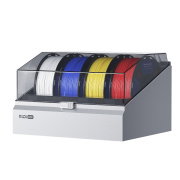
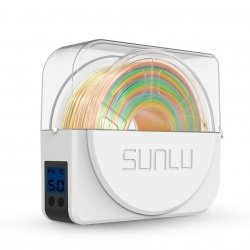
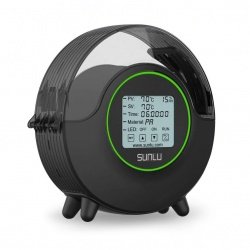
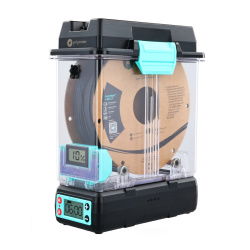
The Sunlu FilaDryer S1 Plus or S2, Creality Space Pi, or Creality Filament Dry Box are great choices for users who print regularly. These devices are similar in size to a single spool of filament. You place them next to the printer, insert a roll, set the time and temperature, and the electronics take care of the rest.
Many models allow not only pre-drying but also printing directly from the dryer. The filament exits through a special opening, ensuring the material remains dry at all times. This is especially useful for long prints made of nylon, PA-CF, PETG, or TPU, which can absorb moisture in literally hours.
High-capacity dryers – when you work with several spools at the same time
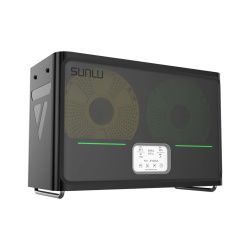
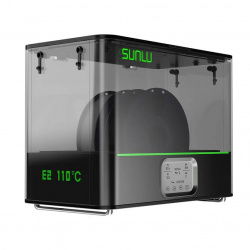
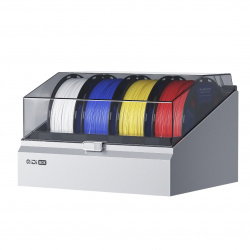
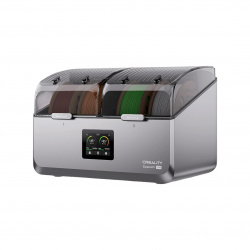
For large studios and users who keep several actively used materials in stock, dryers with larger capacities, such as the Sunlu FilaDryer S4 or Creality Space Pi Plus, have been developed. These devices can hold two or even several spools at once, allowing you to have an entire "warehouse" of filaments ready for use. In practice, this means you can:
- dry several different materials before a large project,
- prepare several colors of PLA or PETG for serial prints,
- always have dry nylon, PA-CF or PC at hand without having to dry each roll separately.
These types of dryers typically offer an advanced air circulation system, even heat distribution throughout the chamber, and advanced controls.
AMS 2 Pro and AMS HT systems – dryer connected to an intelligent filament storage
A separate category of filament dryers are the AMS 2 Pro and AMS HT systems from Bambu Lab. These are complete, intelligent filament storage systems that combine:
- active drying of the material,
- hermetic storage in controlled humidity,
- automatic feeding of filament to the printer,
- managing multiple materials and colors simultaneously.
AMS modules support several spools simultaneously, and by connecting multiple units you can build a system that stores and feeds even a dozen or several dozen different materials.
The AMS 2 Pro handles most popular filaments perfectly, providing a dry, stable environment and automatic background drying. The AMS HT goes a step further. Its design and higher operating temperatures are optimized for strictly engineering materials that require particularly intensive drying.
Storage containers and boxes – maintaining the drying effect
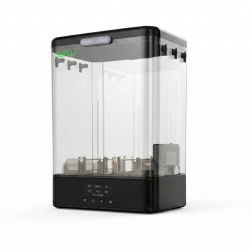
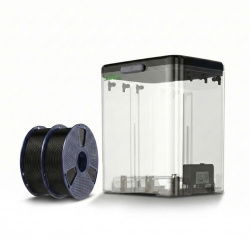
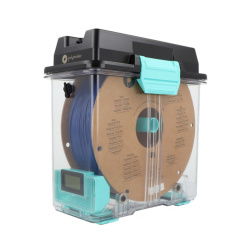
The category also includes products whose primary purpose isn't active drying, but rather the safe storage of already-dried filaments. A good example is the PolyDryer Box. This storage container helps maintain low humidity around the material. These types of solutions are useful in situations where:
- you use the dryer periodically and then want to "keep" the effect for longer,
- you have some less frequently used filaments that you don't want to dry every time,
- You care about order and protecting your rolls from dust and accidental damage.
Dry boxes complement traditional dryers. You dry the filament in an active dryer and then store it in an airtight container to prevent it from absorbing moisture from the air again.
Why are filament dryers used and what are the benefits?
Damp filament is one of the most common causes of 3D printing problems. Water trapped in the material turns into steam during heating, which shoots out of the nozzle, leaving bubbles, a rough surface, and stringiness. Layers don't bond properly, leaving components brittle, less precise, and less well-aligned. A filament dryer eliminates this problem at the source.
The most important benefits for the user include better surface quality with fewer pores, threads and impurities on the model, greater mechanical strength of the prints, especially from engineering materials, repeatability, i.e. a situation in which the same model printed today and in a month looks the same, fewer nozzle clogging and problems with filament feeding, as well as time and material savings thanks to fewer failed prints, corrections and rework.