



New arrivals




On Sale
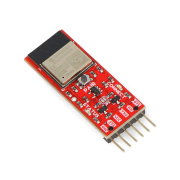
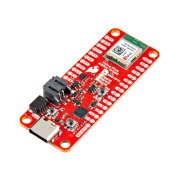

Magnetometers
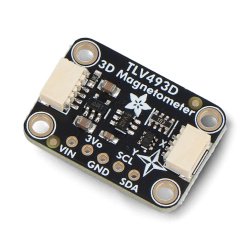
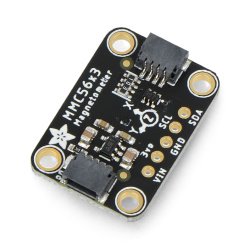
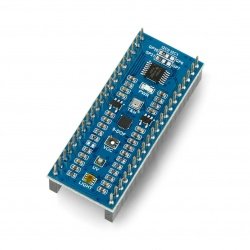
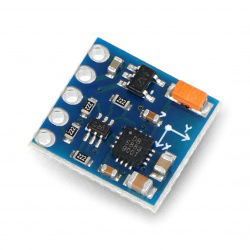
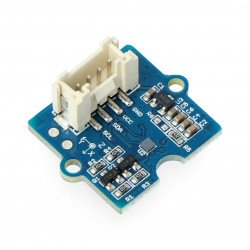
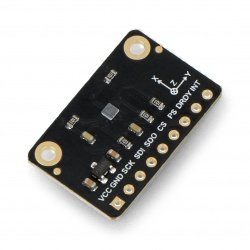
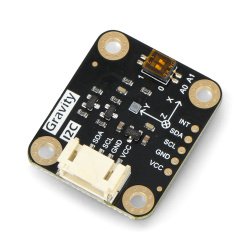
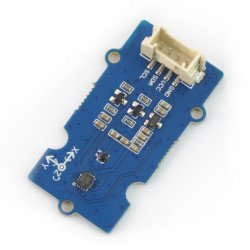
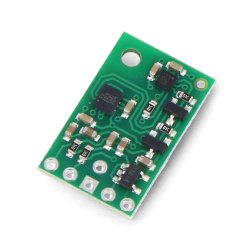
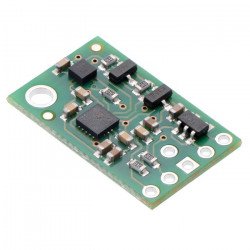
Magnometer - In order to determine the coordinates and orientation of an object, sensor devices are often used. Such devices include gyroscopes, accelerometers and magnetometers. Despite having a similar application area, they each measure different quantities. By combining them into one device, you get a powerful tool to help determine the location and direction of movement of, for example, a drone or robot. Appropriately designed electronic circuitry performing these functions can be found in many variants in the Botland shop offer.
Products


See also
What is a magnetometer and how does it work?
Among the MEMS sensors included in the Botland store's offer, you will find devices with a built-in gyroscope, accelerometer, and a magnetometer - a device used to measure the magnetic field intensity, most often based on the Hall effect or magnetoresistance phenomenon. The device can be used, for example, to measure the earth's magnetic field (proton magnetometer) or to detect metals. In a Hall magnetometer, if we connect a voltage source to a metal plate, we cause a current to flow between the two surfaces of the plate. In turn, the Gaussian vibration magnetometer works on the principle of vibrations of a small magnet. The name of the device comes from its inventor, CF Gauss. It was the first device to measure absolute magnetic intensity.
Magnetometer – a device for measuring the magnetic field
When we bring a source of magnetic field (e.g. a magnet) close to a plate powered by direct voltage, we distort the electron flow path on the plate surface. Then, one side of the plate will be occupied by electrons and the other by protons. In this way we will observe changes in the magnetic field.
After connecting a voltmeter with a readable display between both surfaces of the board, we will be able to read the voltage, the value of which depends on the intensity of the magnetic field and its direction of influence in space. A magnetometer is a device used to measure the magnetic field of various elements (it can be used to measure the magnetic properties of matter).
Additional information about magnetic field measurements
The magnetoresistive concept of the magnetometer uses materials that are sensitive to the magnetic field - an iron-nickel alloy is often found. Such materials change their resistance when exposed to a magnetic field, which is why magnetometers are used to measure the magnetic field.
The MEMS sensors available in our offer are also equipped with an I2C interface, thanks to which you can easily connect your magnetometer to work with, for example, Arduino or Raspberry Pi .
Magnometer in the phone - MEMS gyroscopes - small and practical
If you want to easily develop your robot design in terms of its balance stability when stopping, moving or standing still on an uneven surface. An excellent solution will be the use of a small MEMS gyroscope which, by measuring the angular deviation of the robot from the equilibrium position, will transmit information to Arduino, which, by controlling appropriate motors and servomechanisms, will set the robot in the correct position, preventing it from unintentionally tipping over. A magnetometer is used in many electronic projects.
And how is angular velocity measured by a MEMS gyroscope? The sensor built into these devices has dimensions not exceeding the diameter of a human hair and works based on the phenomenon of mechanical resonance. When the gyroscope is rotated, the MEMS sensor converts this movement into a very low voltage signal, proportional to the rotation angle. Then, this signal is amplified and transmitted to the microcontroller, where further decisions are made via the program depending on the read voltage value.
Accelerometer - easy measurement of acceleration
Accelerometers are devices whose task is to measure acceleration - a quantity that describes how quickly an object's speed changes over time. Accelerometers are helpful tools in measurement systems for detecting vibrations of the tested object and in navigation systems. The accelerometer detects the static and dynamic effects of acceleration.
Static forces include gravity, and dynamic forces include vibration and displacement. Accelerometers can measure acceleration in one, two, or three axes of a coordinate system, but as with gyroscopes, the three-axis solution is at the forefront.
Construction of an accelerometer
The structure of a typical accelerometer includes microscopic electrodes forming a capacitor suspended on springs. Under the influence of acceleration, the electrodes move relative to each other, changing the capacitance between them - the speed of these changes makes it possible to determine the acceleration of the object on which the accelerometer works.
There are also piezoelectric accelerometers in which a suitable material, under the influence of mechanical influence, generates an electric charge on its surface - this phenomenon is used, among others, when performing seismic measurements.
Magnometers - FAQ
The magnetometer belongs to the group of MEMS sensors. It is used to precisely measure the magnetic field, or more precisely, its intensity. Some magnetometers operate on the principle of the Hall effect, while others use the phenomenon of magnetoresistance. Magnetometers have various applications. They can be used, among others: for detecting metals or for measuring magnetic fields, e.g. earth. A specific type of sensor is a Gaussian magnetometer, which uses the vibrations of a very small magnet.
When choosing a magnetometer , you should first of all take into account the measurement range, type of communication interfaces, FSR, measurement resolution, accuracy and supply voltage range and additional sensors. Other important parameters are measurement accuracy, e.g. ±0.5° and total RMS noise. Selected magnetometer models are mounted on a printed circuit board equipped with Qwiic connectors.