



New arrivals
On Sale


3D PRINTING
3D printing is a term for various production techniques in which a product is built up layer by layer. A 3D printer adds material to an object until the desired shape is reached. This is a form of additive manufacturing which is an excellent alternative to sub-additive manufacturing. A great benefit of 3D printing is the fact that it generates less waste of material. This production technique is becoming more and more popular around the world, and thus, now you can buy a 3D printer without spending a fortune. The capabilities of such devices are diverse, and a wide variety of materials can be used for this kind of production, including plaster, gold, bioplastic, ceramic, photopolymer, wood, titanium, ABS, sand, PLA, polyester and epoxy. 3D printing is also used for the production of functional parts. It makes it possible to produce a real object; however, it is necessary to draw it on a screen using a computer-aided design (CAD) tool first. Then the 3D file is sent to a specific software which cuts it in slices and sends to the printer. Eventually, by using deposits or other material, the 3D printer creates layer by layer to get the final product.
Subcategories
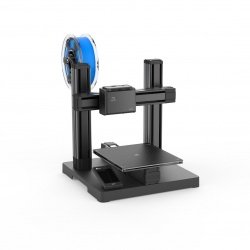 3D printers
(76)
3D printers
(76)
 Filaments
(828)
Filaments
(828)
 Accessories for 3D printers
(270)
Accessories for 3D printers
(270)
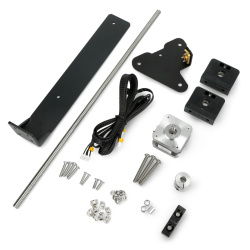 Replacement parts for 3D printers
(123)
Replacement parts for 3D printers
(123)
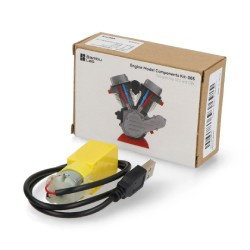 Creative kits for 3D projects
(1)
Creative kits for 3D projects
(1)
 Filament dryers
(15)
Filament dryers
(15)
 Postprocessing and filament merging systems
(21)
Postprocessing and filament merging systems
(21)
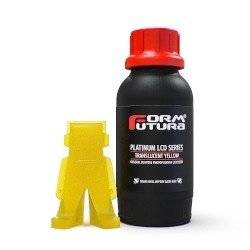 Resins for 3D printers
(1)
Resins for 3D printers
(1)
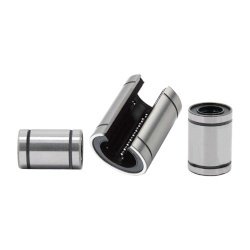 Components for 3D printers construction
(45)
Components for 3D printers construction
(45)
 3D scanners
(29)
3D scanners
(29)
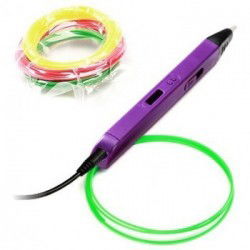 3D Pens
(10)
3D Pens
(10)
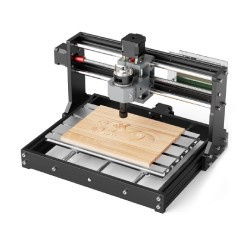 CNC
(233)
CNC
(233)
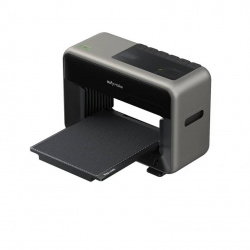 UV printing
(3)
UV printing
(3)
Products

See also
3D printing is the future of prototyping
The term "3D printing" covers a number of different technological processes in which material is combined or solidified under computer control in order to create a three-dimensional object from the material added by an appropriate system. It can be available in various forms, such as liquid particles, powder grains, resin or molten plastic. One of the key advantages of 3D printing is the ability to produce very complex shapes or geometries, and the prerequisite for producing any 3D printed part is a digital 3D model or CAD file. This greatly facilitates the design and rapid production of elements - that is why 3D printers are often used for rapid prototyping of mechanical elements.
History of additive methods
The idea of 3D printing first appeared in the 1970s, but it was only in the late 1980s that the first FDM printers appeared, which are still popular today. In the 1990s, 3D printing techniques were considered only suitable for producing functional (with some limitations) or visual prototypes. At that time, rapid prototyping was the only application of 3D printing systems. Nowadays, the precision, repeatability and range of materials used in 3D printers have increased to such an extent that some printing processes are considered more profitable as an industrial production technology than the classic methods previously used - especially in small series production. Thanks to this, the concept of additive manufacturing has permanently entered the industrial vocabulary.
Different types of 3D printing technology
There are many different 3D printing processes. They can be grouped into several categories. The main differences between the processes lie in the way the layers are deposited. The most popular methods use melting the material to extrude the layers. The most popular method of this type - FDM - produces an object from the so-called molten filament, which immediately hardens behind the nozzle, creating layers. Powder bed fusion techniques include several processes that can be used with a wide range of materials and structures. These techniques include selective and direct laser sintering. These methods offer higher resolutions than FDM, but are much more expensive. Other methods harden liquid materials using various advanced technologies such as stereolithography or photopolymerization. Such systems spray a layer of photopolymer onto the object and selectively harden it with UV light. Using multiphoton photopolymerization, it is easy to produce objects even below 100 nm, but these methods are difficult and expensive.
3D printing - FAQ
3D printing ✔️ is the opposite of subtractive manufacturing, which involves cutting or hollowing out a piece of metal or plastic using a milling machine or similar devices. 3D printing allows you to produce complex shapes using less material than traditional production methods.
The type of 3D printing material depends on the technology the 3D printer uses. And there are plenty of them: plastics ( filaments )✔️, powder materials, resins , metals and alloys, carbon fiber, graphite and graphene, nylon, paper and even food products!
We have posted a comprehensive guide in the 3D Printing section of the Botland Blog. The filaments are made of thermoplastic materials. Some of them are synthesized from start to finish based on artificial substances, others, such as the most popular PLA (polyactide) filaments , are made from natural raw materials.
When it comes to choosing 3D printing software, it is worth choosing Autodesk Fusion 360, Autodesk AutoCAD, Ultimaker Cura, TinkerCAD, SketchUp or MeshLab. You can also start with Morphi. It's a 3D software development app developed by a New York startup and intended for use on tablets by beginners.
The three fundamentals of 3D printing costs are, of course, the 3D printer itself, the cost of the material, usually a spool of filament, and electricity consumption. We can add additional accessories. You can read more about 3D printing costs and how to reduce them on Botland Blog .
First, it is worth learning the basics - what 3D printing is and how individual parts of a 3D printer work, including the frame. Once we have a working 3D printer and filament, it's time for design files. We download ready-made designs from the Internet, run the machine and print.
Take a soft cotton cloth and apply a small amount of liquid polishing paste to it. Then apply this to the 3D print surface in small circles until all the paste is rubbed in. After the process is completed, the surface will be slightly smoother, but these are just the basics. You can find more ready-made solutions in the 3D printing postprocessing category.