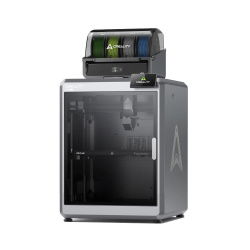
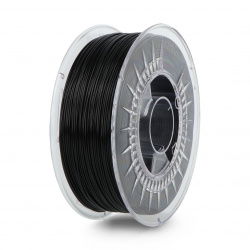
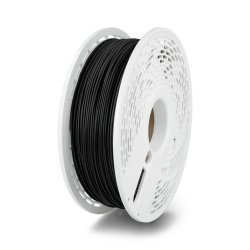
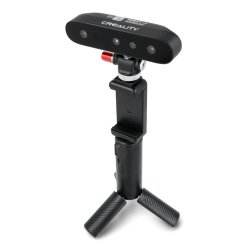
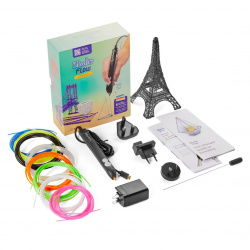
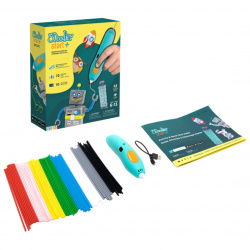
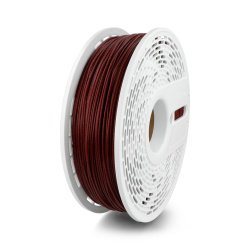
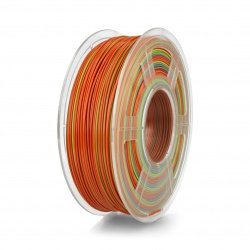
Filament set - Rosa3D Refill PLA-CF Matt Home Decor 1,75mm 4x 1kg
- New
- Reduced price
- Pack
- Sale
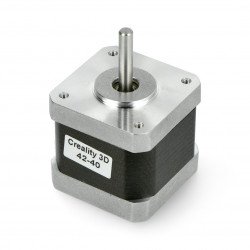
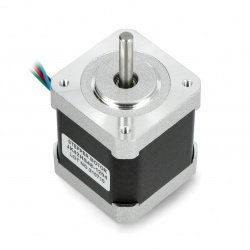
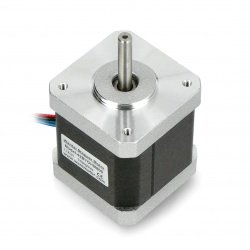
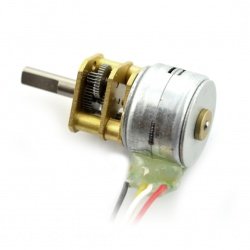
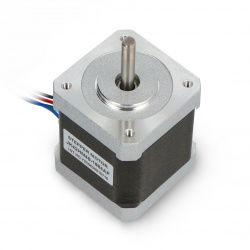
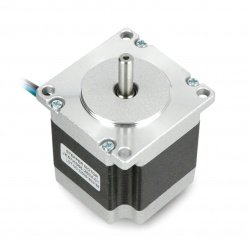
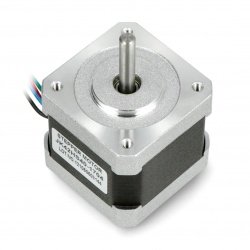
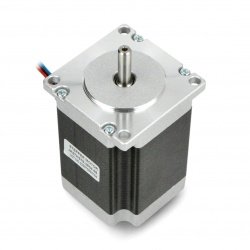
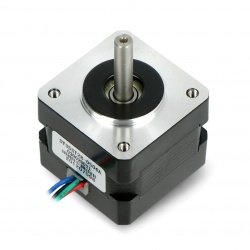
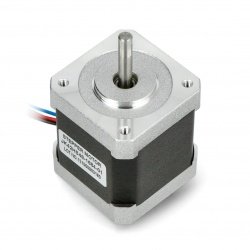
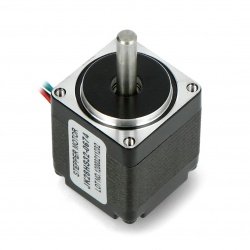
Stepper motors are the perfect solution whenever high accuracy of the geometrical position of the system driven by this motor is required. Stepper motors can be found in many devices and machines. Good examples of wide range of usage of stepper motors are electromechanical clocks, inkjet and laser printers, 3D printers, many types of electronics, CNC machines.
Stepper motors are also installed in cars and motorcycles, which are driven by internal combustion engines. Then these elements perform the function of stabilizing the revolutions of the engine driving the vehicle at idle speed. The high holding torque gives the user the ability to precisely rotate the stepper motor shaft by the specified number of steps. The last parameter depends on the step resolution of the motor, but the use of an encoder is not required.
Due to their simple design, the stepper motors are reliable and easy to operate. Choose now stepper motors in Botland, which will prove themselves in many of your automatic and robotic projects. See the full list of products below!
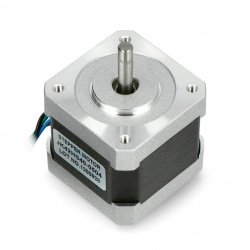
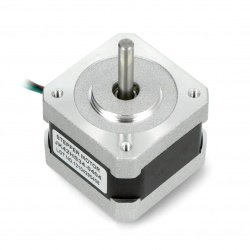
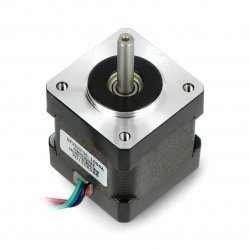
Stepper Motor JK42HS40-0504 200 steps/rotations 12V/0,5A/0,43Nm
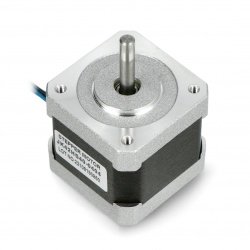
A bipolar stepper motor, four wired. Has a resolution of 200 steps per rotation (1.8 degree). It is powered with a voltage of 12.0 V, consumes 500 mA per coil. Torque is 4.4 k...Stepper Motor JK42HS34-0404 200 steps/pr 12V/0,4A/0,25Nm
A bipolar stepper motor, four wired. It has a resolution of 200 steps per rotation (1.8 degree). It is powered with a voltage of 12.0 V, consumes a current of 400 mA per coil....Stepper motor 28BYJ-48 5V / 0.1A / 0.03Nm with ULN2003 controller
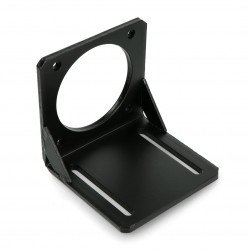
Five wire stepper motor with driver on Darlington chip. It has an integrated 64:1 gear ratio, is powered by 5 V, and draws 100 mA current per coil. The holding torque...NEMA 17 - Aluminium L-type Step Motor Mount - Pololu 2266
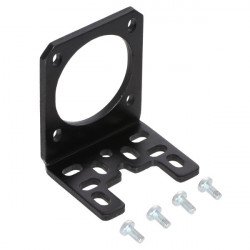
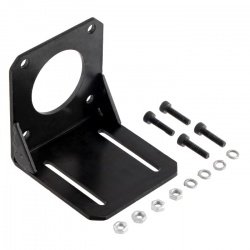
Lightweight, aluminum holder for stepper motor NEMA 17. It has slots and mounting holes along with compatible M3 x 6 mm screws.Stepper Motor JK57HS56-2804 200 steps/rot 2,4V/2,8A/1,26Nm
A bipolar stepper motor, four wired. Has a resolution of 200 steps per revolution (1.8 degree). It is supplied with the voltage of 2.4 V, consumes 2800 mA on the coil. Torque:...Stepper Motor JK42HW34-0334 200 steps 12V/0,33A/0,22Nm
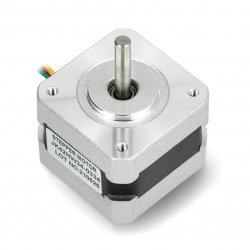
Bipolar stepper motor , four-wire. Has a resolution of 200 steps per revolution (1.8 degrees). Powered by 12 V, draws 330 mA per coil. Torque is 2.3 kg*cm (0.22 Nm)....Stepper Motor JK42HS48-1204 200 steps 3,6V/1,2A/0,47Nm
A bipolar stepper motor, four wired. It has a resolution of 200 steps per revolution (1.8 degree). It is supplied with the voltage of 3.6 V, it consumes a current of 1200 mA...Stepper Motor 42BYGHM809 400 steps 3V 1,7A 0,48Nm - SparkFun ROB-10846
Bipolar stepper motor, four-wire. It has a resolution of 400 steps per revolution (0.9 degrees) . It is powered by 3 V and draws 1.7 A per coil. Holding torque is 4.89 kg*cm...DFRobot Micro Metal Geared Stepper Motor (12V 0.6kg.cm)
Small metal stepper motor with 100:1 gearing powered by 12 V. It has a resolution of 20 steps per revolution (18 degrees). Holding torque is 0.6 kg*cm (0.06 Nm). Dimensions are...Stepper Motor JK42HM48-1684 400 steps 3,0V/1,68A/0,43Nm
Bipolar stepper motor , four-wire. Has a resolution of 400 steps per revolution (0.9 degree). Powered by 3.0 V, draws 1680 mA per coil. Torque is 4.4 kg*cm (0.43 Nm)....Stepper Motor JK57HS56-2504 200 steps 3,25V/2,5A/1,1Nm
Bipolar stepper motor , four-wire. Has a resolution of 200 steps per revolution (1.8 degrees). Powered by 3.25 V, draws 2500 mA per coil. Torque is 11.2 kg*cm (1.1 Nm)....Stepper motor JK42HS40-1704 200 steps 2.8V/1.7A/0.4Nm
Bipolar stepper motor, four wire. It has a resolution of 200 steps per revolution (1.8 degrees). It is powered by 2.8 V and draws 1700 mA per coil. The torque is 4.0 kg*cm (0.4...NEMA 23 - Steel L-type Step Motor Mount - Pololu 2258
Steel bracket for stepper motor NEMA 17. It has slots and mounting holes along with compatible M4 x 16 mm screws.Stepper Motor JK57HS76-2804 200 steps/rot 3V / 2,8A / 1,89Nm
JK57HS76-2804 bipolar four-wire stepper motor with 200 steps per revolution (1.8 degrees). It is powered by 3 V, draws 2800 mA per coil. Torque is 19.0 kg*cm (1.89 Nm)....Vibration damper for NEMA17 stepper motor
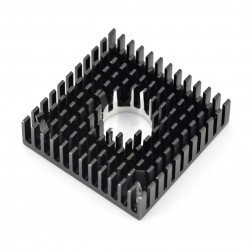
Vibration damper designed for mounting on NEMA17 stepper motors, used, among others, in 3D printers. The use of a vibration damper enables the reduction of noise and...Stepper Motor SY35ST28-0504A 200 steps 10V / 0,5A / 0,1Nm - Pololu 1208
Bipolar stepper motor 200 steps (1.8 °) 10 V supply with 500 mA current per coil, holding torque 1 kg*cm (0.1 Nm). Dimensions: 35 x 35 x 28 mm (NEMA 14).Stepper motor JK42HS60-1704A 200 steps 5V/1.7A/0.66Nm
Bipolar stepper motor, four wire. It has a resolution of 200 steps per revolution (1.8 degrees) . It is powered by 5.0 V and draws 1700 mA per coil. The torque is 6.8 kg*cm...Stepper Motor JK42HS48-1684 200 steps 2,8V/1,68A/0,43Nm
Bipolar stepper motor , four-wire. Has a resolution of 200 steps per revolution (1.8 degrees). Powered by 2.8 V, draws 1680 mA per coil. Torque is 4.4 kg*cm (0.43 Nm)....Stepper Motor JK28HS32-0674 200 steps 3,8V/0,67A/0,06Nm
Bipolar stepper motor , four-wire. Has a resolution of 200 steps per revolution (1.8 degrees). It is powered by 3.6 V, draws 670 mA per coil. Torque is 0.6 kg*cm (0.06 Nm)....Stepper Motor SY35ST36-1004A 200 steps 2.7V 1.0A 0.14Nm - Pololu 1209
Bipolar stepper motor 200 steps (1.8 degrees) supplied with a voltage of 2.7V with a current consumption of 1000 mA per coil, the torque holding 1.4 kg * cm (0.14 Nm)...Stepper Motor JK42HS48-0406 200 steps 12V/0,4A/0,31Nm
Unipolar stepper motor , six-wire. Has a resolution of 200 steps per revolution (1.8 degrees). Powered by 12 V, draws 400 mA per coil. Torque is 3.17 kg*cm (0.31 Nm)....NEMA 34 - L-type Step Motor Mount - 100x100mm
NEMA 34 standard stepper motor mount . The mount has universal mounting holes for most NEMA 34 standard motors. Mounting screws will be required for motor mounting , which...How does a stepper motor work? A stepper motor is a brushless motor powered by impulse voltage (electric current), the shaft of which does not rotate continuously as in the case of most types of electric motors, but discreetly, where individual steps correspond to rotations by the same number of angular degrees - e.g. stepper motor with a resolution of 200 steps, which corresponds to one complete revolution of the shaft, a single step corresponds to a rotation of 1.80°.
The stator of the stepper motor consists of grouped windings to which voltage pulses are successively supplied. A single voltage pulse supplied from the control system to the winding causes the rotor to rotate by one step. This is, in simple terms, how a stepper motor works.
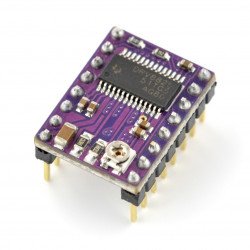
By connecting a stepper motor to Arduino via a controller (see also: stepper motor drivers), you can programmatically set the motor's operating parameters, such as rotational speed, acceleration or the angular position of the rotor.
The design of the stepper motor is relatively simple. In practice, this means reliable operation and low failure rate in stepper motors.
Choosing a stepper motor is not an easy task at all. First of all, remember to adjust all parameters (including torque and gear ratio) of stepper motors to a specific application.
The first criterion for selecting a motor is its required sequence of the most frequently performed movements in terms of number in time and angle of rotation. This is determined by the time required to reach the specified motor shaft position and the acceleration and deceleration between zero and maximum speed. Information regarding rotational speed can be found in the specific product description.
For proper and safe operation of the application, the motor must also be selected in terms of step resolution, torque, acceleration torque and shaft load.
The geometric dimensions of the motor should also be taken into account, including the spacing of the mounting holes, however, two stepper motors with the same rated supply voltage and dimensions very similar to each other may differ in current consumption and winding design - unlike unipolar motors, bipolar motors have each winding equipped with in the center tap, which allows for increased torque. The use of stepper motors is very common, including: due to the ease of engine control.
Typically, stepper motors operate in open-loop feedback systems. For applications where increased operational reliability is required, stepper motors operate in a closed feedback loop that uses a sensor that allows you to constantly track the position of the motor shaft. Stepper motor failure is usually detected using a diagnostic computer.
The stepper motors offered by the Botland store are available in various sizes and operating parameters, such as rated supply voltage and torque, which allows you to optimally select the motor for your device design.
Since stepper motors require a pulse voltage supply, in practice this allows the stepper motor to be used in applications where accuracy is a priority.
Thanks to this, such stepper motors are successfully used in CNC machines and power tools for manual, precise material processing, as well as in hard drives, clocks, printers, two-dimensional plotters, engraving machines, laser heads, scientific research equipment, and broadly understood robots. - also those supporting the production of integrated circuits and other electronic components.
For applications requiring increased precision of operation, We have also prepared an offer of stepper motors with gears extending the standard step resolution of the motors. We also encourage you to check out the entire engines category, which includes, among others: DC DC motors, vibration motors and linear motors . Do you have questions about the construction of a stepper motor or don't know which stepper motor driver to choose? We encourage you to contact our experienced advisors.

A stepper motor is a brushless motor powered by a pulse voltage. Where did this name come from? Divides a complete revolution into a number of equal steps. It transforms a sequence of input pulses into a precisely defined increment in the shaft's rotational position, and each pulse causes it to rotate by a given angle. Add a controller to this, which will allow you to control its operating parameters.
Choosing a stepper motor for a CNC mill is all about finding one that can provide the right torque and speed. It's not worth using a heavy stepper motor if the rest of the CNC components aren't stable enough to handle a lot of force. Optimum performance is determined by torque calculations.
Stepper motors can be found, among others, in 3D printing equipment and CNC milling machines , cutting machines and plotters , textile machines, gaming equipment, medical equipment, robotics and welding equipment. It can even be found near the engine compartment of a car - if it has a breakdown, it is often not very expensive, but troublesome.
There are three main types of stepper motors. These are permanent magnet motors - these usually have a low price and low resolution, variable reluctance motors - quite rarely used and with low torque, and hybrid motors - used more and more often and very durable. Another division distinguishes unipolar and bipolar stepper motors.