



New arrivals
On Sale
Ultrasonic distance sensors
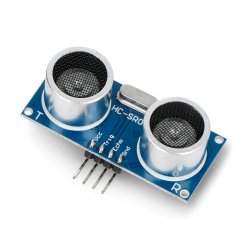
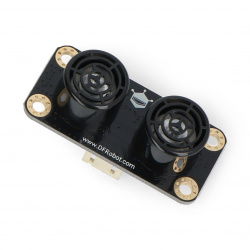
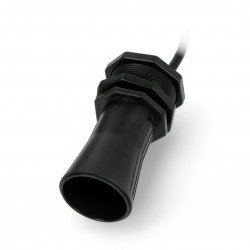
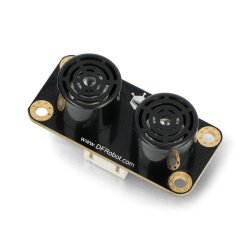
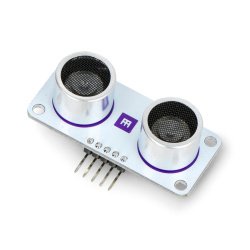
A number of sensors for measuring distances using infrared light or a laser beam is provided ultrasonic distance sensorsthat are used in various automated applications. Their task is the detection of objects and measuring distance to them. Ultrasonic sensors are used for the operation of the ultrasound, i.e. sound with frequencies that exceed the theoretical range audible to the human ear (i.e., above 20 kHz).
Products




See also
How does an ultrasonic distance sensor work?
The principle of operation of an ultrasonic distance sensor is to send ultrasound through the sensor and receive it back - similarly to the laser beam from laser distance sensors. Based on the time difference between sending and receiving the signal (ultrasound), it is possible to determine the distance between the sensor and the object from which the ultrasonic wave was reflected. Because ultrasonic distance sensors use an audio signal rather than light in the measurement process, they can be used in applications where photoelectric sensors have difficulty detecting plastic objects and curved surfaces with very good light reflectivity. Ultrasonic sensors are also resistant to any environmental light disturbances and environments heavily polluted with dust.
What should you consider when choosing an ultrasonic sensor?
Depending on the application requirements, ultrasonic sensors can be installed in various devices in many ways. The emission of ultrasonic waves from the sensor involves sending them into space, similarly to a laser beam from a photoelectric sensor, so the parallel cooperation of these sensors can be very effective when performing measurements in environments with easy scattering of sound and light waves. For most applications using ultrasonic distance sensors in difficult environments, it is worth installing an additional photoelectric sensor to prevent incorrect reflections of ultrasonic waves that can seriously falsify the measurement.
It is also worth taking into account such aspects as the selection of the optimal measurement mode depending on the sensor application, the required measurement range, the type of measurement information output (e.g. to connect to the analog input in Arduino or to a relay switching e.g. the direction of travel of the robot), as well as the shape and material of the housing of the device in which we want to install the ultrasonic distance sensor.
Ultrasonic distance sensors - FAQ
You can check the operation of an ultrasonic sensor by connecting it to power and measuring changes in the output signal under conditions in which the sensor should respond (for example, by moving your hand in front of it). Before working with any distance sensor , it is often necessary to calibrate its sensitivity.