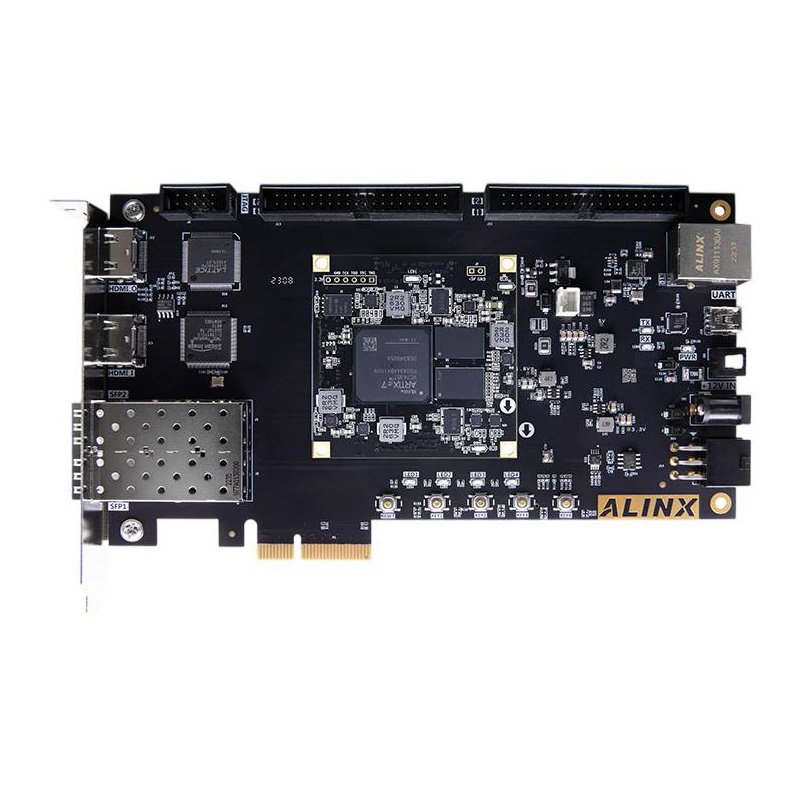

































































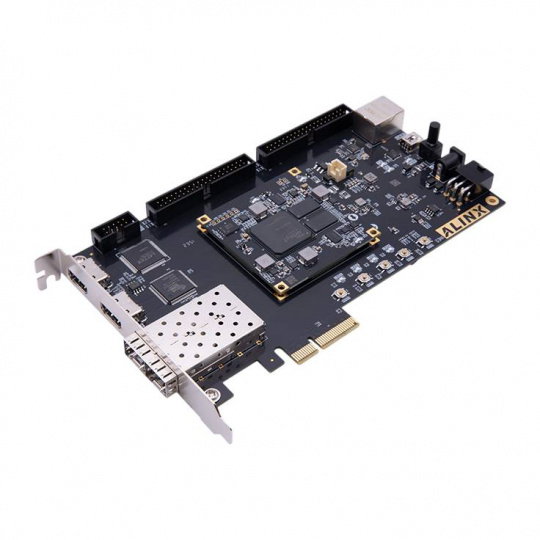
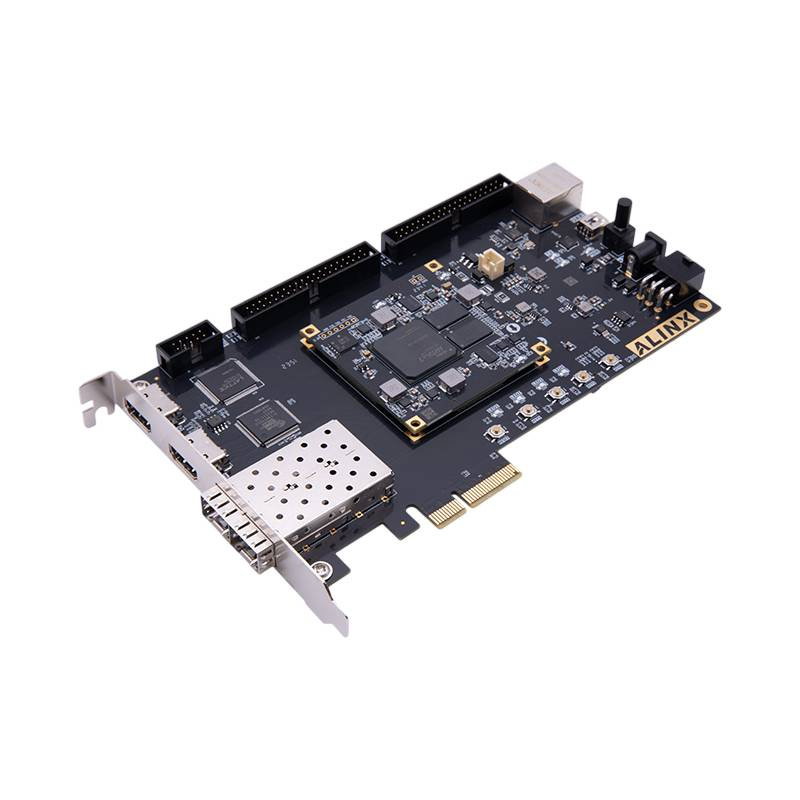


The ALINX AX7A035B is a high-performance FPGA development board based on the AMD Artix 7 XC7A35T , consisting of an AC7A035 System-on-Module (SOM) and a carrier board. It offers 1 GB of DDR3 memory, 16 MB of QSPI Flash, PCIe, two SFP+ ports, Gigabit Ethernet, and HDMI input and output . A rich set of interfaces makes the platform suitable for high-speed communications, image processing, data analysis, and industrial automation.
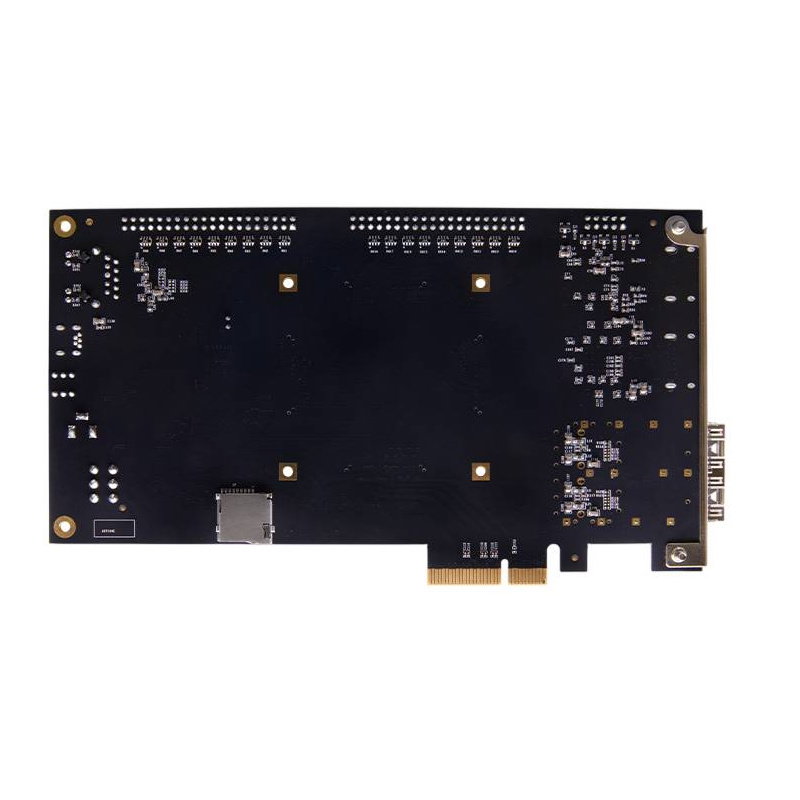
The ALINX AX7A035B is an advanced development platform designed for designing digital systems using FPGA programmable logic. Its core is the AC7A035 System-on-Module (SOM) with an AMD Artix 7 XC7A35T-2FGG484I chip, DDR3 memory, and QSPI Flash, connected to an extensive backplane. The platform provides a PCIe interface, two SFP+ ports, Gigabit Ethernet, HDMI input and output, UART, microSD , and two 40-pin expansion ports . This enables projects involving high-speed data transmission, fiber optic communications, image analysis, and industrial control. The modular design also allows the AC7A035 module to be used independently in a dedicated device.
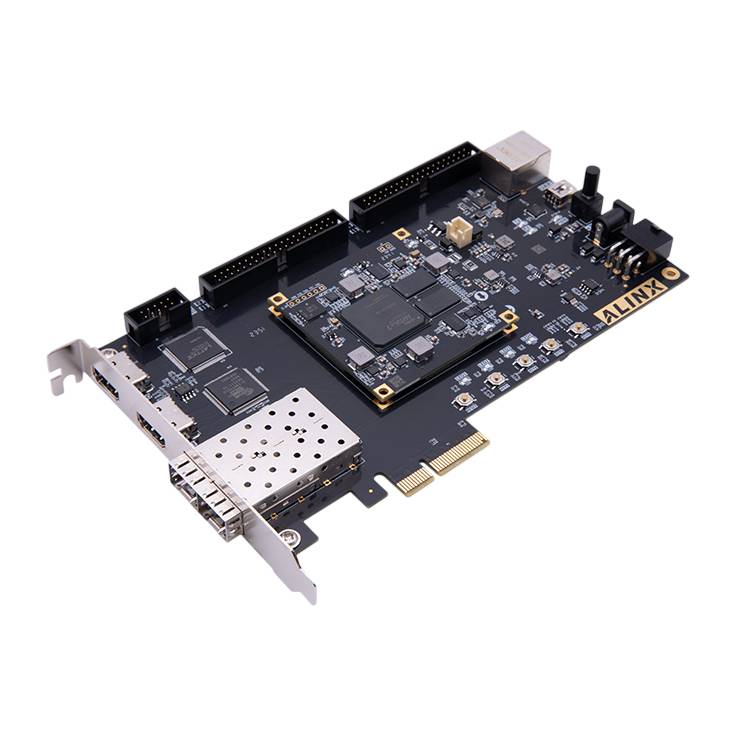
AX7A035B - FPGA development board - AMD Artix 7 XC7A35T.
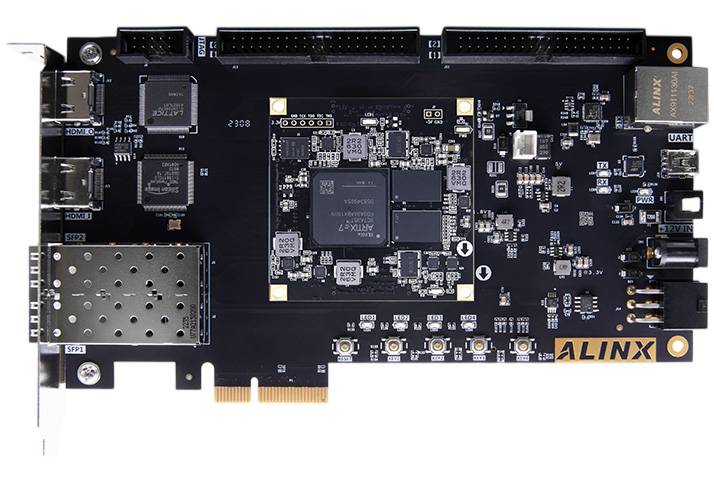
The combination of FPGA, DDR3 memory and fast communication interfaces enables the implementation of projects requiring parallel processing and predictable response times.
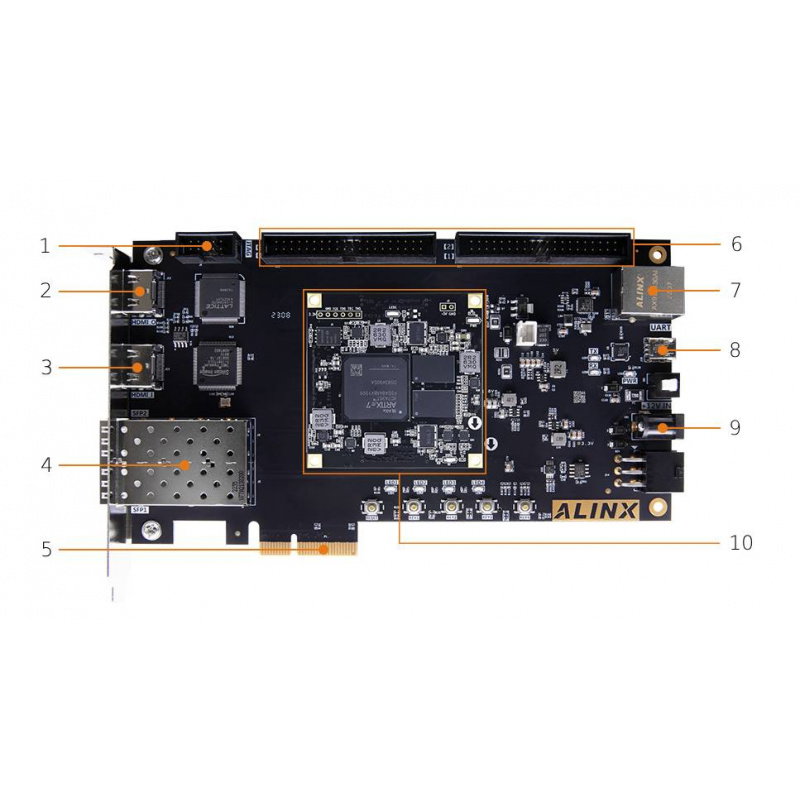
The most important communication interfaces are located at the edges of the baseboard, which makes connecting cables and modules easier . The central part of the structure is occupied by the replaceable AC7A035 SoM module , and below it are buttons and user LEDs . According to the attached graphics, the board includes:
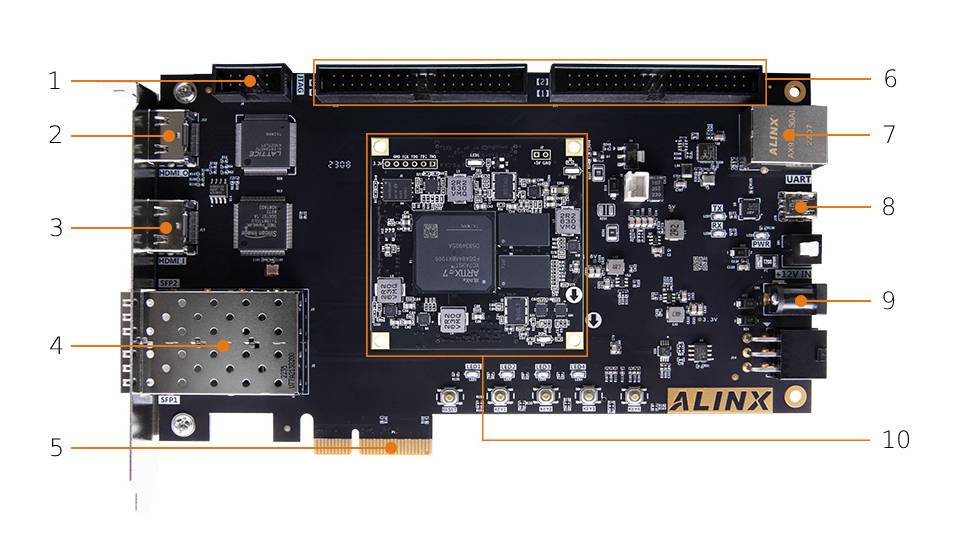
Arrangement of components on the board.
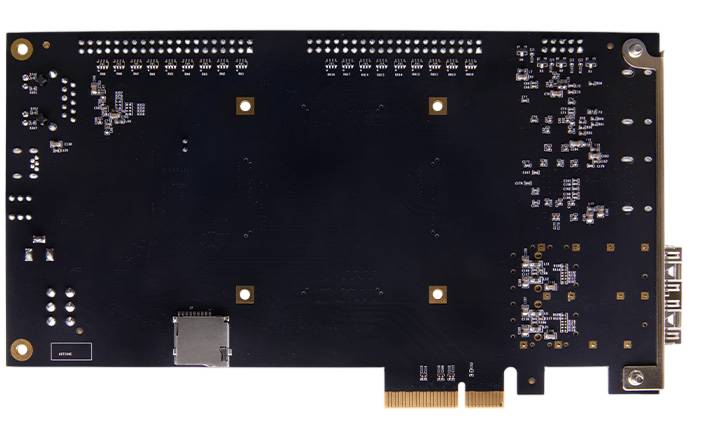
ALINX AX7A035B will prove useful as an educational, prototyping and research and development platform.
The heart of the platform is the AMD Artix 7 XC7A35T-2FGG484I , an FPGA chip housed in a 484-pin BGA package. The Artix 7 architecture was fabricated using 28nm technology and provides a favorable combination of performance, power consumption, and cost. The chip allows for the creation of custom hardware blocks, controllers, interfaces, and parallel processing pipelines. The XC7A35T is equipped with four high-speed GTP transceivers that can operate at speeds of up to 6.6 Gb/s per channel. These transceivers are used by SFP+ and PCIe interfaces, among others, making the platform suitable for building communication and data acquisition systems. The programmable logic can also implement digital filters, HDMI video support, real-time control, and hardware-based data stream analysis.
| Technical specifications AX7A035B | |
|---|---|
| SoM module | AC7A035 |
| Main system | AMD Artix 7 XC7A35T |
| Layout variant | XC7A35T-2FGG484I |
| FPGA housing | FGG484 |
| Manufacturing technology | 28 nm |
| High-speed transceivers | 4 x GTP |
| Maximum transceiver speed | up to 6.6 Gb/s per channel |
| RAM | 1 GB DDR3 SDRAM |
| DDR3 memory bus width | 32 bits |
| DDR3 memory communication frequency | up to 400 MHz |
| DDR3 effective transmission rate | up to 800 Mb/s per line |
| Maximum memory bandwidth by instruction | up to 25 Gb/s |
| Non-volatile memory | 16MB QSPI Flash |
| SoM module connection | 4 x Panasonic board-to-board connectors |
| PCIe interface according to the manufacturer's website | 1 x PCIe Gen2 x4 |
| PCIe interface as per instructions | PCIe x2 |
| Maximum speed of a single PCIe lane as per manual | up to 5 Gb/s |
| Fiber optic interface | 2 x SFP+ |
| Maximum SFP+ speed | up to 6.6 Gb/s per lane |
| Network interface | 1 x Gigabit Ethernet RJ45 |
| Image input | 1 x HDMI |
| Image output | 1 x HDMI |
| Serial interface | 1 x USB UART |
| Memory card slot | 1 x microSD |
| MicroSD card operating modes | SD and SPI |
| EEPROM memory | 1 x 512 B 24LC04 |
| Temperature sensor | LM75 |
| Temperature sensor accuracy according to instructions | 0.5°C |
| Temperature sensor interface | I2C |
| Expansion ports | 2 x 40 pins |
| Expansion port raster | 2.54 mm |
| Number of IO lines per expansion port | 34 |
| Programming interface | 1 x JTAG |
| Buttons | 1 x Reset and 4 x user buttons |
| Diodes | 1 x PWR, 1 x RXD, 1 x TXD and 4 x user LEDs |
| Supply voltage | 12V |
| Other power options as per instructions | PCIe connector or 12V ATX installation |
| Dimensions | 188 x 106 mm |
Useful links |
| Niebezpieczne | Equipment |
| Package width | 29 cm |
| Package height | 20 cm |
| Package depth | 10.5 cm |
| Package weight | 1.061 kg |
Be the first to ask a question about this product!