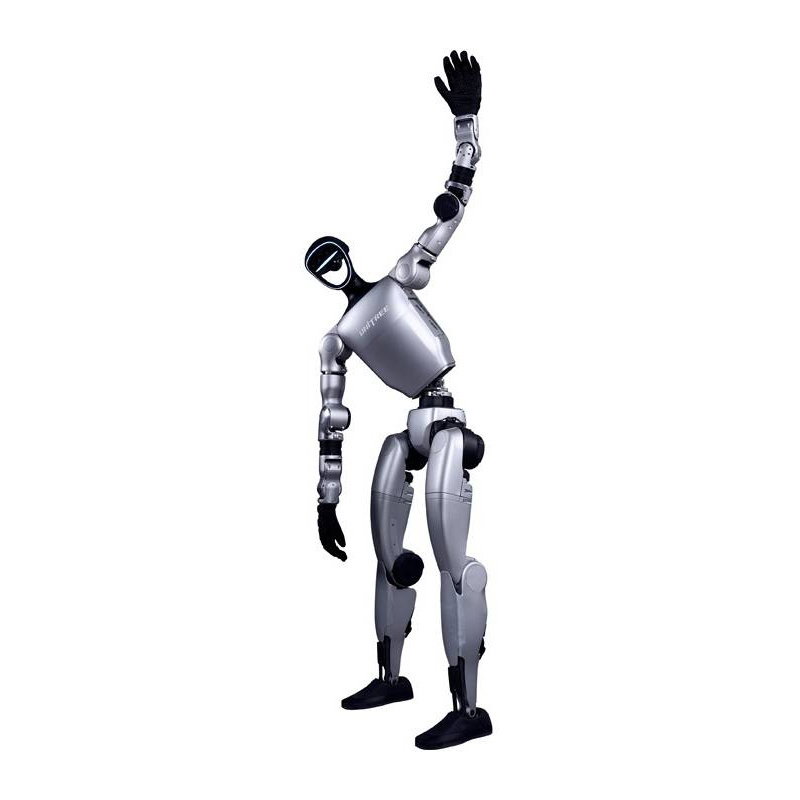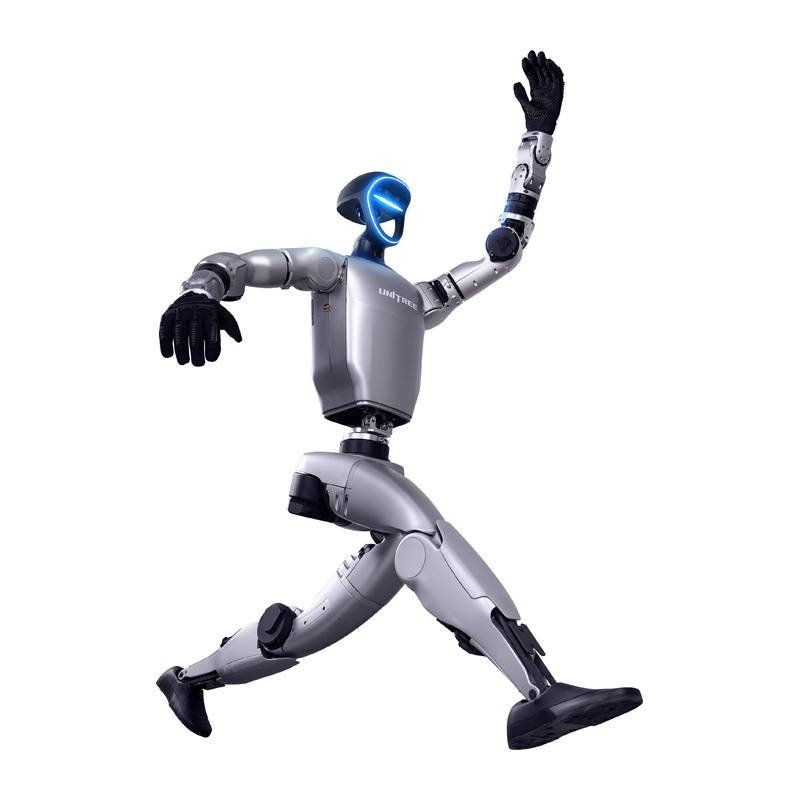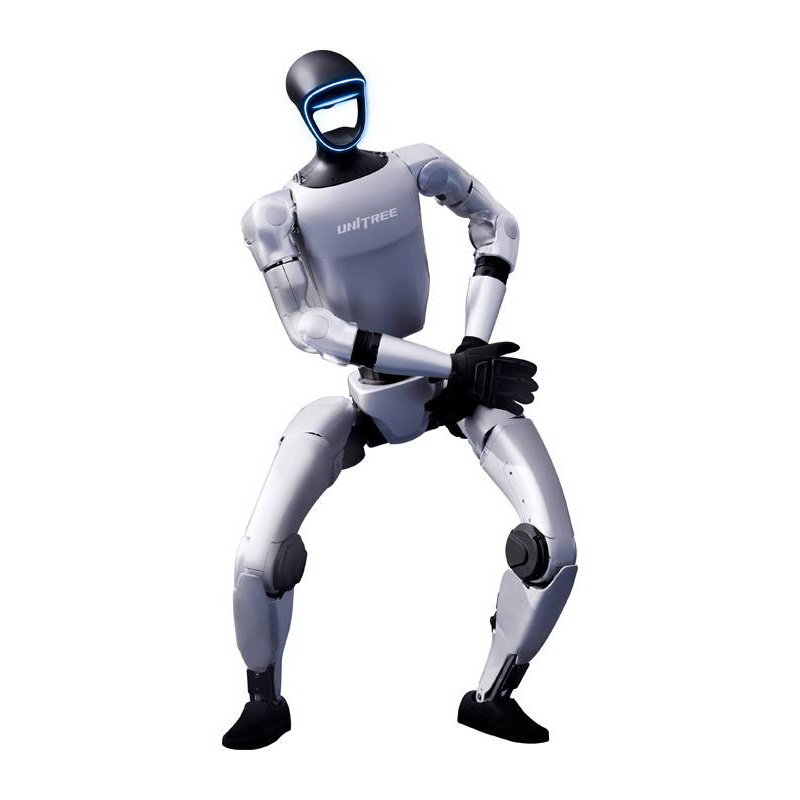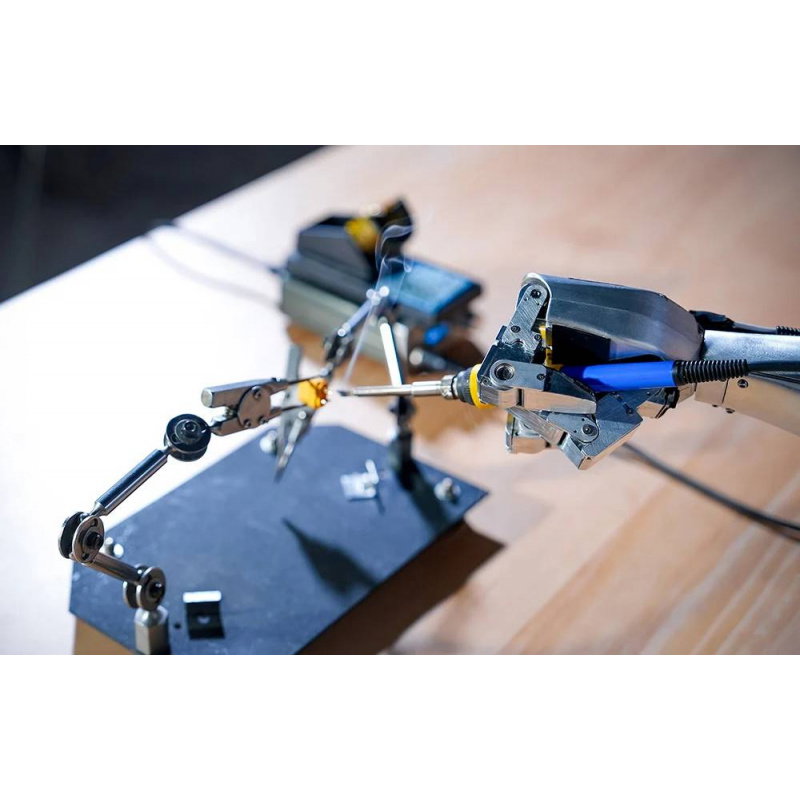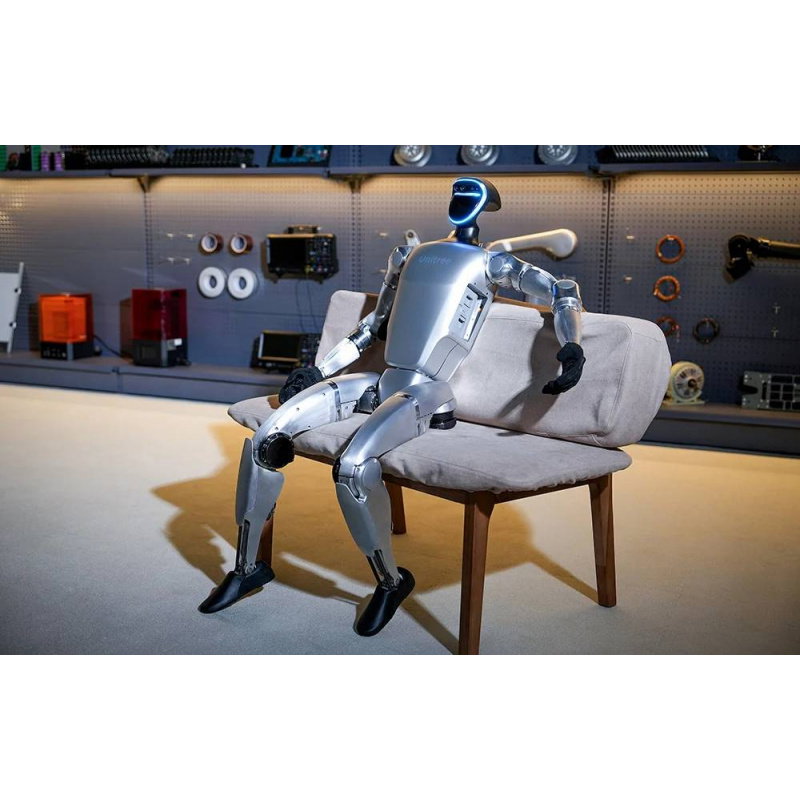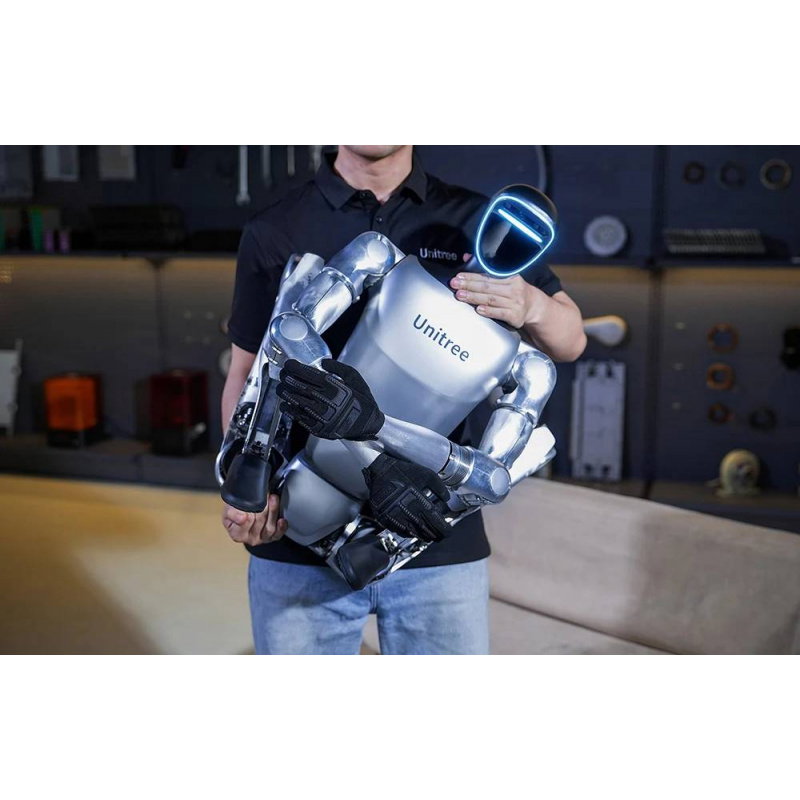









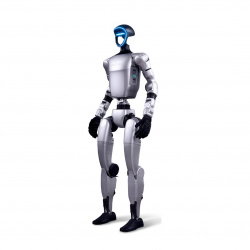

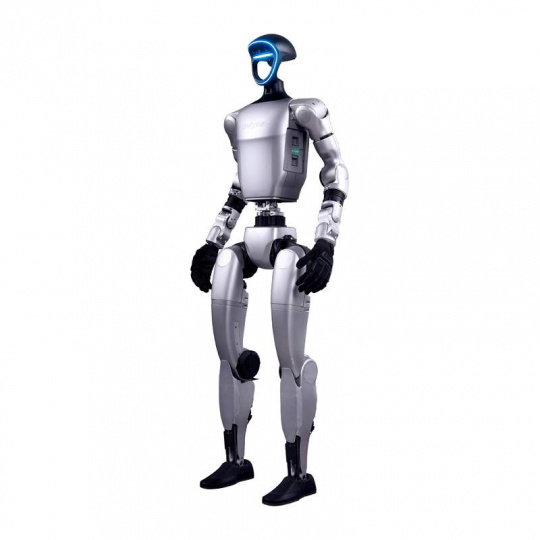
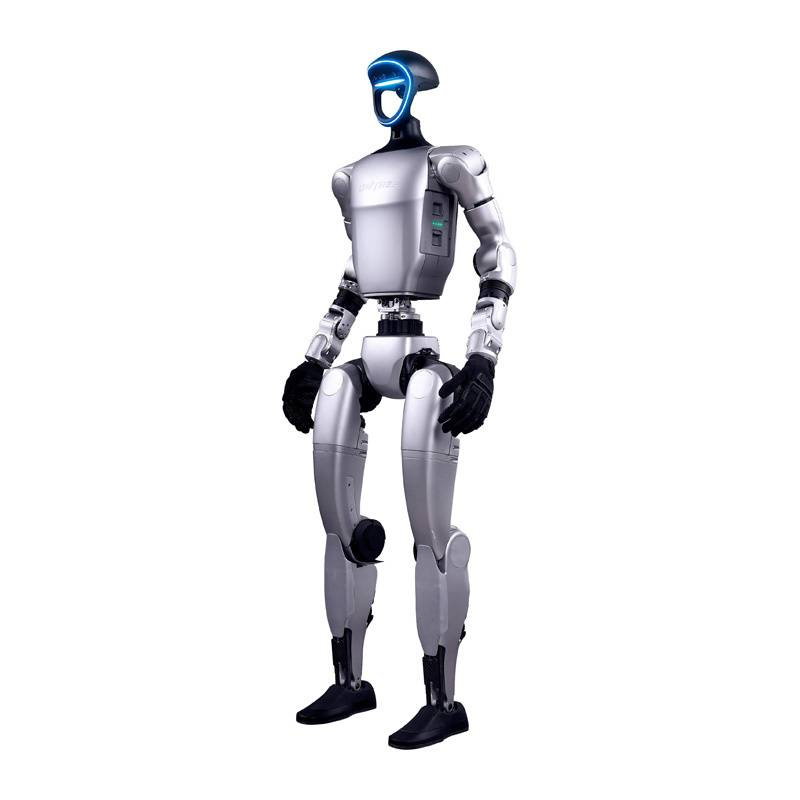


The Unitree G1 Edu U9 is an advanced AI humanoid robot designed for research into manipulation, tactile perception, and human-robot interaction. Equipped with 37 degrees of freedom, two three-fingered Dex3-1 hands with tactile sensors, a depth camera, and a 3D LiDAR scanner, it enables precise manipulation and object contact analysis. The platform offers high computing power, AI support, and extensive programming and development capabilities for robotic algorithms.
Note! The hands, equipment components, and some of the robot's functions and capabilities shown in photos and videos may refer to optional equipment or other versions of the G1 model.
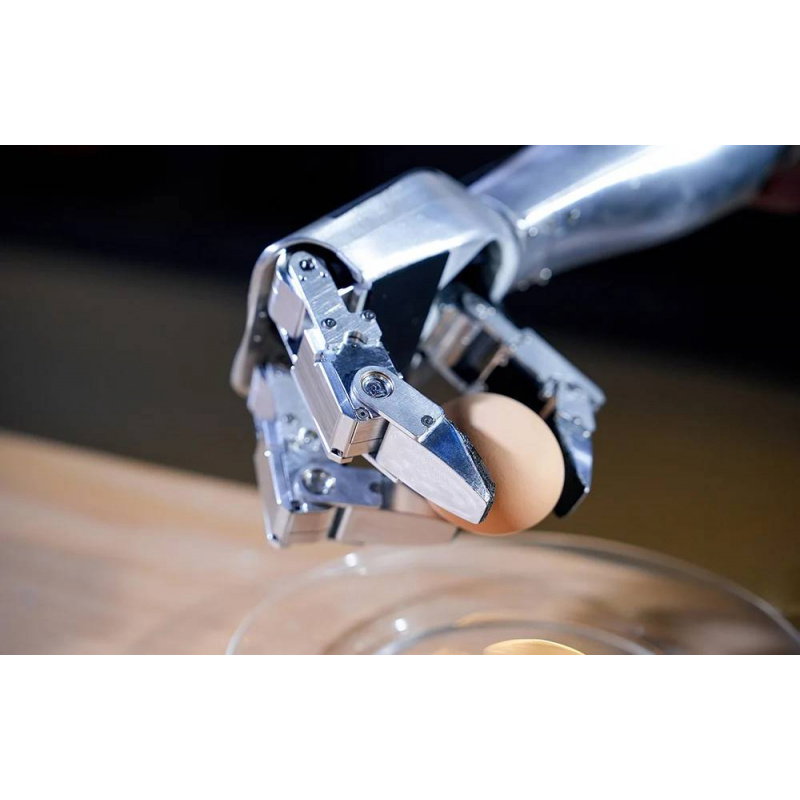
The Unitree G1 Edu U9 is a professional humanoid platform designed for research laboratories, technical universities, and teams developing modern artificial intelligence and humanoid robotics systems. The robot combines advanced mechanics, high computing power, and an extensive perception system enabling complex manipulation and research tasks. The Edu U9 is based on the G1 Edu Standard Edition platform and is equipped with two three-fingered Dex3-1 force-controlled hands with an advanced tactile sensor system . Each hand has 33 tactile sensors that enable object contact analysis, grip force control, and precise manipulation of objects of various shapes and structures. The design offers a total of 37 degrees of freedom , enabling smooth humanoid movements and complex manipulation operations. The robot utilizes a depth camera and a 3D LiDAR scanner for environmental perception, supports WiFi 6 and Bluetooth 5.2 , and a 9000 mAh intelligent battery provides approximately 2 hours of operation. The knee joint has a maximum torque of 120 Nm, and the arm can move objects weighing up to approximately 3 kg. AI processing is handled by a powerful 8-core processor and the Nvidia Jetson Orin platform, offering computing power of up to 100 TOPS.
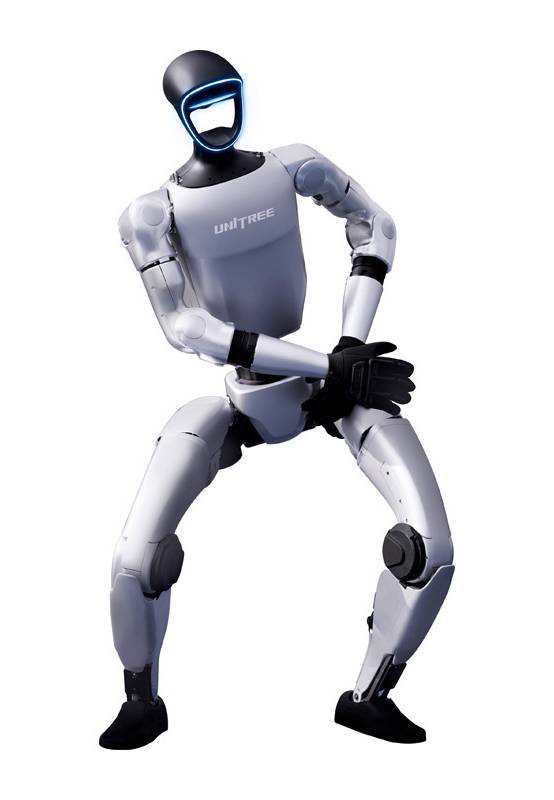
Humanoid robot - Unitree G1 Edu U9.
The G1 Edu is equipped with a Livox MID-360 3D LiDAR system and an Intel RealSense depth camera.
The Unitree G1 Edu U9 utilizes an advanced humanoid design offering up to 37 degrees of freedom , allowing for natural full-body movements and highly complex manipulation operations . The robot can walk smoothly, maintain balance, Rotate its torso and perform dynamic limb movements. The design includes multi-axis arms and torso, and three-fingered Dex3-1 hands, enabling precise grasping and manipulation movements. Using force control and tactile sensors , the robot can analyze contact with an object and dynamically adjust grip force . Low-inertia PMSM motors and industrial cross-roller bearings with high durability and load capacity ensure dynamics and precision. The design has been optimized for research on autonomous manipulation and physical interaction with the environment.

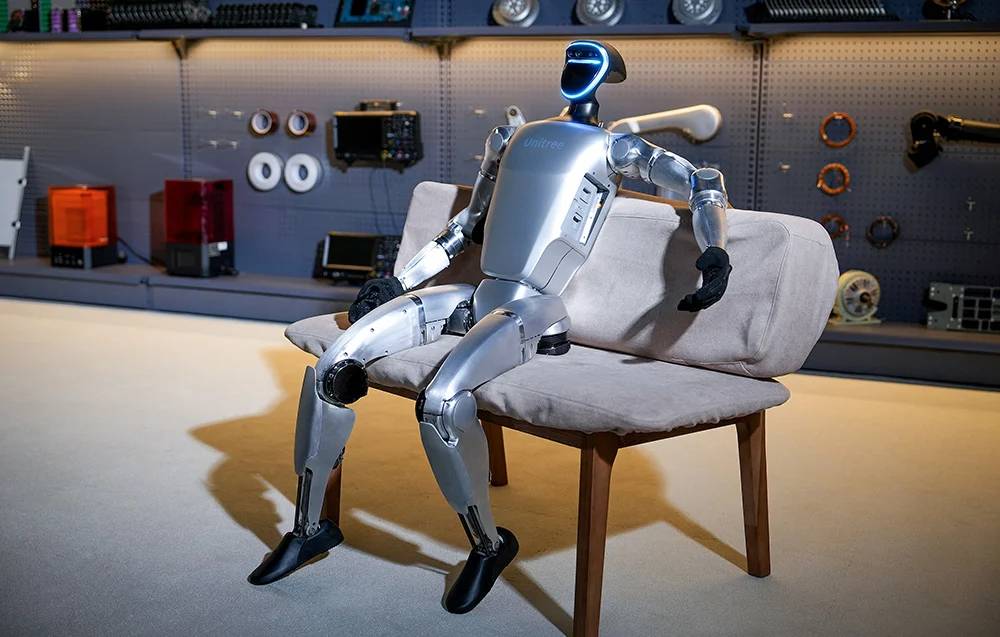
The model has 37 degrees of freedom and is equipped with two hands with three fingers.
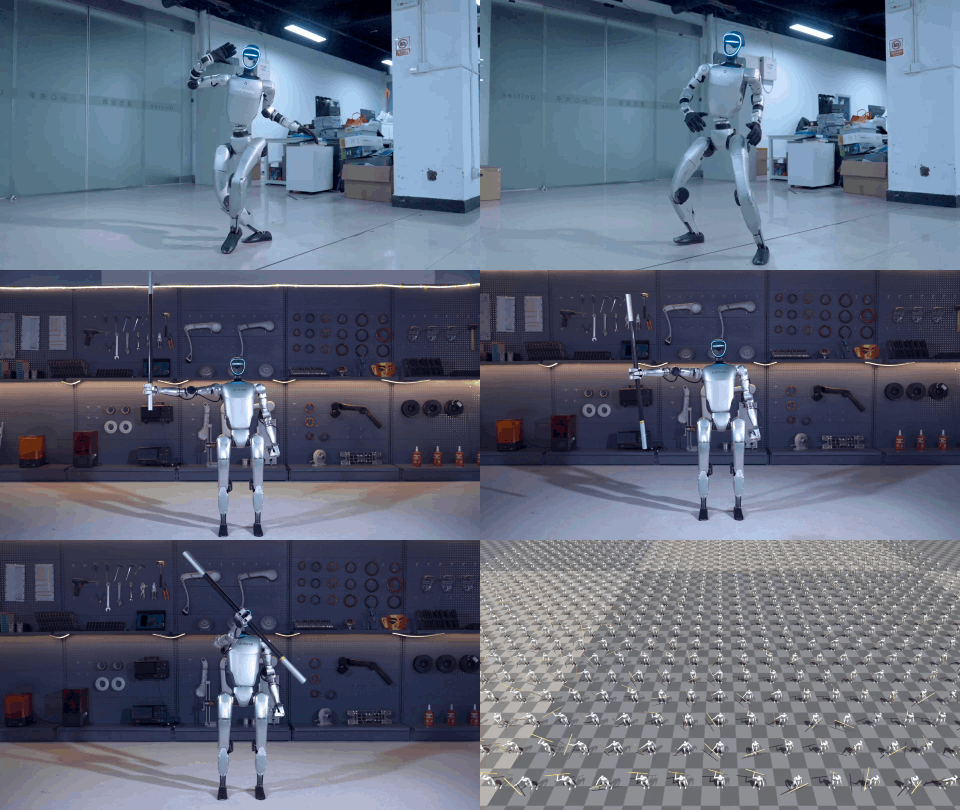
The robot's design is inspired by human anatomy, which translates into a natural way of moving and high stability.
The robot is equipped with an advanced perception system, including a depth camera and a 3D LiDAR scanner, enabling spatial mapping, environmental analysis, and real-time obstacle detection . The platform can be used for research on autonomy, machine vision, and intelligent navigation. A key element of the U9 model is the three-fingered Dex3-1 hands, equipped with 33 touch sensors on each hand . The system analyzes contact force, pressure, and object interaction, significantly increasing the robot's manipulation capabilities and ensuring safe operation with delicate components. The audio system includes a four-microphone array and a 5W speaker, enabling voice communication and integration with AI systems using speech recognition and human-robot interaction. The Unitree Explore APP allows for monitoring the robot's operating parameters, performing diagnostics, and calibrating joints.
The Unitree G1 Edu U9 has a compact design , measuring 1320 mm high and weighing approximately 35 kg . Efficient drives provide a maximum knee torque of 120 Nm , enabling dynamic and stable movement during advanced manipulation tasks. The robot can carry objects weighing up to approximately 3 kg per arm while maintaining high control precision. A 9000 mAh intelligent battery provides approximately 2 hours of operation , and a quick-change system helps reduce downtime during research and experimentation.
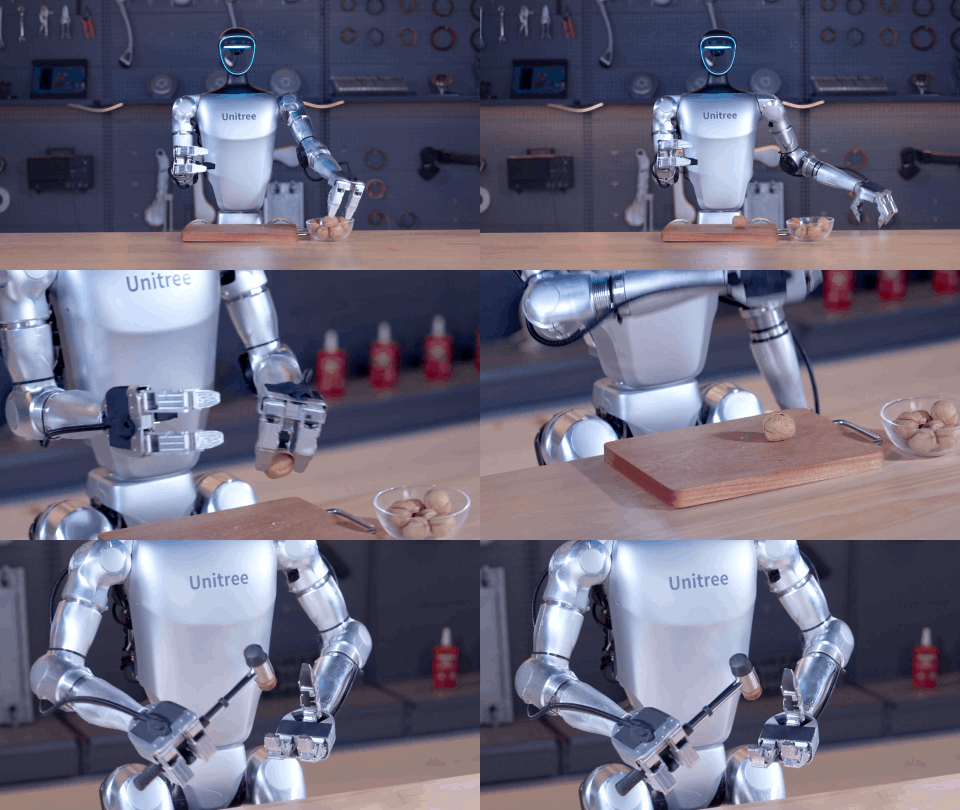
The robot is powered by a battery that provides approximately 2 hours of operation.
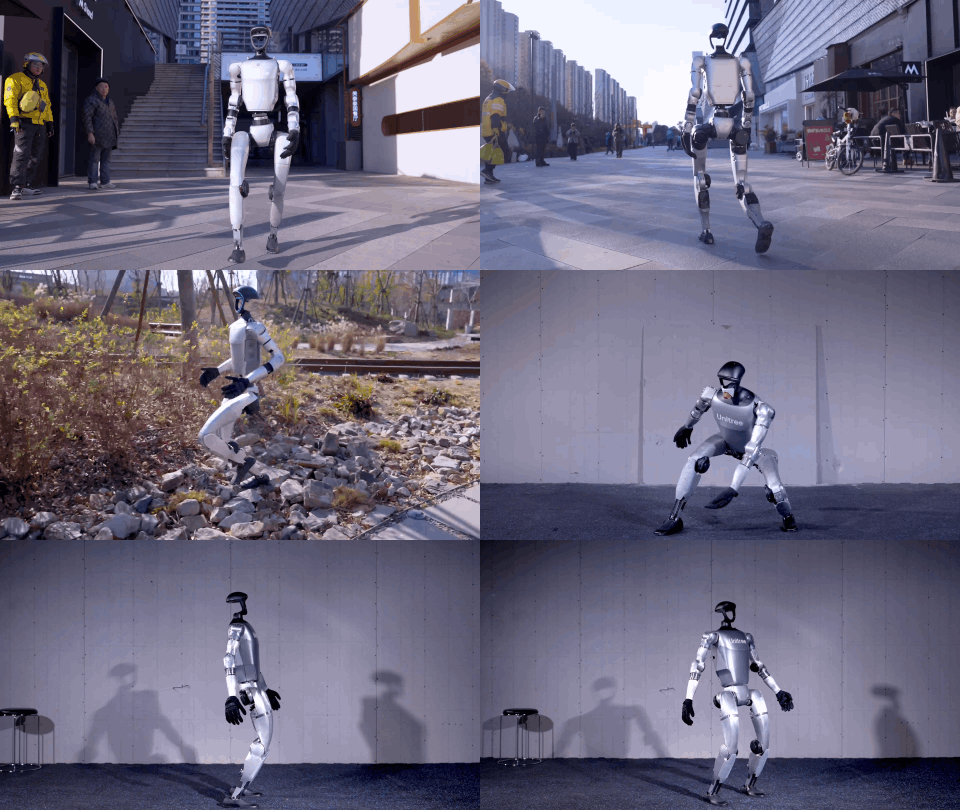
Open architecture supports Secondary Development, allowing full control over the system.
The G1 Edu platform was designed as an open research environment supporting the development of proprietary AI systems, autonomy and humanoid control. The robot utilizes an 8-core processor and the Nvidia Jetson Orin platform, providing computing power of up to 100 TOPS. The manufacturer provides technical documentation, APIs, implementation examples, and development tools enabling the development of high-level and low-level applications. The platform supports research on control, perception, motion planning, manipulation, and haptic interaction. WiFi 6 and Bluetooth 5.2 connectivity enable integration with computers, laboratory environments, and external control systems. Over-the-air (OTA) updates allow for convenient development of the robot's functionality and software updates.
| UnitreeG1 Edu U9 Technical Specifications | |
|---|---|
| Total degrees of freedom | 37 |
| Degrees of freedom of the leg | 6 |
| Degrees of freedom of the waist | 3 |
| Degrees of freedom of the arm | 5 |
| Degrees of freedom of the hand | 7 (optional force control for three-fingered hand + 2 additional degrees of freedom for the wrist) |
| Dex3-1 Hand Parameters | thumb: 3 active degrees of freedom, index finger: 2 active degrees of freedom, middle finger: 2 active degrees of freedom |
| Optional installation of touch sensors | yes (included) |
| Joint bearings | industrial cross roller bearings with high precision and high load capacity |
| Joint motors | PMSM permanent magnet synchronous motors with a low-inertia internal rotor |
| Maximum knee joint torque | 120 N*m |
| Maximum load on the arm | about 3 kg |
| Calf and thigh length | 0.6 m |
| Arm span | about 0.45 m |
| Waist range of motion | Z ±155°, X ±45°, Y ±30° |
| Knee range of motion | from 0° to 165° |
| Hip range of motion | P ±154°, R from -30 to 170°, Y ±158° |
| Wrist range of motion | P ±92.5°, Y ±92.5° |
| Full internal cable management | Yes |
| Joint encoder | double encoder |
| Cooling system | local air cooling |
| Battery type | 13-cell lithium-ion battery |
| Basic computing power | High-performance 8-core processor |
| Sensors and communications | depth camera + 3D LiDAR |
| 4-microphone array | Yes |
| Loudspeaker | 5 in |
| Wireless connectivity | WiFi 6, Bluetooth 5.2 |
| High-performance computing module | Nvidia Jetson Orin |
| Quick-connect battery | Yes |
| Battery capacity | 9000 mAh |
| Charger | 54V / 5A |
| Manual controller | Yes |
| Working time | about 2 hours |
| OTA updates | Yes |
| Possibility of further development | Yes |
| Dimensions in standing position | 1320 x 450 x 200 mm |
| Dimensions when folded | 690 x 450 x 300 mm |
| Weight with battery | over 35 kg |
| G1 Edu Version Comparison | ||||
|---|---|---|---|---|
| Model | DOF | Hands | Touch sensors | |
| G1 Edu U1 | 23 | lack | NO | |
| G1 Edu U2 | 29 | lack | NO | |
| G1 Edu U3 | 43 | 2 x Dex3-1 | NO | |
| G1 Edu U4 | 43 | 2 x Dex3-1 | Yes | |
| G1 Edu U5 | 41 | 2 x RH56DFQ | NO | |
| G1 Edu U9 | 41 | 2 x RH56DFTP | yes - 17 sensors / hand | |
| G1 Edu U9 | 41 | 2 x Revo 2 Basic | NO | |
| G1 Edu U8 | 37 | 2 x Dex3-1 | NO | |
| G1 Edu U9 | 37 | 2 x Dex3-1 | yes - 33 sensors / hand | |
| G1 Edu U10 | 35 | 2 x Revo 2 Basic | NO | |
Useful links |
| Niebezpieczne | Equipment |
| Robot type | Walking |
| Robot power supply | Rechargeable battery |
| Control platform | Other |
| Robot form | Ready to use |
Be the first to ask a question about this product!