



Promotions

3D printers
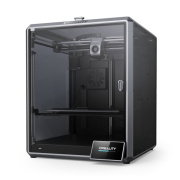
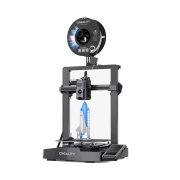
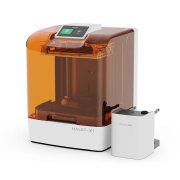
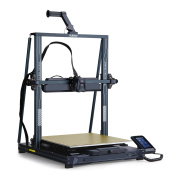
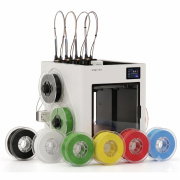
3D printers are revolutionizing the world and are more and more accessible by the general public. Additive manufacturing is not a technology of the future: it’s already used in different industrial sectors. Using 3D printing allows you to learn about the technology, boost your curiosity and transfer a virtual project to the real world. A 3D printer works similar to a regular printer; however, it prints objects in three dimensions. Imagine the classic printer (2D) that prints sheets of paper with text or images. If you superimpose several sheets, you get a third dimension - this is the idea of how the 3D printer works. 3D printing has existed since the early 1970s, and it enables creating diverse objects which can be used for different purposes. There are different types of 3D printers, and thus, several printing methods exist. A common point between all of them is that every 3D printer creates layer by layer of a particular material to build an object. The differences lie in the way how these layers are put and in the material used for printing. There are, for example, industrial printers which use a selective laser sintering method, or stereolithography which allows printing with ultraviolet rays.
Subcategories
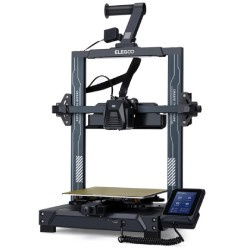
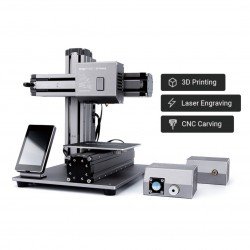
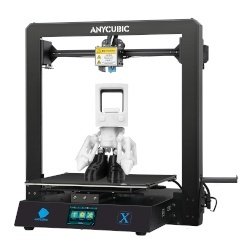
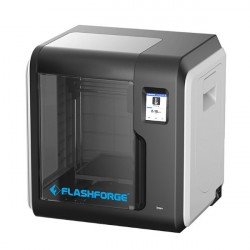

Products
See also
3D printers - FAQ
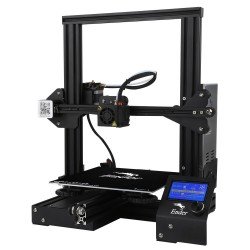
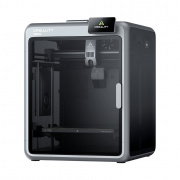
A compromise has to be found. A lower price means less functionality, although the first 3D printer should not cost a fortune. If you want to start printing in 3D, we recommend small-sized MakerPi 3D printers and Creality 3D printers from the Ender series, with particular emphasis on Creality Ender-3 (assembly in just a few minutes).
The Future Laboratories program piloted 3D printing trends to Polish schools during public consultations with experts and teachers. Safe 3D printers with a closed working chamber that are suitable for educational purposes are collected by Botland in the 3D Printers - Laboratories of the Future category.
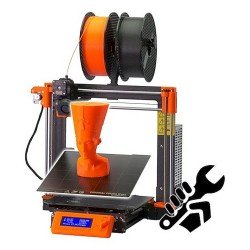
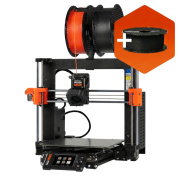
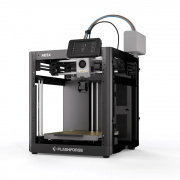
We like to print figures and 3D models ourselves in Botland. Creality Ender 3D printers , Flashforge 3D printers and the unrivaled Czech Prusa 3D printers work well here.
Modeling, design, prototyping, industry, biotechnology, surgery, dentistry, entertainment, construction… the number of industries related to 3D printing is still growing. More information, interesting facts and studies can be found in the 3D Printing section on Botland Blog .
Toys, models, figurines, home decorations - for example vases, musical instruments, functional accessories such as cases and housings, and even spare parts for machines. A 3D printer will create almost anything if we only have a design file - and there are tens of thousands of free ones on the Internet.