






























































LED matrices are light modules composed of multiple diodes arranged in a regular grid, most often in a square or rectangular shape. This design allows them to be used not only as a light source but also as a simple display for presenting animations, text, symbols, and visual effects. LED matrices are used in both hobby projects and more advanced electronic systems, information installations, and lighting decorations.

- Sale
- Sale

LED matrices
Products: 14
Loading...
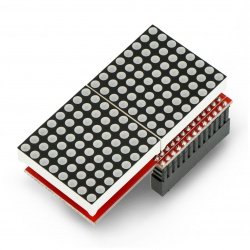
LED Matrix 16x8 MAX7219 for Raspberry Pi
The cover plate is equipped with two 64 LED matrices' slots. Two LED matrix modules with a total of 128 LEDs and red colour are included. The overlay module is based on the...
Index: OST-18523
Index: OST-18523
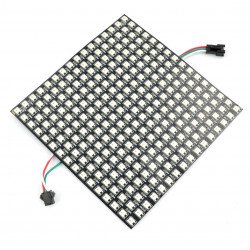
Elastic matrix 16x16 - 256 LED RGB - WS2812B individually addressed
The matrix consists of 256 individually addressed RGB LEDs arranged in 16 rows and 16 columns. Each pixel can emit a colour from a 24-bit palette. One microcontroller pin is...
Index: LED-06183
Index: LED-06183
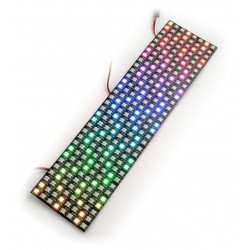
Elastic matrix 8x32 - 256 RGB LED RGB - WS2812B individually addressed
The matrix consists of 256 individually addressed RGB LEDs arranged in 8 rows and 32 columns. Each pixel can emit a colour from a 24-bit palette. One microcontroller pin is...
Index: LED-06185
Index: LED-06185
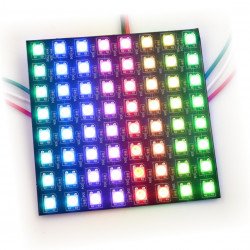
Elastic matrix 8x8 - 64 LED RGB - WS2812B individually addressed
The matrix consists of 64 individually addressed RGB LEDs arranged in 8 rows and 8 columns. Each pixel can emit a colour from a 24-bit palette. One microcontroller pin is...
Index: LED-06182
Index: LED-06182
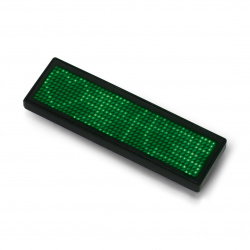
Programmable LED Name Tag 93x30mm - USB text display - green
The LED Name Tag is an electronic identifier with a green LED display that allows for the dynamic presentation of a name, position, advertising slogan, or any other message....
Index: DNG-27724
Index: DNG-27724
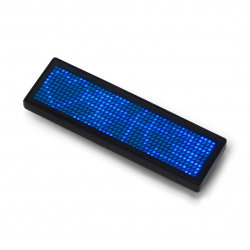
Programmable LED Name Tag 93 x 30 mm - USB text display - blue
The LED Name Tag is an electronic badge with a blue LED display that allows for the dynamic presentation of a name, position, advertising slogan, or any other message. Thanks...
Index: DNG-27725
Index: DNG-27725
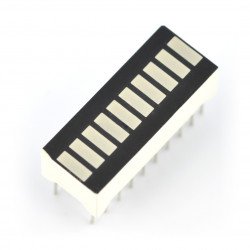
10-segment LED Bar Display OSX10201-GYR1
10-segment LED display, the range of colors is 5 x green, 3 x yellow and 2 x red. It can be used for example as a temperature gauge or liquid level.
Index: LED-08170
Index: LED-08170

Matrix LED 8x8 + driver MAX7219 - small 32x32mm with wires
Matrix module consisting of 64 LEDs arranged in an 8 x 8 square. The set consists of the board with built-in controller and martix as well as female-female wires.
Index: MOD-07798
Index: MOD-07798

Neco Unit LED - cat ear shaped board with RGB LEDs - 2 pieces - M5Stack U163
Neco Unit LED is a cat ear-shaped board with RGB LEDs from M5Stack . Equipped with 35 WS2812C-2020 RGB LEDs, it offers countless lighting effect configurations. With two...
Index: MSS-23507
Index: MSS-23507
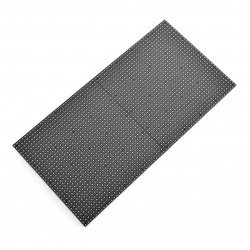
Matrix 64x32 - 2048 LED RGB individually addressed
The matrix is composed of 2048 individually addressed RGB LEDs arranged in 32 rows and 64 columns. Each pixel may emit a color from 24-bit palette. Fot the module's controly...
Index: DFR-08363
Index: DFR-08363
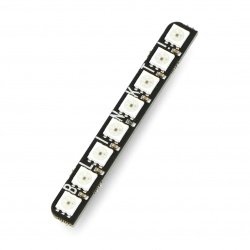
Blinkt! 8x adressed LED RGB - Raspberry Pi extension
Blinkt! is a shield for the Raspberry Pi mounted on GPIO connector of the minicomputer. Board has eight individually addressed RGB LEDs, ideal for adding a visual notification...
Index: PIM-10620
Index: PIM-10620
- Discontinued product
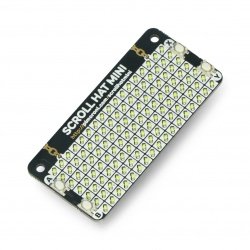
Scroll HAT Mini - 17x7 LED matrix - HAT for Raspberry Pi - Pimoroni PIM491
A matrix consisting of 119 white LEDs in the form of an overlay for a Raspberry Pi minicomputer. The LEDs have been placed in a 17 x 7 arrangement and the brightness of each...
Index: PIM-19069
Index: PIM-19069
- Discontinued product

20-segment LED Bar Display DC-20/20GWA - green
20-segment LED display 20 x green. It can be used for example as a temperature gauge or liquid level.
Index: LED-08167
Index: LED-08167
- Discontinued product
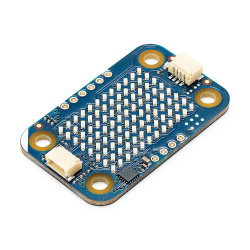
Arduino Modulino LED Matrix - programmable 8x12 LED matrix - Qwiic - ABX00152
The Modulino LED Matrix is a compact LED display module featuring an 8x12 matrix of 96 blue LEDs . It can display text, icons, animations, and simple graphics. Thanks to...
Index: ARD-28939
Index: ARD-28939
Wide selection of formats and compatibility
This category includes a wide selection of modules compatible with platforms such as Arduino, Raspberry Pi, ESP32, and STM32. Depending on the model, they range from compact systems like an 8x8 LED matrix to larger panels containing dozens or hundreds of LEDs. This allows for the right solution for simple educational projects, information panels, decorations, or interactive installations.
WS2812B RGB LED matrix – advanced color control
The product range includes classic LED modules, RGB matrices, and solutions based on addressable LEDs. The WS2812B RGB LED matrix is particularly popular, as each LED can be individually controlled. This allows for a wide color gamut and the creation of dynamic animations, smooth color transitions, and a variety of lighting effects. This type of programmable LED matrix offers significant freedom in designing visualizations and interactions.
Compact 8x8 LED matrix
One of the most popular formats is the 8x8 LED matrix, consisting of 64 LEDs arranged in eight rows and columns. This module is ideal for learning programming and displaying simple characters, icons, and animations. Its small size and ease of use make it a popular choice for beginners.
A major advantage of many matrixes is the availability of ready-made libraries, such as NeoPixel for Arduino. These libraries allow for quick setup of a programmable LED matrix without the need for extensive code. Users can easily control the color, brightness, and LED lighting sequence, allowing for the development of additional functions and effects.
The most important technical parameters and power supply selection
LED arrays differ in technical parameters. The most important include the number of diodes, the matrix layout, the supply voltage, and the control method. Popular modules, such as the WS2812B RGB LED matrix, are powered by 5V, and a single diode can draw up to approximately 60 mA at maximum brightness. For larger panels, a suitable power supply is necessary to ensure stable operation.
The number of colors is also an important parameter. RGB matrices offer a 24-bit color palette, enabling millions of colors and extremely smooth visual effects. This makes them suitable for decorative applications, sound visualization, case lighting, and interactive projects.
Flexible LED matrix for non-standard surfaces
The offer also includes a flexible LED matrix, manufactured on a flexible substrate. This allows the module to adapt to non-standard surfaces and shapes. This solution is suitable for projects requiring a high degree of flexibility in installation, such as decorations, cosplay, clothing items, and unusual housings.
Practical application and selection tips
LED arrays are often used in electronics education because they allow for a quick visualization of the program's output. They also prove useful in more advanced applications as displays, status indicators, or decorative elements that respond to sensor data or microcontroller signals.
When selecting the right module, it's important to consider the number of LEDs, current consumption, and control method. For larger systems, proper power supply is particularly important, as it affects operational stability and brightness. A well-chosen LED array allows you to easily tailor the solution to your project's requirements and achieve the desired visual effect.
This category includes both simple modules, such as the 8x8 LED matrix, and more advanced solutions, such as the WS2812B RGB LED matrix and the flexible LED matrix. This allows you to select the right module for any project – from science to complex lighting installations.