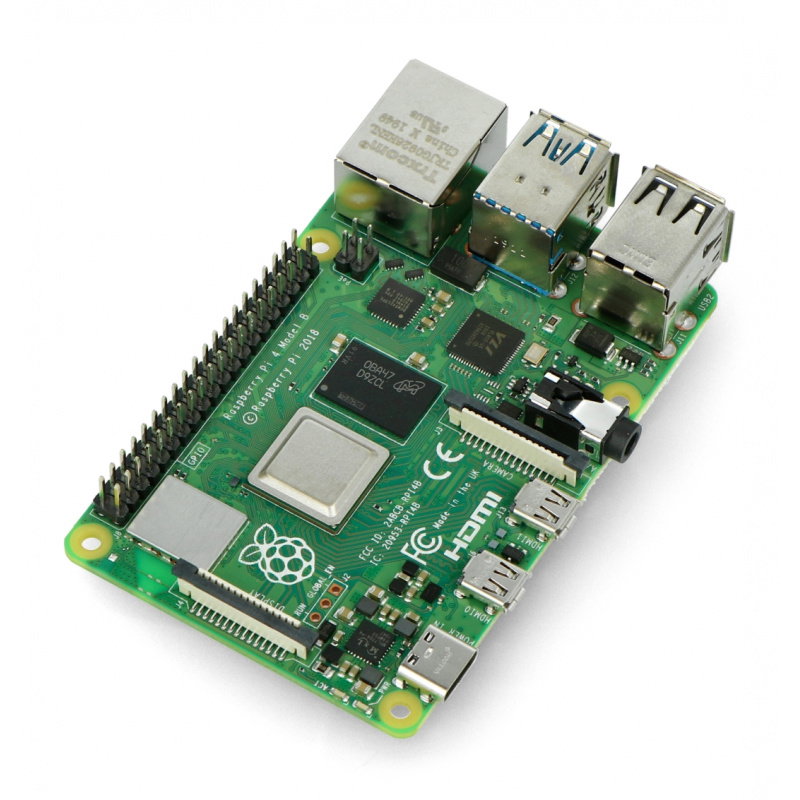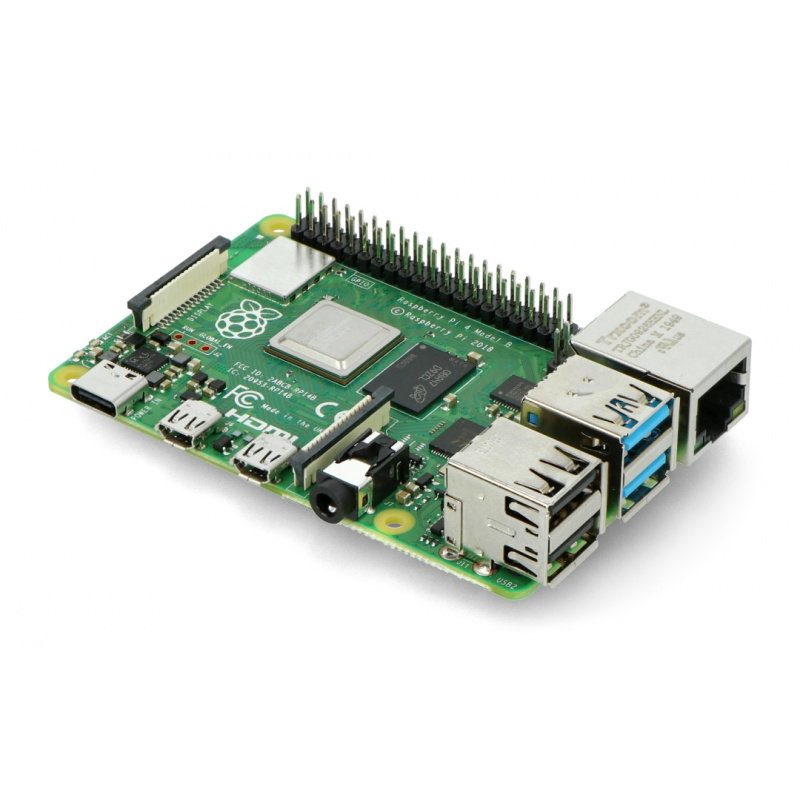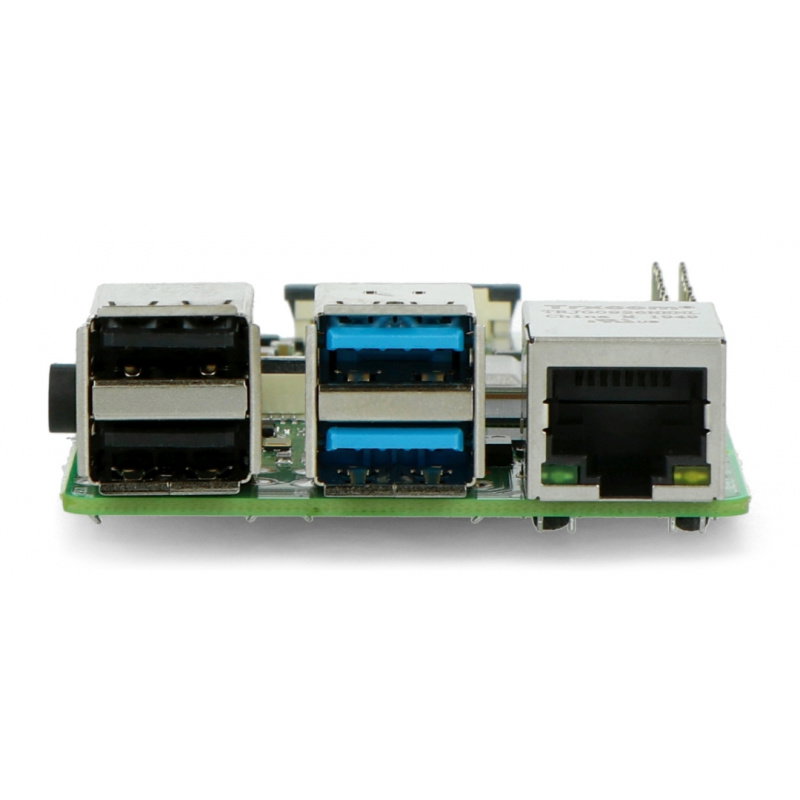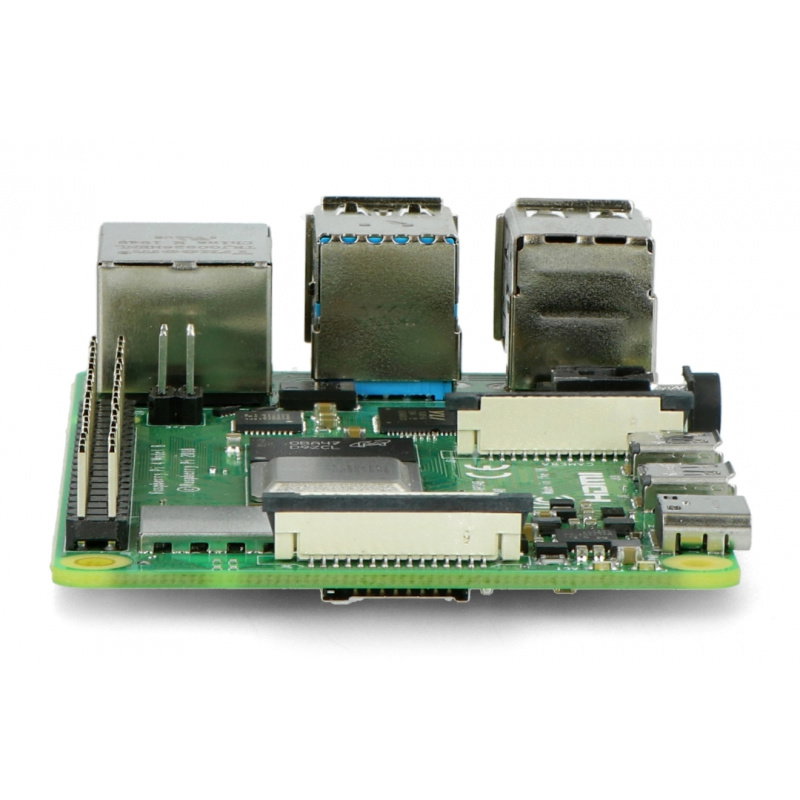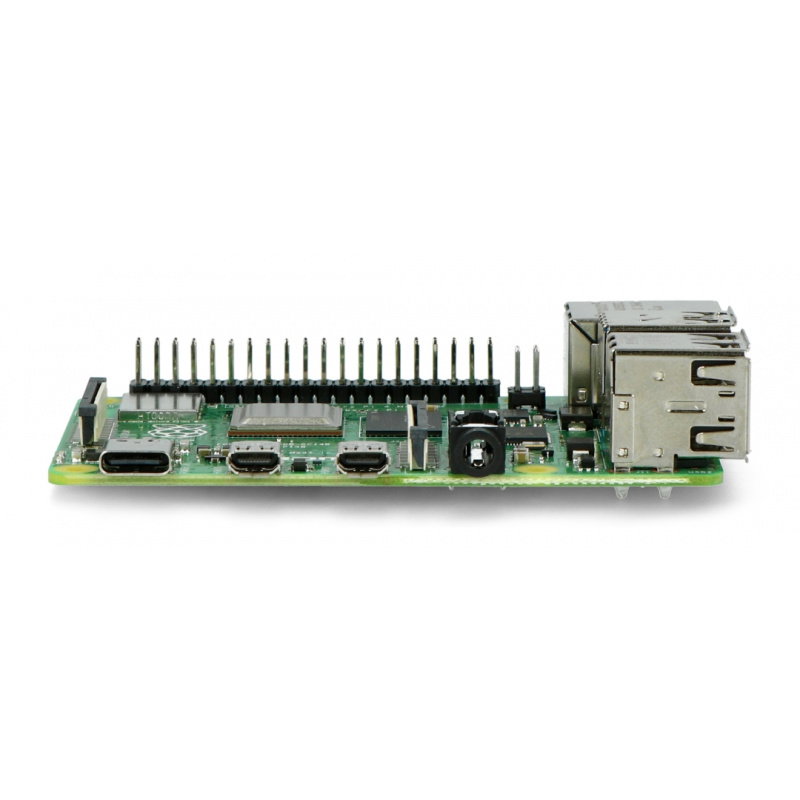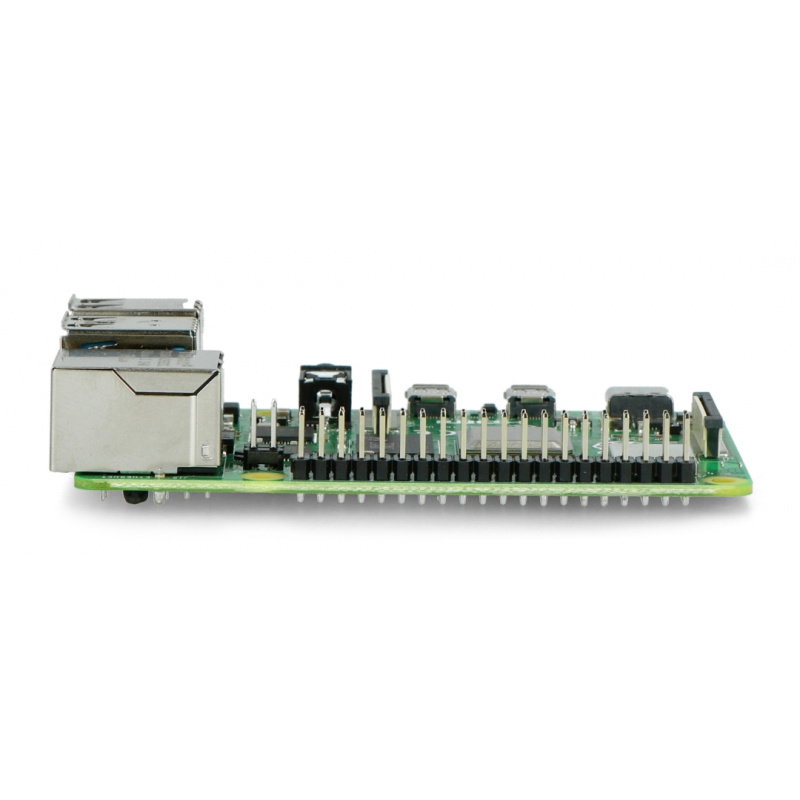


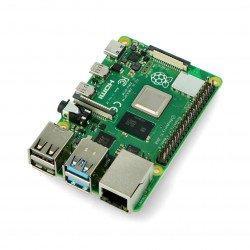










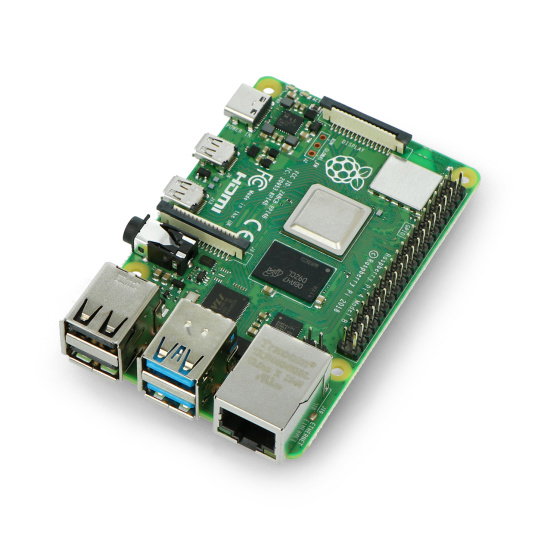
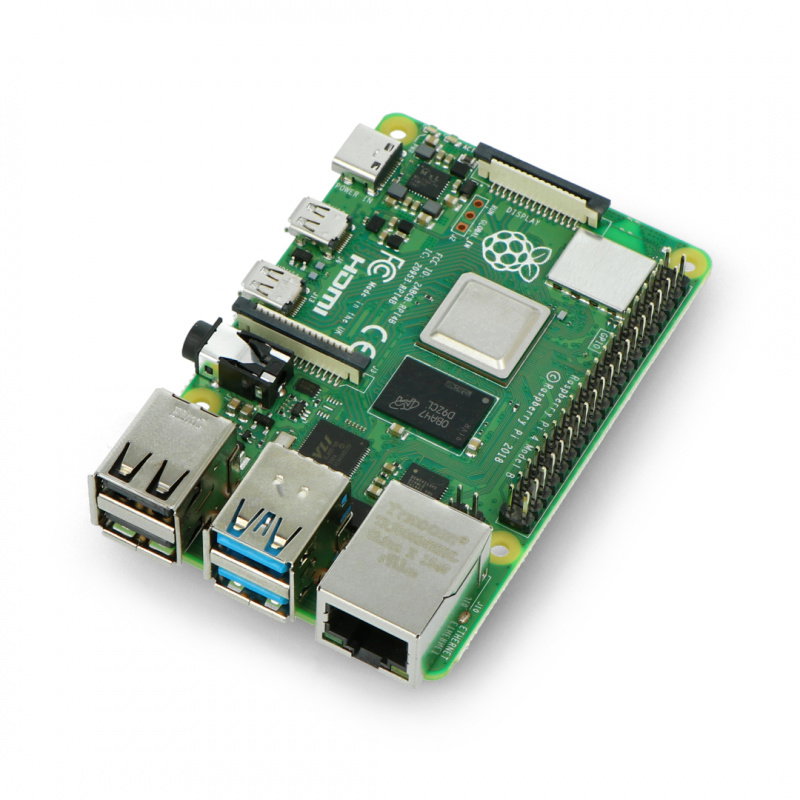


Raspberry Pi 4B with 3GB of RAM . Equipped with two microHDMI ports, two USB 3.0 ports, and two USB 2.0 ports. and a USB Type-C power connector . It has dual-band 2.4 GHz and 5 GHz WiFi, Bluetooth 5 / BLE, an Ethernet port with speeds up to 1000 Mbps , and the ability to power over PoE. The rest of the specifications are compatible with the older 3B+ version, which has been withdrawn from sale.
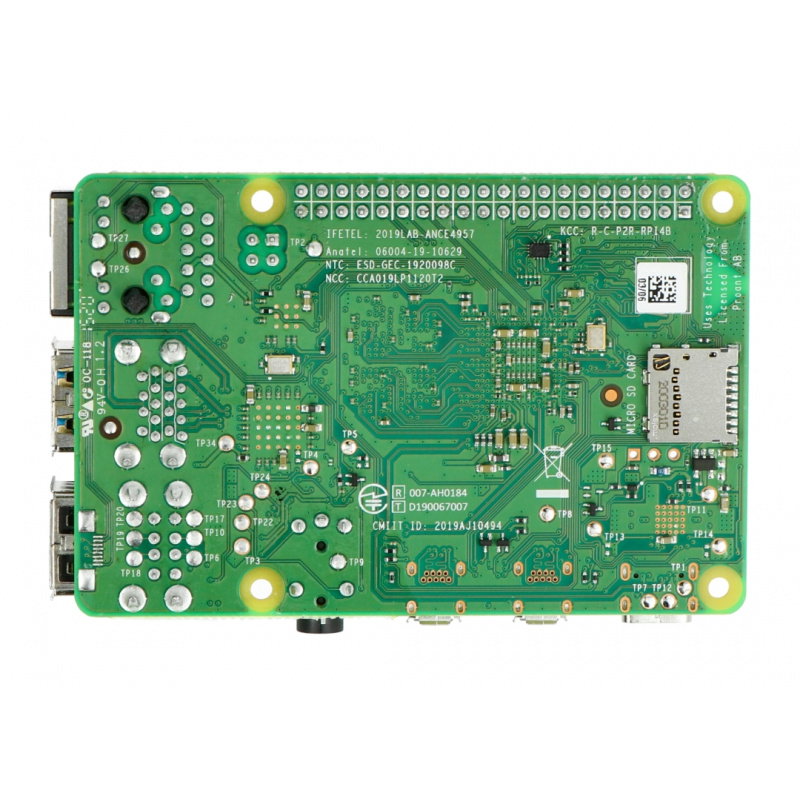
Raspberry Pi version 4 B with built-in 3 GB of RAM . The minicomputer has a powerful Broadcom BCM2711 quad-core 64-bit ARM-8 Cortex-A72 1.8 GHz processor, two microHDMI ports , two USB 3.0 ports , two USB 2.0 ports, and a USB-C power connector. Like other versions of the RPi 4, it has dual-band 2.4 GHz and 5 GHz WiFi, Bluetooth 5 / BLE, an Ethernet port with speeds up to 1000 Mbps , and the ability to power over PoE. Other features remain unchanged from the 3 B+ model. The board still features 40 GPIO connectors, a CSI and DSI connector, and a memory card slot (microSD). Four holes allow for easy installation.
| Characteristic | Description |
|---|---|
| 5 versions of the minicomputer | Raspberry Pi 4 is sold in five versions that differ in the amount of RAM: |
| BCM2711 processor | The Broadcom BCM2711 chipset with a 64-bit Quad-core ARM-8 Cortex-A72 CPU, clocked at 1.8 GHz, provides more computing power than previous Raspberry Pi models. |
| 2 microHDMI monitor connectors | Raspberry Pi 4 is equipped with two microHDMI ports, making it possible to simultaneously connect two HDMI monitors at resolutions up to 4K (4K and 60 fps for one monitor and 4K and 30 fps for two monitors). |
| 2 USB 3.0 ports | The minicomputer has four USB ports. Two are version 2.0 and two are high-performance USB 3.0 ports. |
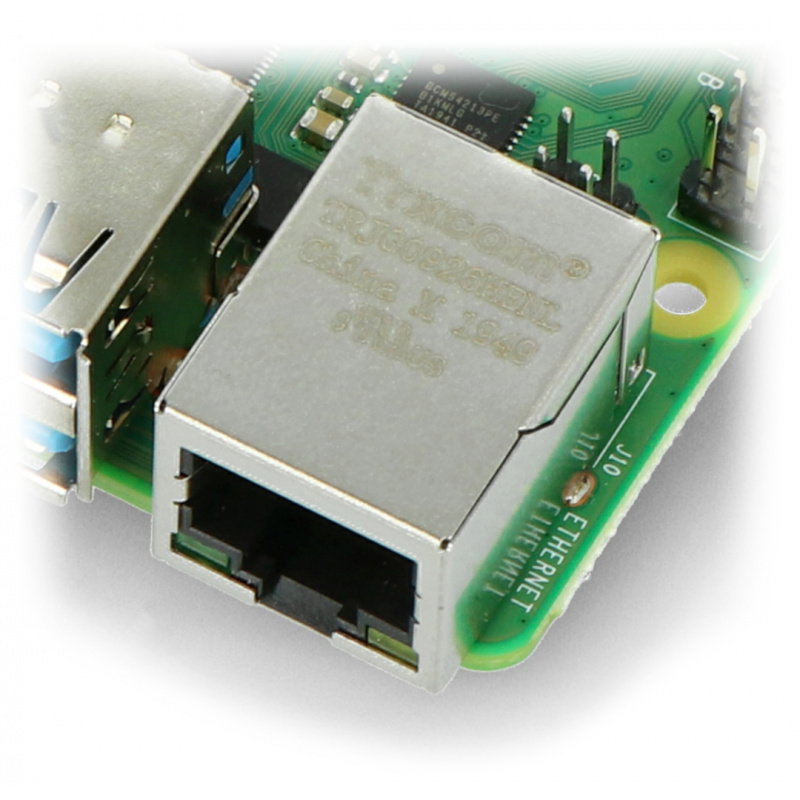
| Ethernet speed up to 1000 Mbit/s | The full Gigabit Ethernet port provides faster cable internet. |
| USB-C power connector | The power connector has been adapted to the latest standards. The Raspberry has a USB-C connector. The manufacturer recommends a 5V/3A power supply. |
| Bluetooth 5.0 | A new wireless standard offering transmission speeds of up to 2 Mb/s. |
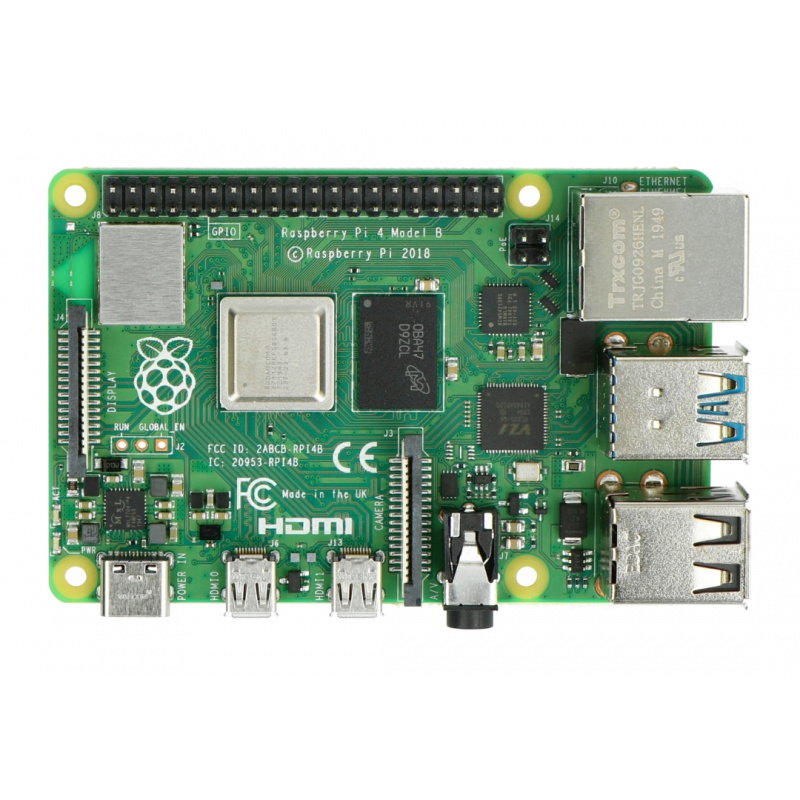
| Distribution of connectors | The board outline remains the same, but the layout of the connectors has changed. |
The Raspberry Pi is equipped with two micro HDMI ports , which allow for video and audio transmission at up to 4K and 60 fps for a single monitor, and 30 fps for two monitors. A 4-pole 3.5mm jack is used to connect headphones, speakers, or analog video via the RCA composite standard. The Raspberry Pi supports the H.265 (4Kp60), H.264 (1080p30) compression standards, as well as OpenGL ES 1.1, 2.0, and 3.0 graphics.
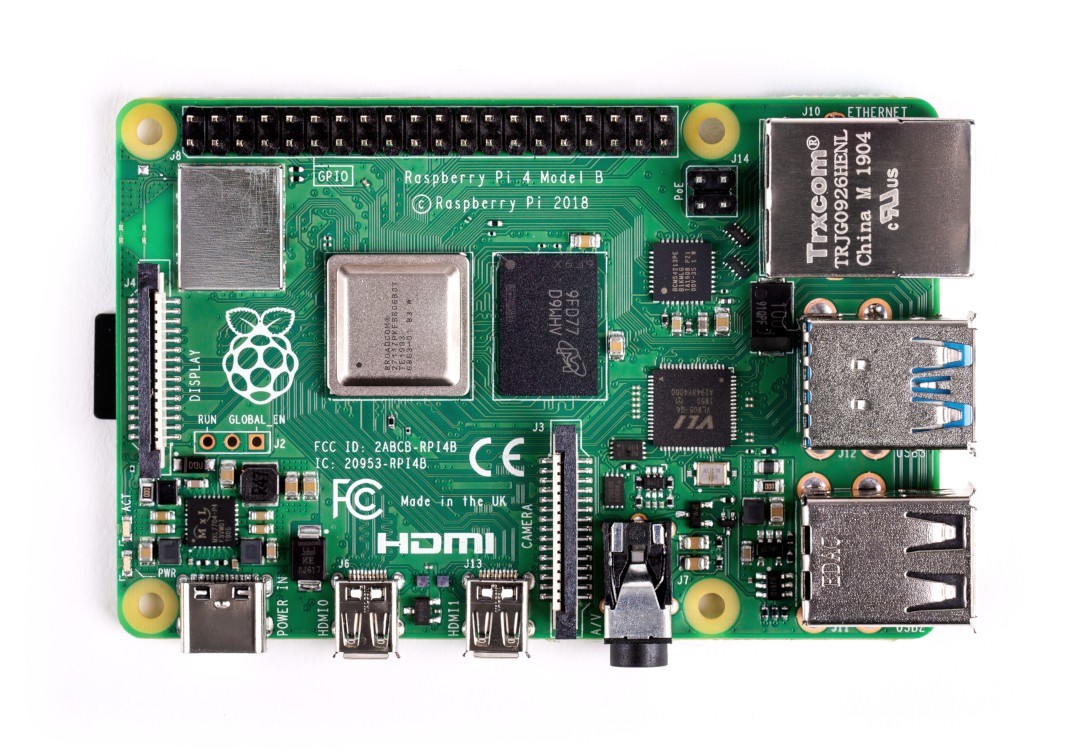
Raspberry Pi 4 model B - top view.
Raspberry Pi 4B - test and review.
The Raspberry Pi's drive is still a microSD memory card . The manufacturer did not use eMMC memory. The operating system can be loaded using a computer with a card reader. We offer suitable cards with the NOOBs program installed , which allows you to install one of the following operating systems upon first launch: Raspberry Pi OS, Openelec, RaspBMC, or OSMC Linux.
Check out how to install the Raspberry Pi OS operating system |
The Raspberry Pi 4 is equipped with popular communication interfaces found in traditional desktop and laptop computers. The most important of these include:
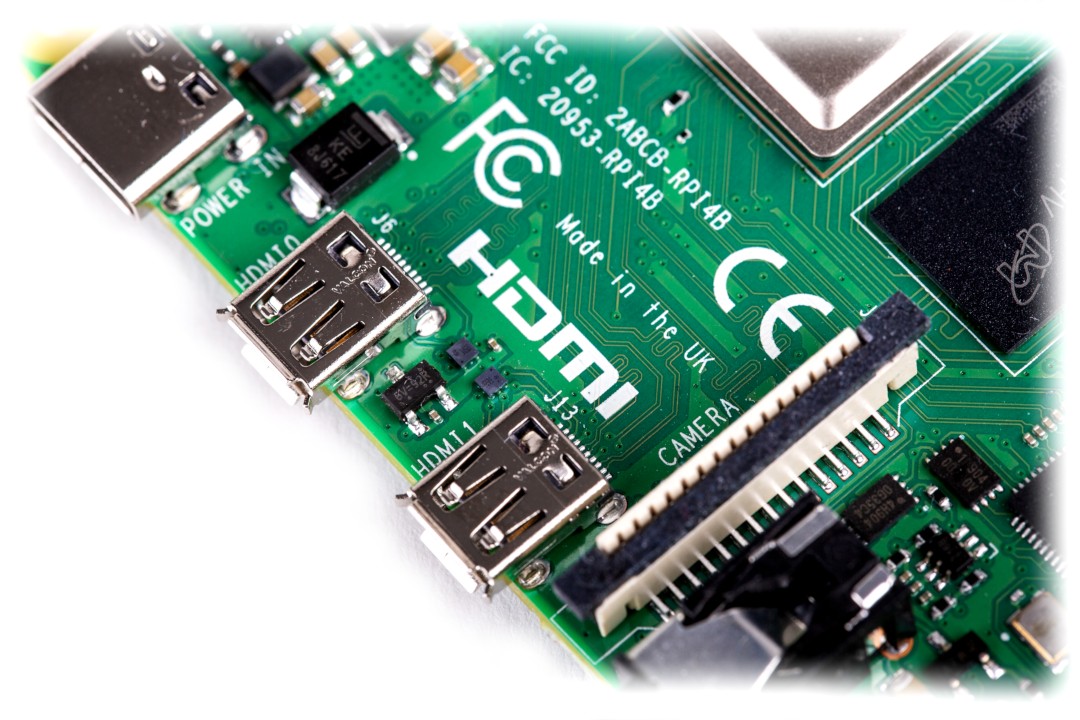
Raspberry Pi 4 - microHDMI connectors.
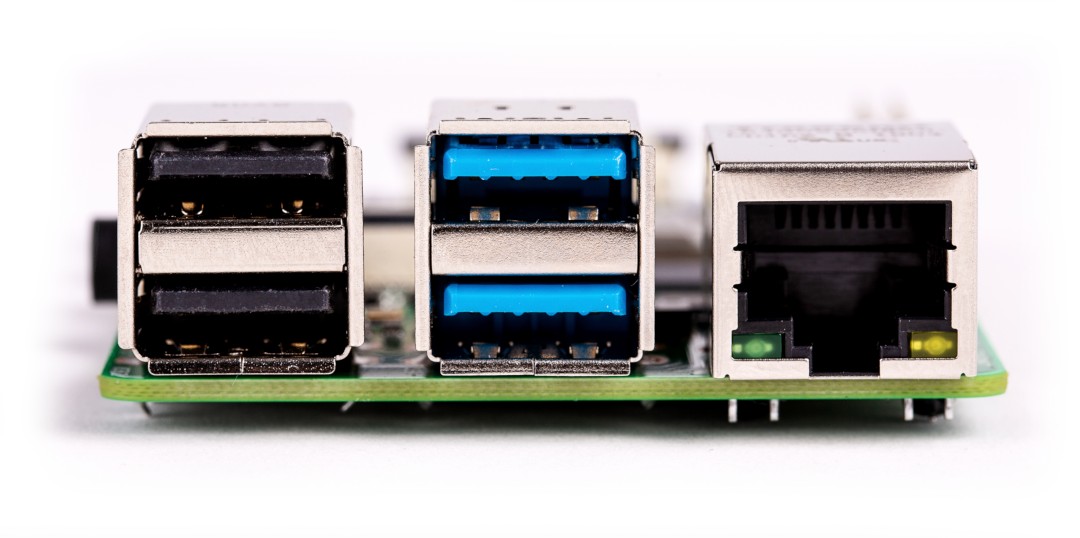
Raspberry Pi 4 - USB 3.0 connectors.
To power the Raspberry Pi 4, it requires a power supply with a USB Type-C connector and an output voltage of 5V. The minimum recommended current output is 3A. We offer original power supplies and branded replacements compatible with the Raspberry Pi.
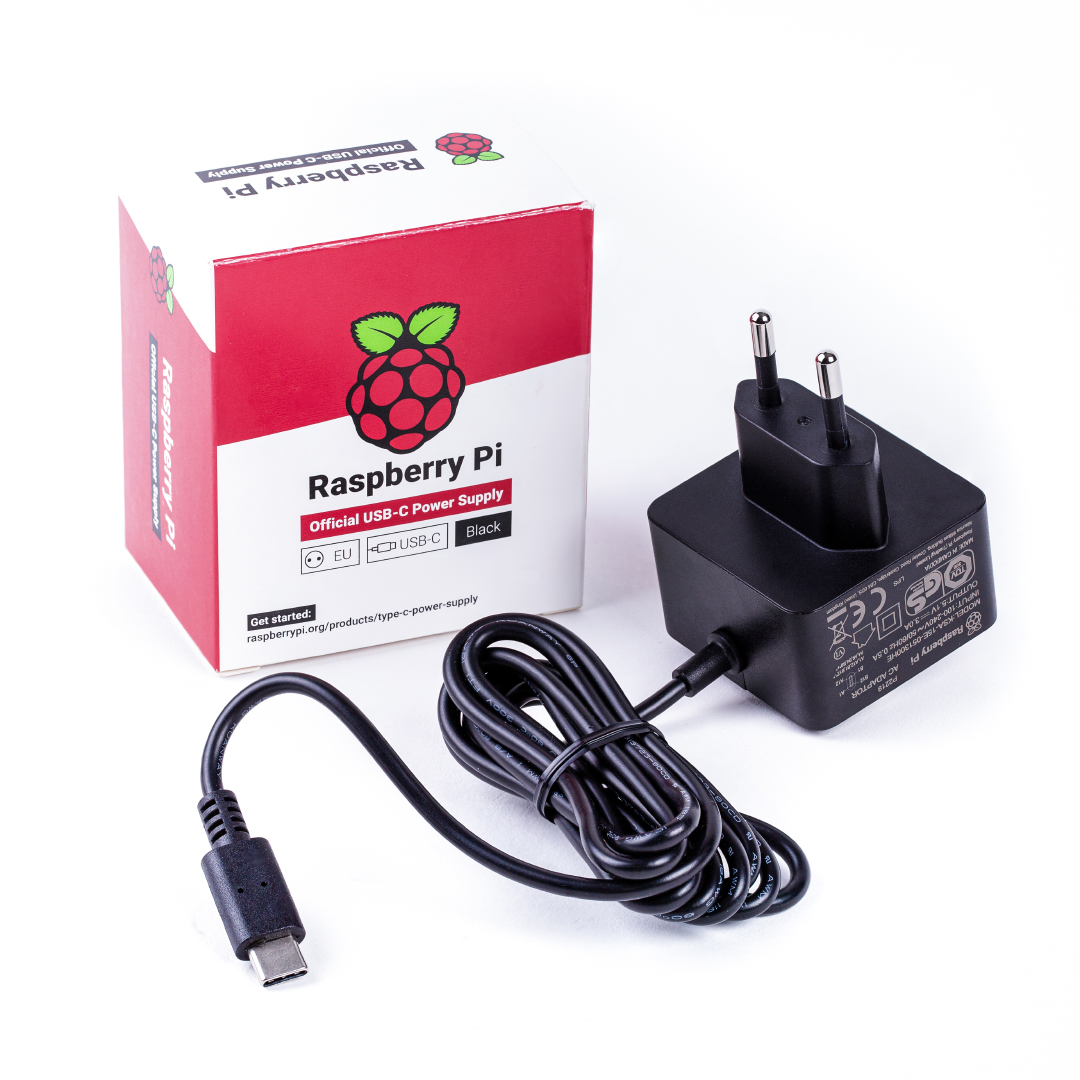 Original power supply for Raspberry Pi.
 | Basic information | |||
|---|---|---|---|
 | 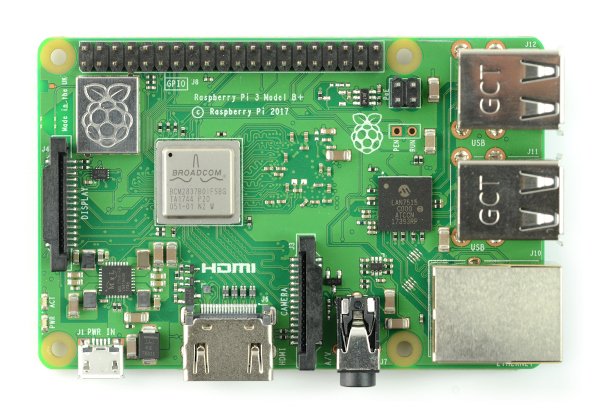 |  | |
| Model | Raspberry Pi 3 model B | Raspberry Pi 3 model B+ | Raspberry Pi 4 model B |
| Issue | 3 - 2016 | 3 - 2018 | 6 - 2019 |
| Technical specifications | |||
| Chipset processor | Broadcom BCM2837 64-bit | Broadcom BCM2837B0 64-bit | Broadcom BCM2711 64-bit |
| Core | Quad-Core ARM Cortex A53 | Quad-Core ARM Cortex-A53 | Quad-Core ARM Cortex-A72 |
| Operating systems | Linux Raspberry Pi OS Windows 10 loT | Linux Raspberry Pi OS Windows 10 loT | Linux Raspberry Pi OS |
| Clocking | 1.2 GHz | 1.4 GHz | 1.8 GHz |
| Architecture | ARMv8-A | ARMv8-A | ARMv8-A |
| RAM | 1GB LPDDR2 @ 900MHz | 1GB LPDDR2 @ 900MHz | Five versions
|
| Memory | microSD card | microSD card | microSD card |
| GPIO socket | 40-pin connector (2x20 pin) 2.54 mm raster | 40-pin connector (2x20 pin) 2.54 mm raster | 40-pin connector (2x20 pin) 2.54 mm raster |
| Power supply | 5.1V / 2.5A via microUSB |
|
|
| Tile dimensions | 85 x 56 x 17 mm | 85 x 56 x 17 mm | 85 x 56 x 17 mm |
| Interfaces | |||
| USB interface | 4x USB 2.0 - type A socket | 4x USB 2.0 - type A socket | 2x USB 2.0 - type A socket 2x USB 3.0 - type A socket |
| Network interface | 10/100 Mbps Ethernet port | 300 Mbps Ethernet port | 100/1000 Mbps Ethernet port |
| WiFi interface | 802.11 b/g/n 150 Mbps | Dual Band 2.4 GHz and 5 GHz 802.11 b/g/n/ac | Dual Band 2.4 GHz and 5 GHz 802.11 b/g/n/ac |
| Bluetooth | Low Energy, BLE 4.1 | Low Energy, BLE 4.2 | Low Energy, BLE 5 |
| Camera | CSI nest | CSI nest | CSI nest |
| Touchscreen display | DSI socket | DSI socket | DSI socket |
| Video | HDMI HD 1080px / 30fps | HDMI HD 1080px / 30fps H.264 1080p30 OpenGLES 1.1, 2.0 | 2 x microHDMI H.265 4K 60 fps H.264 1080p 30 fps OpenGLES 1.1, 2.0, 3.0 |
| Communication | UART, SPI, I2C, GPIO | UART, SPI, I2C, GPIO | UART, SPI, I2C, GPIO |
| UC - Microcontroller | BCM2711 |
| UC - Core | Cortex A72 |
| UC - RAM | 3 GB |
| UC - core | 4. Quad Core |
| UC - External memory | microSD card |
| UC - freq | 1.8 GHz |
| UC - Ethernet | yes |
| UC - WiFi | yes |
| UC - USB | 2x USB 3.0 + 2x USB 2.0 |
| UC - microSD | yes |
| UC - Bluetooth | yes |
| UC - HDMI | yes |
| UC - I2C | yes |
| UC - UART | yes |
| UC - Connector | USB typ C |
| UC - SPI interface | yes |
| UC - LCD interface | yes |
| UC - Camera interface | yes |
| UC - Linux | yes |
| UC - Android | no |
| UC - Windows | no |
| Niebezpieczne | Equipment |
| Package width | 9.5 cm |
| Package height | 6 cm |
| Package depth | 2.5 cm |
| Package weight | 0.054 kg |
Be the first to ask a question about this product!