Over 500,000 customers already trust us. With us you get:
same-day shipping for products marked “24h shipping”
our own service centre in Poland
30 days to return and free delivery in Poland from PLN 500
4.9/5 on TrustMate and 4.9/5 on Google (almost 4,000 reviews)
VAT invoice, leasing and instalments for businesses
For businesses
individual quote for larger quantities
VAT invoice
For schools and universities
orders based on requests for quotation
help with choosing kits for your lab
Send an inquiry - we reply quickly.

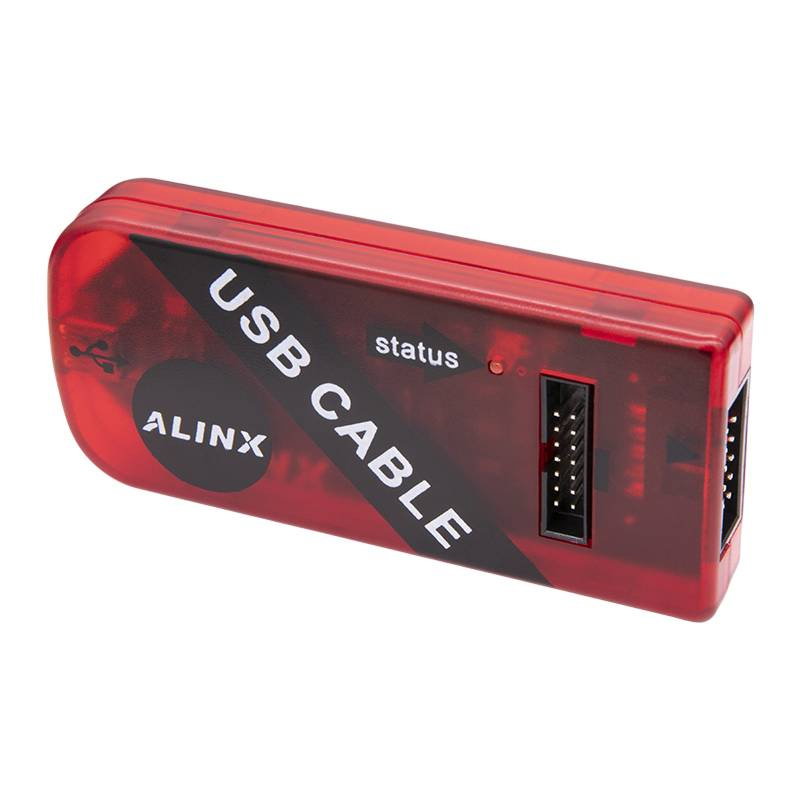
AL321 - USB JTAG programmer for Xilinx FPGA and CPLD devices
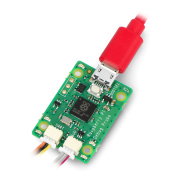
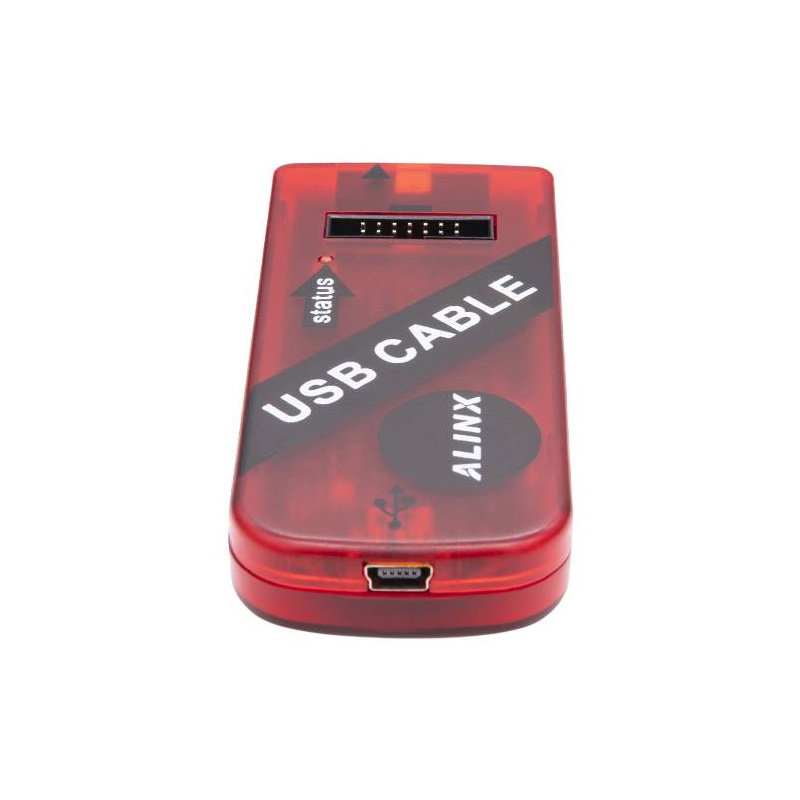
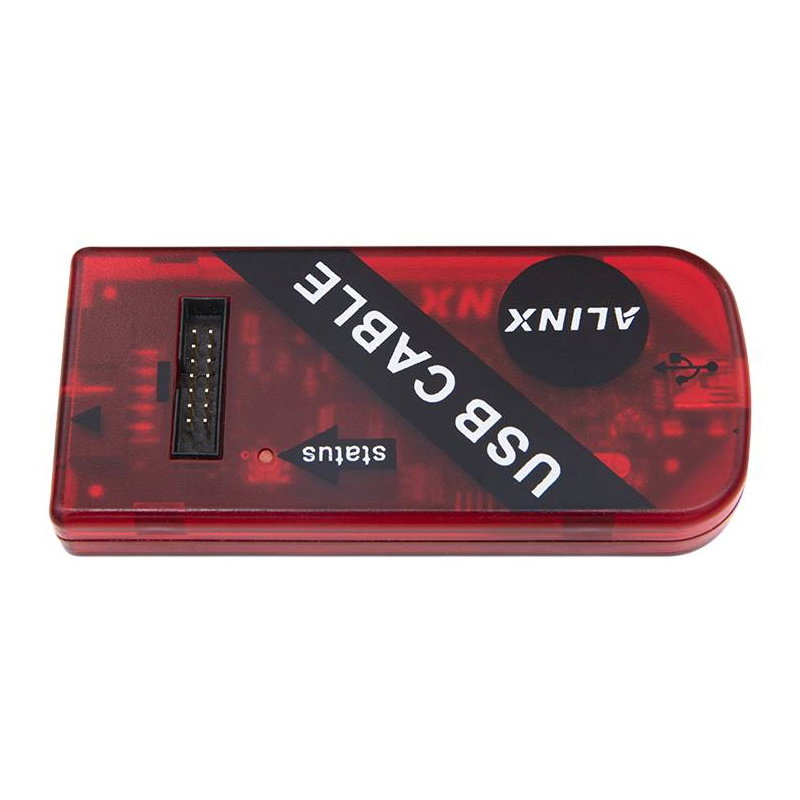
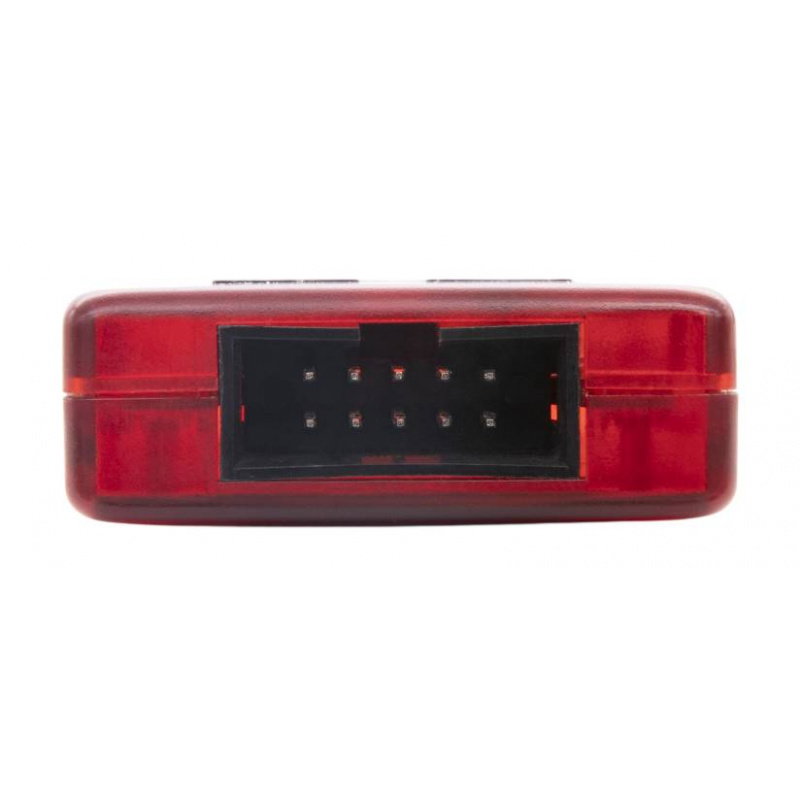
The ALINX AL321 is a USB JTAG programmer and debugger designed for Xilinx FPGAs, CPLDs, and configuration memories . It offers a 10-pin connector with a 2.54 mm pitch and a 14-pin connector with a 2 mm pitch. It automatically detects the target device's interface voltage and supports 1.5 V, 1.8 V, 2.5 V, and 3.3 V levels . It works with Windows and Linux, as well as the ISE and Vivado environments .
We could not load the price.
The promotional price does not combine with quantity discounts.
Manufacturer's description: AL321 - USB JTAG programmer for Xilinx FPGA and CPLD systems
The ALINX AL321 programmer enables configuration transfer, diagnostics, and testing of projects using Xilinx FPGA and CPLD devices. The device connects a computer to the development board's JTAG interface, and two types of connectors facilitate interoperability with various hardware platforms. Automatic adjustment to the target device's interface voltage reduces the need for manual configuration of logic levels. LED indicators provide information about the programmer's operating status, while SPI Flash PROM support allows for saving configurations intended for power-on. The manufacturer declares compatibility with ISE versions 12.1 to 14.7 and with Vivado versions available at the time of product release.
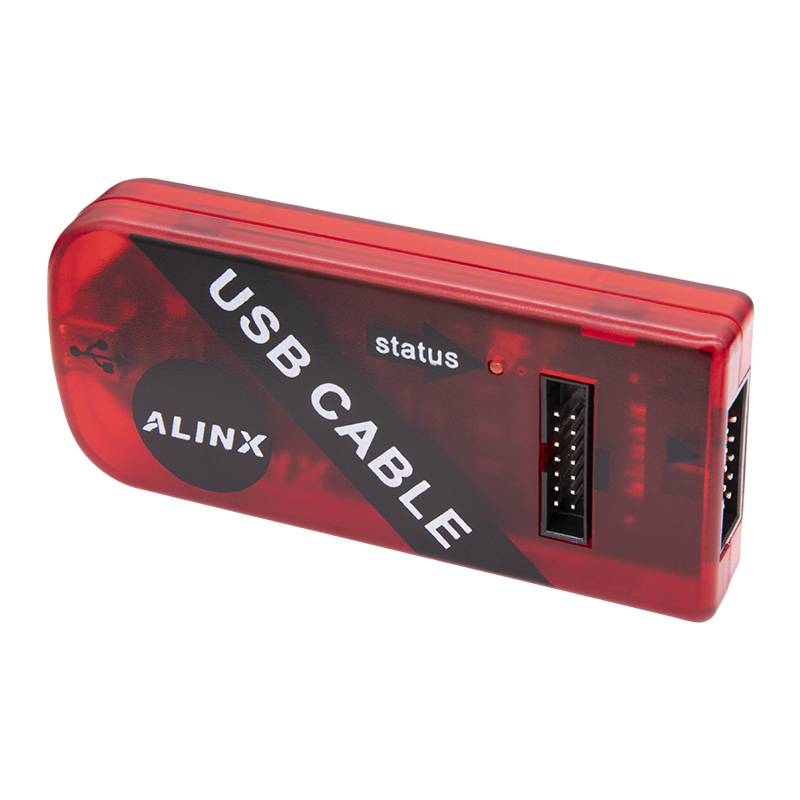
AL321 - USB JTAG programmer for Xilinx FPGA and CPLD systems.
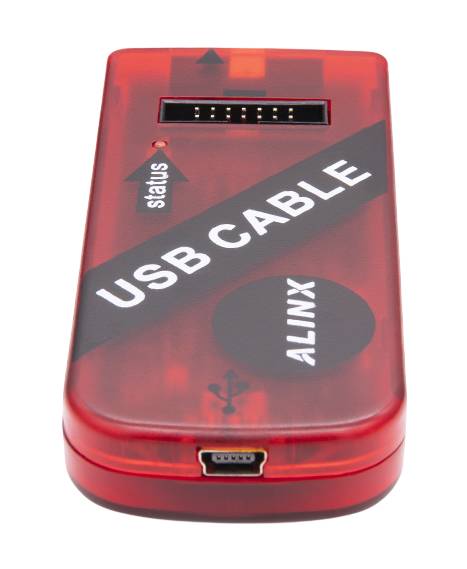
The ALINX AL321 allows for software uploading and precise testing of development boards.
Main features of the Xilinx programmer
- USB JTAG interface: allows you to configure and debug FPGAs and SoCs from your computer
- Two JTAG connectors: a 10-pin port with a 2.54 mm pitch and a 14-pin port with a 2 mm pitch increase compatibility with development boards
- Automatic voltage recognition: the programmer adjusts the interface level to the target system voltage
- Supported Logic Levels: 1.5V, 1.8V, 2.5V, and 3.3V LVCMOS compatible
- Xilinx Software Compatibility: Support for ISE, Vivado, iMPACT, and ChipScope
- Windows and Linux support: ability to work on popular operating systems
- SPI Flash PROM Memory Programming: allows you to save configurations for automatic system startup.
- LED indication: indicators make it easy to monitor the operating and transmission status
- Broad hardware compatibility: Supports multiple Xilinx FPGA, CPLD, and configuration memory families
- Laboratory and design applications: useful for learning, prototyping, commissioning, and servicing digital devices
Applications of the USB JTAG programmer
- Configuring Xilinx FPGAs on Development Boards
- CPLD programming
- Saving configuration to SPI Flash PROM memories
- Debugging FPGA designs in the ChipScope environment
- Testing projects created in ISE and Vivado
- Running prototypes using SoCs and FPGAs
- Diagnostics of the JTAG interface and device chains
- Updating the configuration of digital devices
- Construction of laboratory stations for FPGA learning
- Servicing and testing of electronic boards
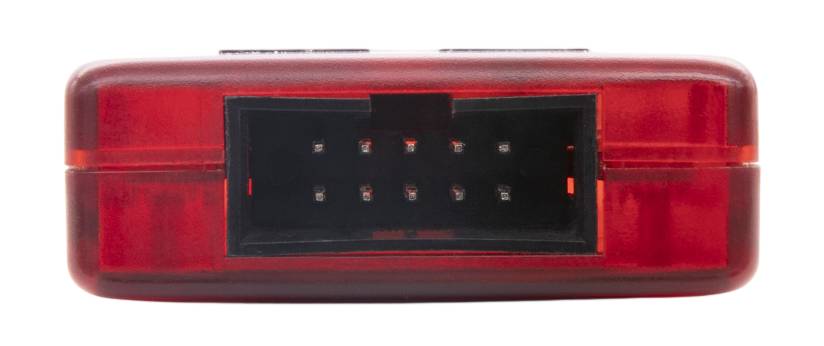
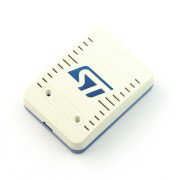
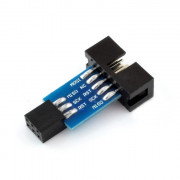
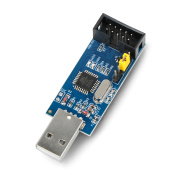
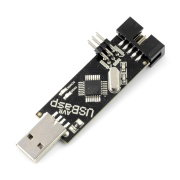
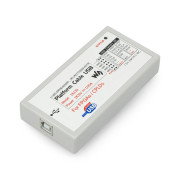
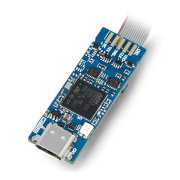
The programmer has two types of interfaces: 10-pin with a 2.54 mm pitch and 14-pin with a 2 mm pitch.
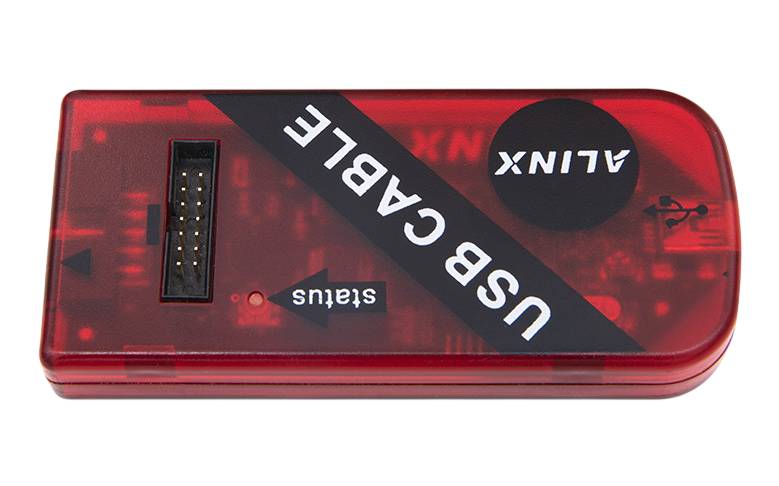
The module supports voltages of 3.3 V, 2.5 V, 1.8 V and 1.5 V.
Technical specifications of the ALINX AL321
- Intended use: Xilinx FPGAs, SoCs, CPLDs and configuration memories
- PC-side interface: USB
- Target system interface: JTAG
- JTAG 1 connector: 10-pin
- JTAG 1 connector pitch: 2.54 mm
- JTAG 2 connector: 14-pin
- JTAG 2 connector pitch: 2 mm
- Supported interface voltages: 1.5 V, 1.8 V, 2.5 V and 3.3 V
- 3.3V level standard: LVCMOS
- Target system voltage recognition: automatic
- Supported operating systems: Windows, Linux
- Supported ISE: 12.1 to 14.7
- Supported Vivado environment: the manufacturer declares support for versions available at the time of publication of product data
- Supported tools: iMPACT, ChipScope
- SPI Flash PROM Memory Programming: Yes
- Status indication: LEDs
- Declared Conformity: Xilinx Devices
- Supported FPGAs: Spartan family, including Spartan-6 devices
- Supported CPLDs: XC9500, XC9500XL, XC9500XV, CoolRunner XPLA3, and CoolRunner-II
- Supported ISP PROMs: XC18V00 series
- Supported Platform Flash Memory: XCF00S, XCF00P, and XL PROM series
- Other supported FPGAs: XC4000 series
Useful links
| Name | Value |
|---|---|
| Width | 12 cm |
| Height | 16 cm |
| Depth | 21 cm |
| Weight | 0.088 kg |
 GLS
Shipping in 24 hours
from €8.07
GLS
Shipping in 24 hours
from €8.07
 Raben - pallet delivery
Delivery in 3–5 days, no inside delivery
from €96.75
Raben - pallet delivery
Delivery in 3–5 days, no inside delivery
from €96.75
The full delivery terms are on the page Delivery and payment.
30 days to return, without giving a reason
If the product does not meet your expectations, you have 30 days from receiving the parcel to withdraw from the contract. The product only has to be complete. The right of return belongs to consumers (a purchase unrelated to business activity).
Complaints
If the product turns out to be faulty, you can make a claim under the guarantee or the statutory warranty. We handle claims without delay, at the latest within 14 working days of receiving the report together with the goods.
Be the first to ask a question about this product!
Instructions and documents
GPSR data
Products from the same category
See all