




On Sale
Wi-Fi Modules
When WiFi technology appeared, it was a total revolution, which definitely improved the management of many devices and systems. It is a technology designed to send and receive information from communication devices. It is designed to provide access to the Internet, without which today it is difficult to imagine normal functioning in reality. WiFi network is used today in many ways. It is primarily known as a technology that allows you to use the Internet for entertainment and interesting leisure activities, as well as to communicate with other users or supplement your knowledge in a specific area. WiFi is also great for managing and controlling various devices. This is what WiFi modules, which you will find in our offer, are used for. They differ in frequency range, power voltage and type of microcontroller. Check our recommendations and use the WiFi module to control your PCB.
Subcategories
Products
See also
How does the WiFi module work?
Like AM/FM receivers and transmitters, the WiFi module uses radio waves for communication, but the frequency range of these extends beyond radio frequencies, even reaching a data transmission frequency of 5 GHz.
WiFi modules - what else is worth knowing about them?
There are two methods of connecting a WiFi network to the Internet - the first involves access to the Internet from a phone through a mobile phone operator, and the second involves access to the Internet using a WiFi router that is powered by the electrical installation. Using the WiFi network , you can control, for example, presence simulation automation in your home, even when you are located several thousand kilometers away. The LED diode that virtually every Wi-Fi router is equipped with indicates, among others: device status and power.
Controlling the Arduino board via WiFi
Arduino WiFi - Modern technology is developing at an almost exponential rate every year. Engineers are working at the same pace to reduce the dimensions of electronic devices and components in order to get rid of unnecessary wires. This process has come so far that a device that is now considered portable can be defined as such if it physically fits into the user's clothing pocket. Modern devices, both for hobby and professional use, use wireless communication, but not to completely abandon wired connections, but to easily establish connections between many devices operating in a WiFi network.
Module compatible with Arduino - additional information
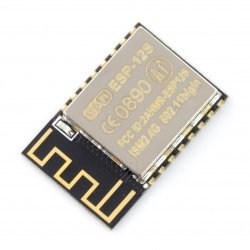
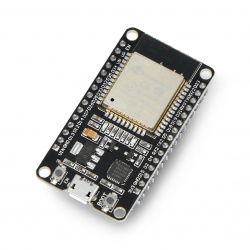
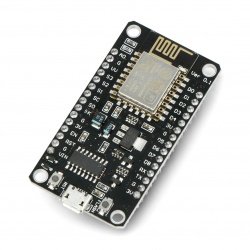
The small ESP8266 integrated circuit, which is responsible for controlling the connection of the Arduino board with the WiFi network in the external module, consumes a current of only 10µA in the idle state. Thanks to it, you can send information about control signals and the necessary measurement data obtained, for example, from atmospheric pressure sensors to Arduino via WiFi in order to remotely determine weather conditions from a remote place from the measurement site. Selected WiFi modules are equipped with a USB-UART converter. Thanks to it, it can be programmed directly via the USB port. Programming is done using the Arduino IDE environment. Additionally, some models are equipped with an analog input. The ESP 8266 module, the ESP32 WiFi and BT module, as well as modules compliant with the IEEE 802.11 standard (WiFi 802.11 bg, 802.11 bgn 802.) deserve special attention. If you have any questions or doubts regarding WiFi modules, please contact our experienced advisors.
WiFi modules - FAQ
WiFi modules, also known as WLAN modules (wireless local area network), are electronic components used with other devices to obtain a wireless connection to the Internet. They use radio waves to communicate.
ESP8266 from Espressif is one of the most famous WiFi modules on the market, often considered in the context of compatibility with the Arduino platform. It relieves the processor and offers WiFi communication in the 802.11 b/g/n 2.4 GHz standard with a maximum bandwidth of up to 72.2 Mb/s, operating with a voltage ranging from 4.8 to 12 V. It is worth trying.