



New arrivals


On Sale

Soldering
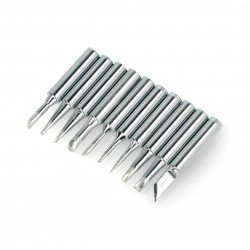
Soldering is one of the methods of permanent joining of metal elements. It uses a metal binder, which we call soldering. Its melting point is lower than the melting point of the elements that we join together. Soldering is a commonly used method in electronics, thanks to the skills of the soldering iron you can significantly expand your possibilities of creation. It is used during prototyping, but also during assembly, service and repair works. Special tools are used for soldering, these are soldering machines and soldering stations. In order to make the work even more effective and to make the connection more precise and durable, we use various types of interchangeable soldering tips, fluxes and soldering crucibles. You will find all this in our offer, as well as other additional accessories that make soldering more efficient for amateurs and professionals. Check out our offer of soldering tools. Take advantage of the possibilities of permanent joining of metal elements in more and more advanced projects.
Subcategories
Products
See also
Soldering irons and soldering stations - helpful in every workshop
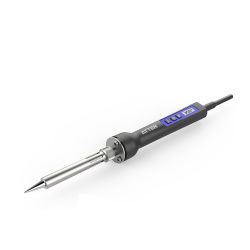
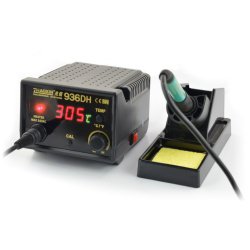
The primary use of a soldering iron is soldering - making metallic electrical connections between electronic components by melting the solder binder between the components. A soldering iron connected to a voltage source supplies thermal energy (generated by the flow of current through the soldering iron heater) to the soldering tip, which plays a key role in the soldering process. After connecting the soldering iron to the voltage source, wait a few minutes until the soldering tip heats up to the optimal temperature at which you can freely melt the soldering filler, and then use it to connect the elements of the electrical circuit being assembled or repaired. Our offer includes soldering irons, as well as soldering stations with temperature control and hot air soldering functions. For more advanced tasks, soldering stations with a fan in the butt and a separate desoldering function with the ability to save operating parameter settings will be useful.
Binders and fluxes - "fuel" for soldering
Even the most technically advanced car has no chance of functioning properly with incorrectly selected fuel, engine oil and other consumables. The situation is similar with soldering - in addition to selecting the appropriate soldering equipment, the appropriate soldering binder and flux substances should be selected for the scope of work performed. Our offer includes soldering binders with a standard composition of 60% tin (acting as the actual binder) + 40% lead (acting as a flux that facilitates the soldering process). Depending on the surface area of the soldered area and the number of wires and their cross-section, it is worth selecting the tin according to the cross-section of the soldering wire. During soldering, the melting temperature of the solder must be approximately 100°C lower than the temperature of the soldering tip for the soldering process to be effective. The use of rosin in the soldering process facilitates the distribution of tin and also helps protect against unwanted short circuits due to spilling tin outside the target soldering area. Due to the higher level of difficulty of soldering in the surface mount technique (SMD) compared to through-hole assembly (THT), it is helpful to use solder paste and gel flux, which should be applied under the soldered element, before placing the soldering tip to its terminals on the soldering pads.
A wide range of accessories to facilitate soldering
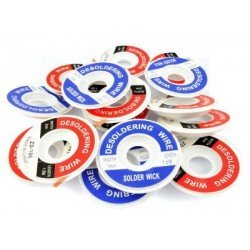
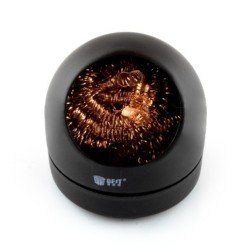
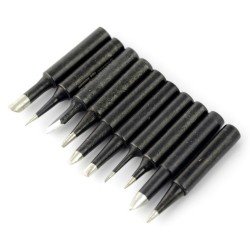
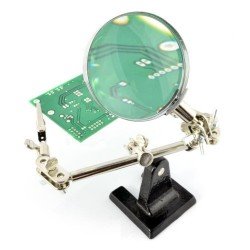
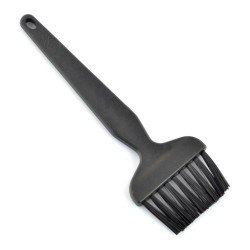
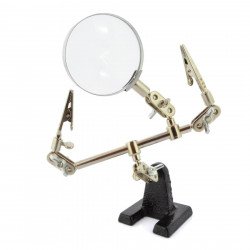
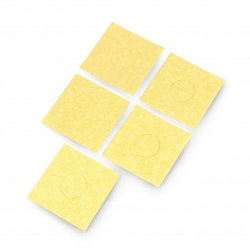
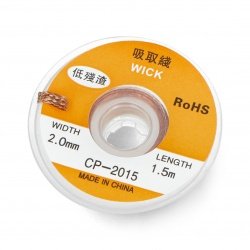
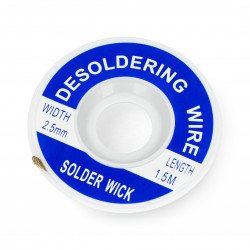
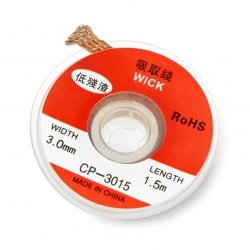
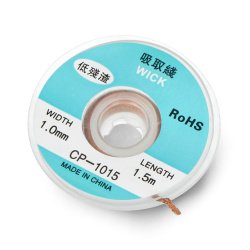
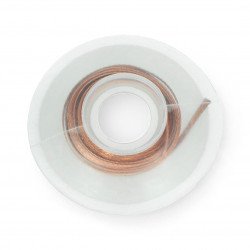
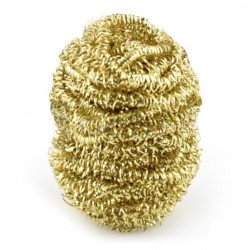
To perform soldering professionally, in addition to a soldering iron and binder, it is worth having other accessories in your workshop that will make your soldering even more effective. Due to the fact that the soldering tip is the most important final link in the chain of transferring thermal energy necessary to melt the solder, it is important to keep the tip and the soldered surface clean, because the quality of the soldering process determines the correct assembly of the electronics and, consequently, the proper functioning of the device. . For this purpose, it is worth purchasing a cleaner with an insert of brass shavings or a soldering sponge, which should be moistened with water before use. This solution allows you to clean the soldering tip on an ongoing basis and extends its life. Since assembly errors may occur during soldering, it is good to have a vacuum cleaner and braided copper tape at hand, which absorbs solder and protects the soldering pad from damage during desoldering. In addition to tin, solder usually also contains lead, which helps melt tin. Due to the temperature of the tip exceeding 300°C during soft soldering, soldering fumes that are harmful to health are produced. A good solution to this problem is the use of a soldering fume absorber in the form of an exhaust fan with a carbon filter. We also recommend ESD brushes for cleaning electronics in devices susceptible to damage caused by electrostatic discharges, as well as magnifying glasses and work holders for PCB boards, which will definitely help in the workshop during assembly, service and design work.
Soldering - FAQ
You can solder a variety of metal components, including wires, electronic components, structural parts, housings, pipes, tools, and many other items.
When soldering with tin, remember to properly degrease the surface, use a special flux and maintain the appropriate temperature during the entire process. Detailed instructions can be found on our blog in the article " How to solder - guide ".
For basic surface degreasing, you can use high-proof spirit or extraction naphtha. Additionally, solder adhesion can be improved by using special soldering acids to etch the surface and an appropriate flux .
The correct soldering temperature depends on the parameters of the binder used and the soldered elements - it must be sufficient to dissolve the binder, but lower than the melting point of the soldered objects. During classic electronics soldering, the tip temperature is usually 320-350°C.
When performed correctly and with safety precautions, soldering is not harmful to health.
Brazing is a soldering technique at temperatures exceeding 450°C. Solders are made of aluminum, silver, copper, phosphorus, nickel, cobalt, palladium or even gold.
Soft soldering is a soldering technique at temperatures below 450°C. Mainly alloys of tin , bismuth, cadmium and antimony are used as soldering binders.
Hot air soldering is usually performed at temperatures from 320°C to 380°C. The blowing regulation in hot air soldering irons is usually gradual, and a graph of the temperature dependence on the set blowing level can be found in the instructions for use.