



New arrivals
On Sale
HDF and Wood-Based Boards
Products
See also
HDF and wood-based boards
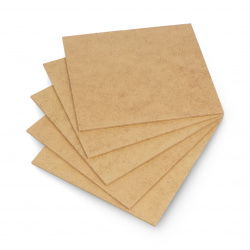
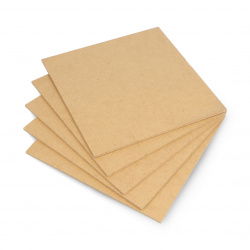
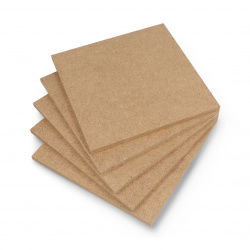
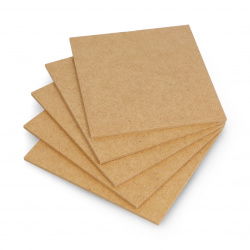
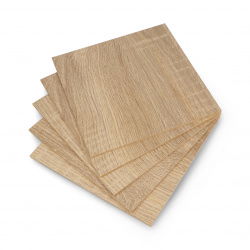
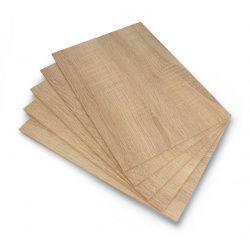
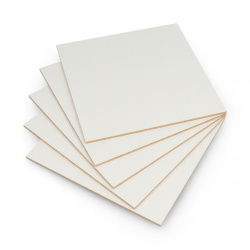
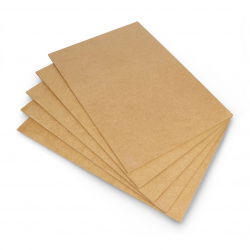
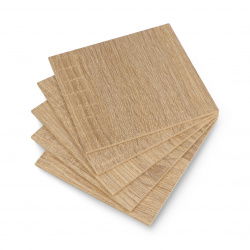
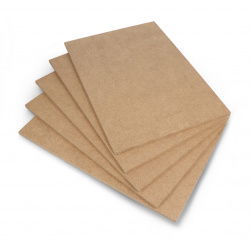
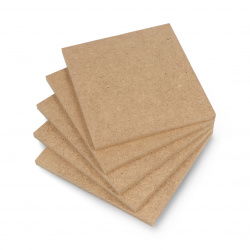
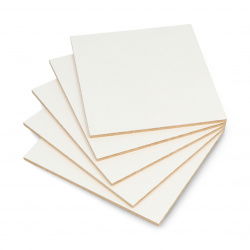
HDF boards and other wood-based materials are raw materials designed for precision processing with lasers and CNC milling machines. They are distinguished by their uniform structure and stable parameters. They are used for cutting, engraving, and milling elements with high repeatability. They are a popular choice for technical, prototype, and hobby projects, where predictable results are paramount. HDF (High Density Fiberboard) is a high-density fiberboard. It is made from very finely ground wood fibers, compressed under high pressure and temperature. MDF (Medium Density Fiberboard) is a medium-density fiberboard. It is also made from wood fibers, but is compressed less intensively than HDF, resulting in a lower density. Other materials can be found in the CNC and laser machining materials starter kit. This test mix allows you to test various raw materials without purchasing full packages of each. Inside, there are sheets of various wood-based materials and plastics, such as plywood, Plexiglas elements, and cork boards. Each of these behaves differently during laser cutting and CNC milling, so the package is focused on testing and prototyping, from checking engraving quality and cutting parameters to assessing the material's behavior during machining.
The use of wood-based materials in practice
HDF boards and other wood-based materials are primarily used as a base for laser and CNC processing. They provide a foundation for what can be further used in modeling, decorative, or utility projects. These materials work well with both diode and CO₂ lasers and CNC milling machines, enabling clean edges and a high level of detail. It's hard to beat the results in terms of dimensional accuracy and aesthetic finish. HDF is chosen primarily for its consistent processing behavior. The laser cuts it cleanly, without significant edge fraying, and the engraving remains even and legible even on small details. With CNC, the material holds its shape well when milling shallow and medium-sized details, especially flat elements. It's not a "construction" material in the classic sense, and its role is more for precision components, prototypes, templates, and designs, where cutting accuracy is more important than mechanical strength.
HDF vs MDF vs plywood
Compared to MDF, HDF is denser and harder, resulting in more stable edges after laser cutting and less dust formation during processing. MDF is easier to mill but less precise when cutting fine details. Plywood, on the other hand, behaves differently, having a layered structure that provides greater strength but can cause uneven edge quality when laser cutting, especially in cheaper variants with more voids and glue. In practice, HDF is chosen where geometry and detail, rather than mechanical stress, are a priority. The materials available in the package, including cork and plywood, are characterized by greater diversity and context of use.
HDF and wood-based boards in Botland's offer
At Botland, we focus on proven wood-based materials that work well with lasers and CNC milling machines. We offer HDF boards and other material variants in a variety of thicknesses and formats, allowing us to tailor them to both simple test projects and more advanced implementations. This allows users to select both processing equipment and materials in one place, allowing them to fully utilize their potential in practice.