




Promotions

Switches with lever
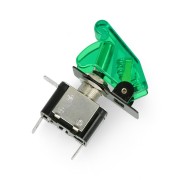
There are many different types of switches that vary in mechanism, size, appearance and application. We use them to switch specific functions, as the name suggests. Furthermore, we can use them to start a device or system and also stop it. Most switches used in projects with a lot of different functions are lever switches. They are typical for cockpits in vehicles, especially airplanes and helicopters, where they are placed among buttons and lights and indicators. Their mechanism of operation is based on a lever, they are easy to use, allow for quick and trouble-free switching of functions and switching on and off the device. We present different types of switches with different lever sizes. You can choose between bistable and monostable lever switches, so you can adjust them perfectly to the specifics of your device. All of them are made of durable and resistant to mechanical damage, as well as to the adverse impact of external factors.
Products
See also
Toggle switches - FAQ
Most common toggle switches have a SPDT contact configuration, i.e. one common contact (COM), one normally closed (NC) and one normally open (NO). To connect a single load (e.g. a light bulb ), the easiest way is to use the COM-NO pair.
The on-off-on lever switch is called SPDT (Single-Pole-Double-Throw), which means that, depending on the position of the switch, the middle contact (COM) is shorted to one of the two extreme pins or completely disconnected (middle position).
The symbol of a toggle switch does not differ significantly from the markings of other switches with the same contact configuration - in the diagram, the short section between the common contact (COM) is connected to the normally closed contact (NC), and the normally open contact (NO) remains disconnected from the other pins of the switch. (which symbolizes the actual idle state of the switch).