Over 500,000 customers already trust us. With us you get:
same-day shipping for products marked “24h shipping”
our own service centre in Poland
30 days to return and free delivery in Poland from PLN 500
4.9/5 on TrustMate and 4.9/5 on Google (almost 4,000 reviews)
VAT invoice, leasing and instalments for businesses
For businesses
individual quote for larger quantities
VAT invoice
For schools and universities
orders based on requests for quotation
help with choosing kits for your lab
Send an inquiry - we reply quickly.

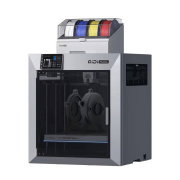
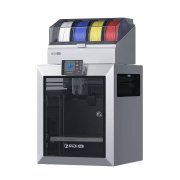
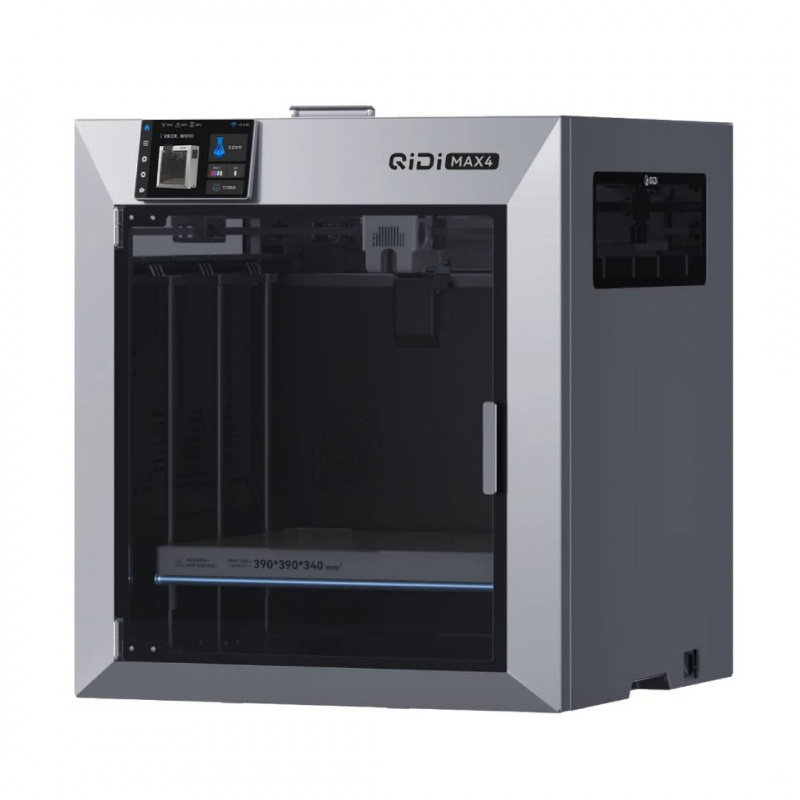
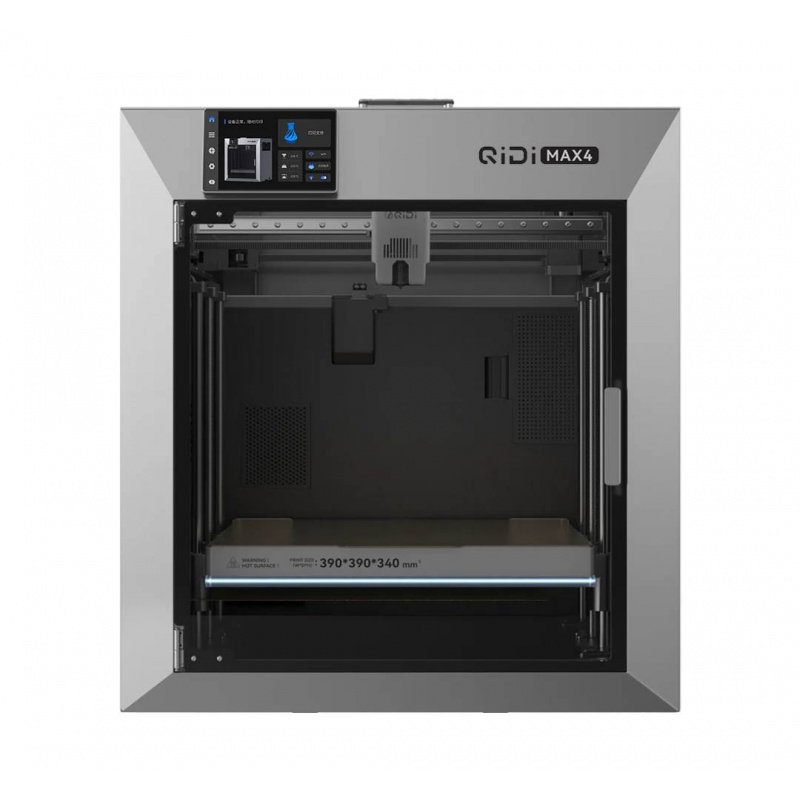
3D printer - QIDI Max 4
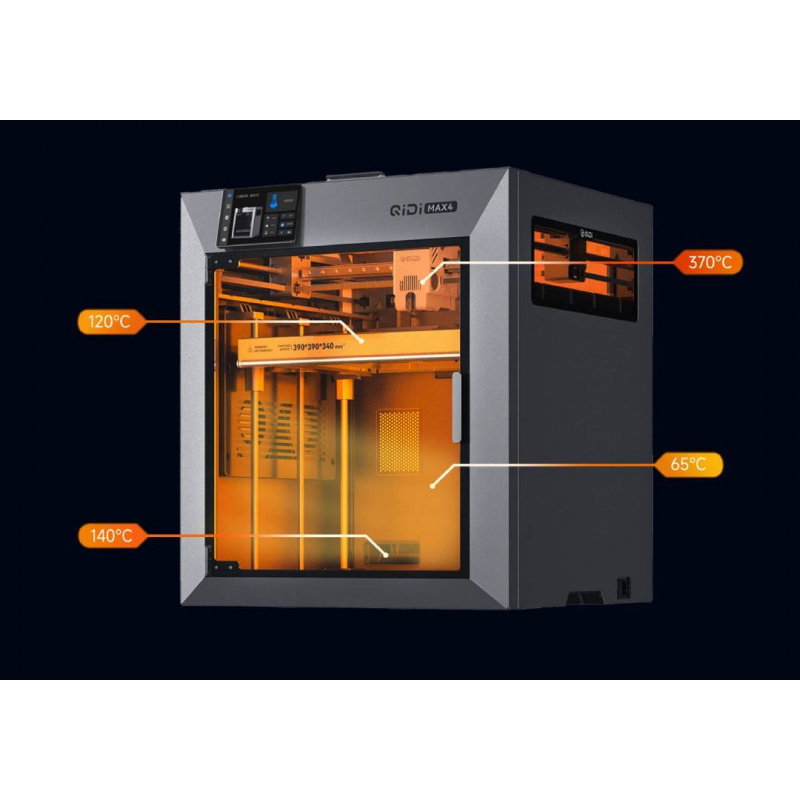
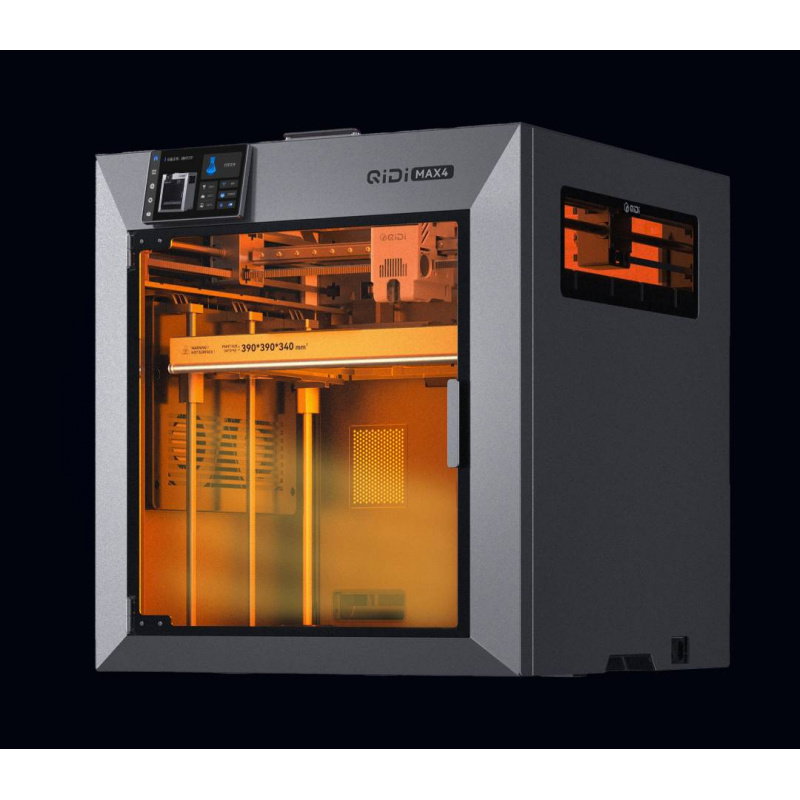
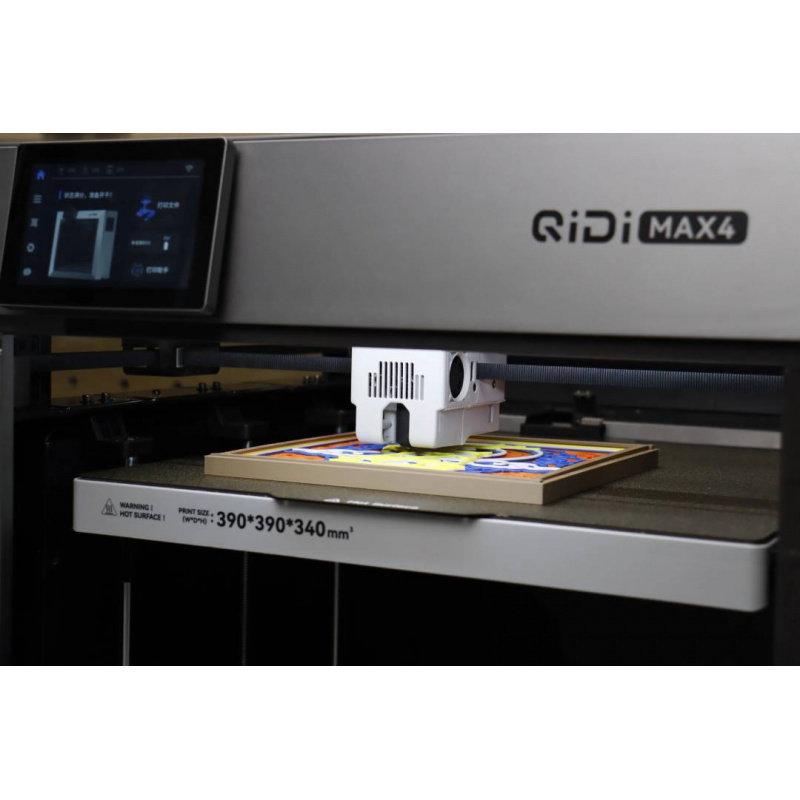
The QIDI Max4 is a large-format, enclosed CoreXY 3D printer with a 390 x 390 x 340 mm build volume, a hotend up to 370°C , a bed up to 120°C , and an actively heated chamber up to 65°C . It achieves a printhead speed of up to 800 mm/s and acceleration of up to 30,000 mm/s². Auto-leveling, an AI camera, 3-in-1 filtration , active cooling, FOC motors, and compatibility with the QIDI Box allow it to quickly print large models using standard, technical, and composite filaments.
We could not load the price.
The promotional price does not combine with quantity discounts.
Product description: 3D printer - QIDI Max 4
The QIDI Max4 is a closed CoreXY 3D printer combining a large build volume of 390 x 390 x 340 mm with parameters enabling work with technical filaments. The hotend reaches 370°C , the bed 120°C , and the actively heated chamber up to 65°C . The printhead can move at speeds of up to 800 mm/s and accelerations of up to 30,000 mm/s², and the maximum hotend flow is 40 mm³/s. The design utilizes closed-loop FOC motors, an X-axis linear guide, 1.5GT belts, and 2 mm pitch Z-axis screws. The Max4 also features Load Cell Auto Leveling, AI Camera, 3-in-1 Filtration , Input Shaping, Filament Sensor, 2.4GHz/5GHz WiFi, Ethernet and USB, and the ability to expand with the QIDI Box for multi-color and multi-material printing.
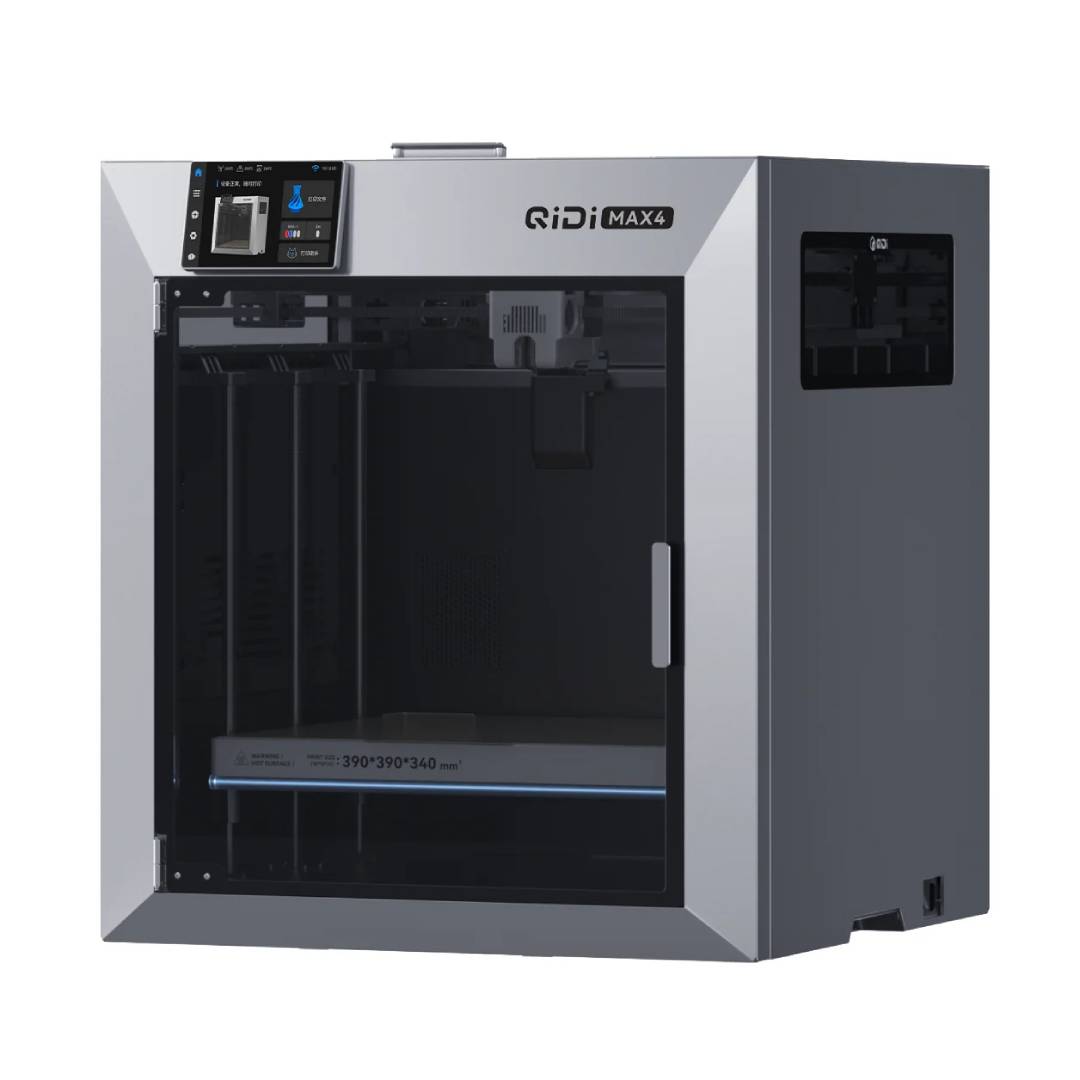
3D printer - QIDI Max 4.
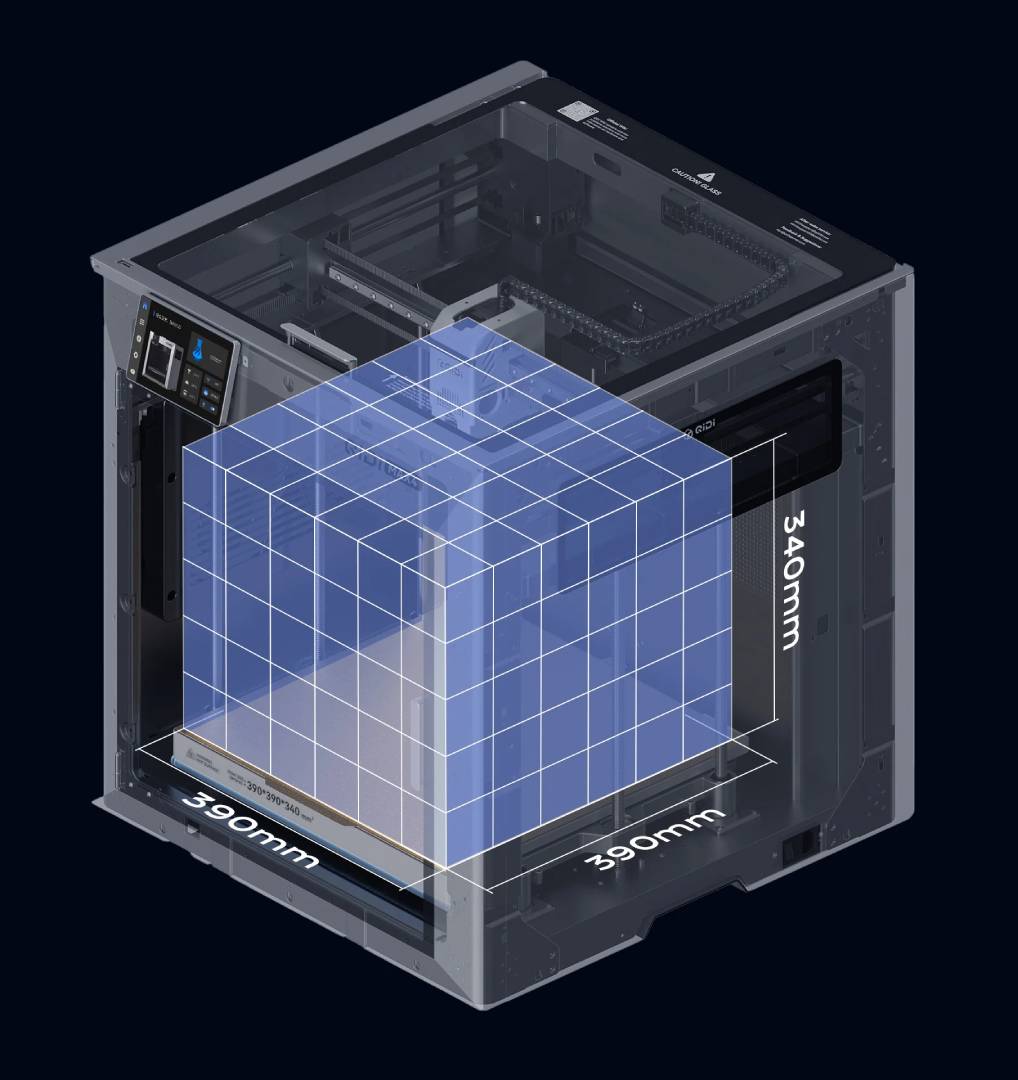
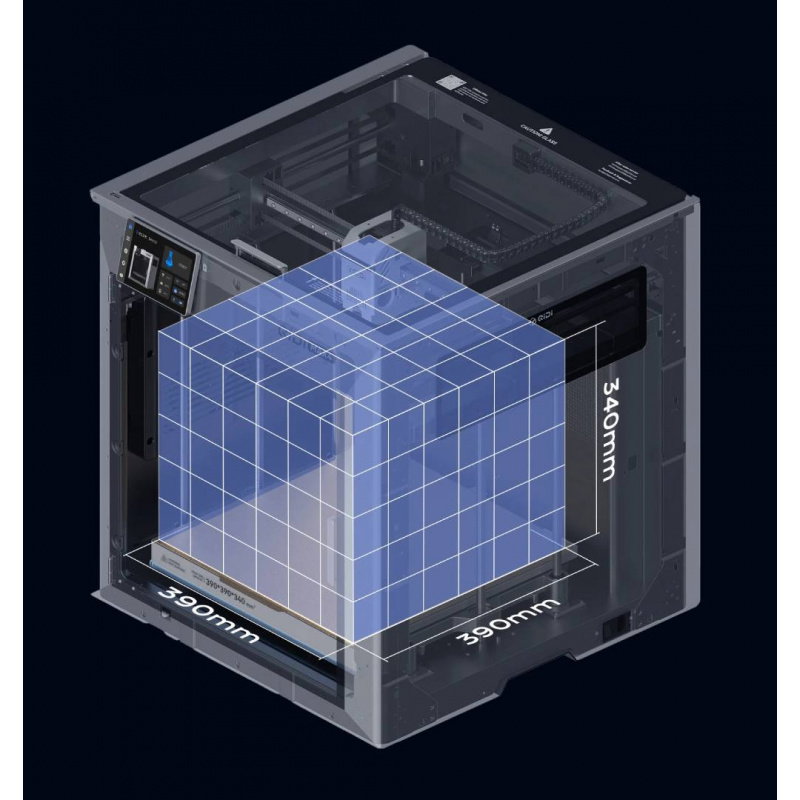
The large build volume allows you to print large models or many smaller parts in a single job.
Large QIDI Max4 workspace and fast CoreXY system
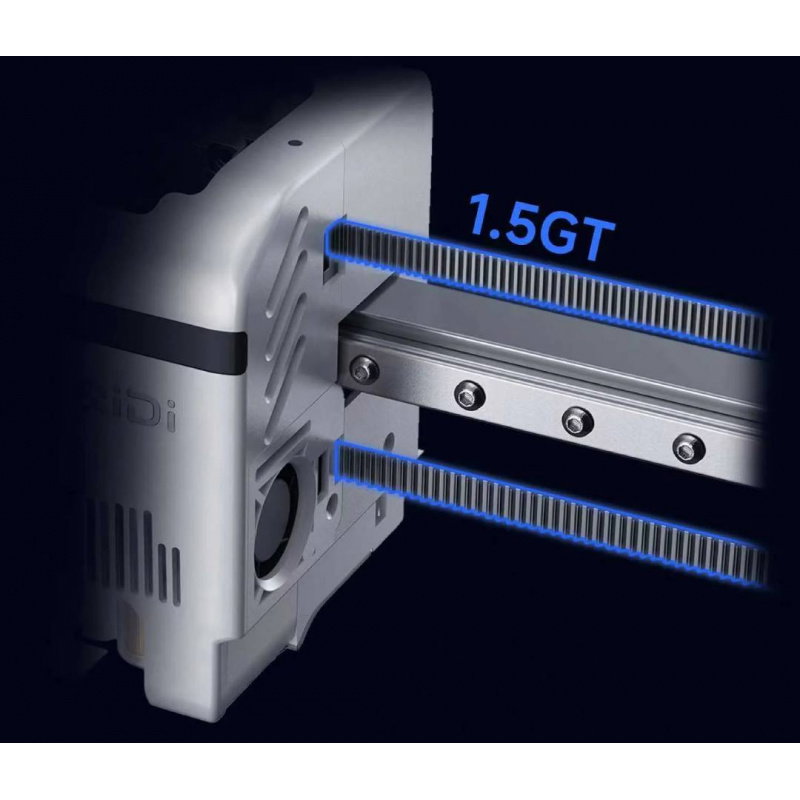
The 390 x 390 x 340 mm build volume of the QIDI Max4 allows for projects significantly larger than typical compact desktop printers. This space can be used to print both single large objects and entire series of smaller parts arranged on a single platform. The CoreXY design utilizes a metal frame for the motion mechanism, an X-axis linear guide, steel Y-axis linear shafts, and 10 mm wide 1.5GT belts. Closed-loop FOC stepper motors enable head speeds of up to 800 mm/s and accelerations of up to 30,000 mm/s² , supporting rapid prototyping and efficient production of large models.
Precise Z-axis and automatic platform leveling
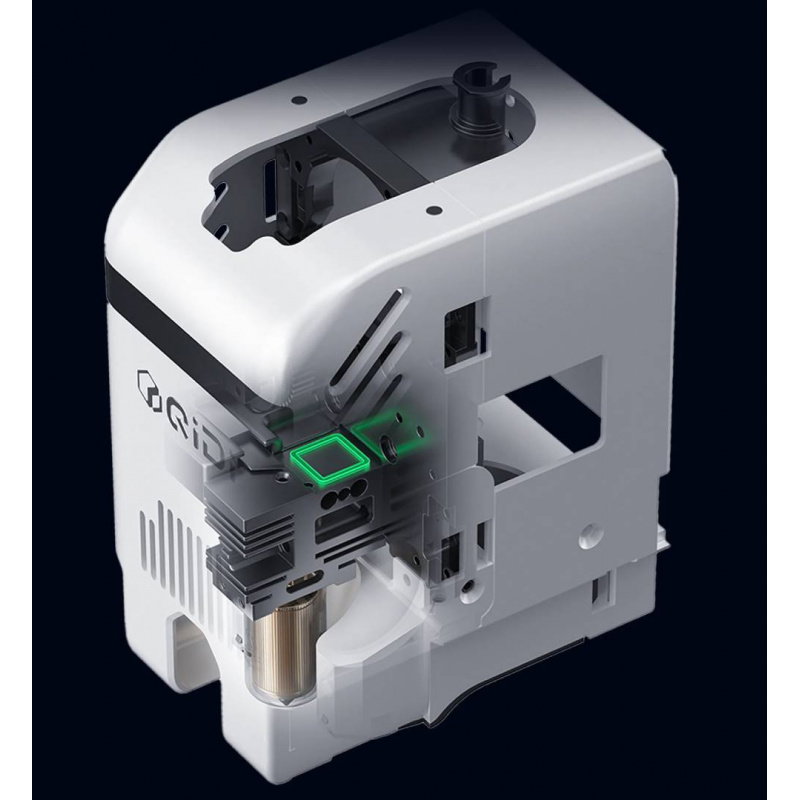
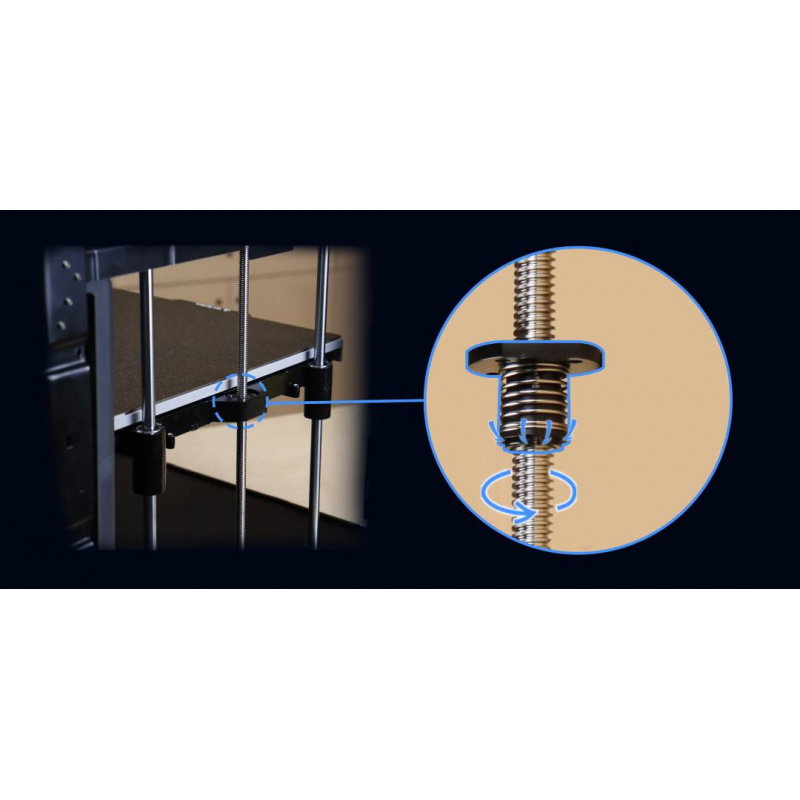
A large-format platform requires stable guidance, so the Z axis utilizes two independent motors with 2mm pitch screws and four 12mm diameter steel linear shafts . The design is complemented by backlash-limiting nuts , which improve the repeatability of subsequent layer positioning. The automatic leveling system utilizes a Load Cell sensor integrated into the hotend , allowing the nozzle itself to act as the measuring element during surface measurement. The lack of offset between the probe and the nozzle simplifies first-layer calibration, while the Input Shaping function helps reduce artifacts caused by vibrations in the mechanism.
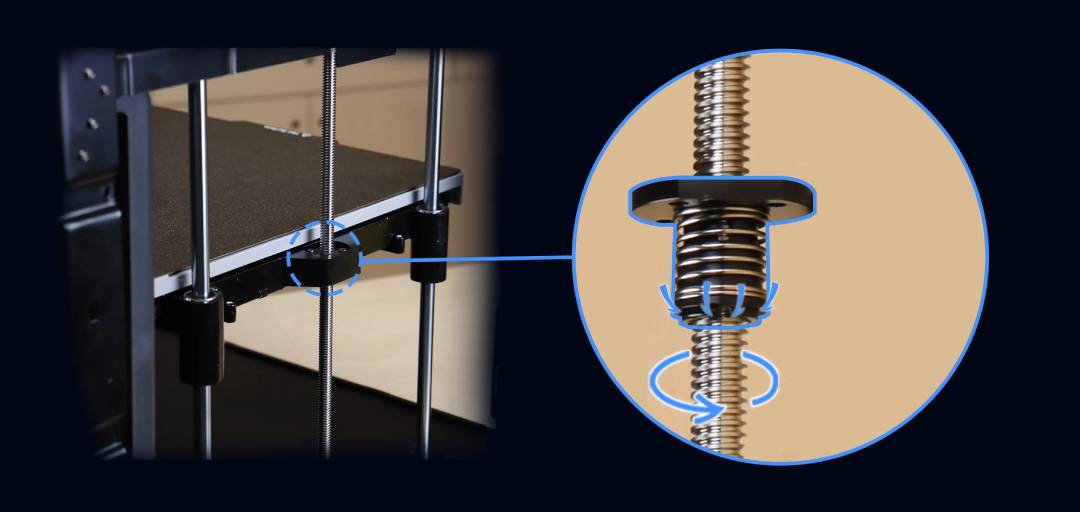
Two independent drives with backlash limiting nuts support precise platform positioning.
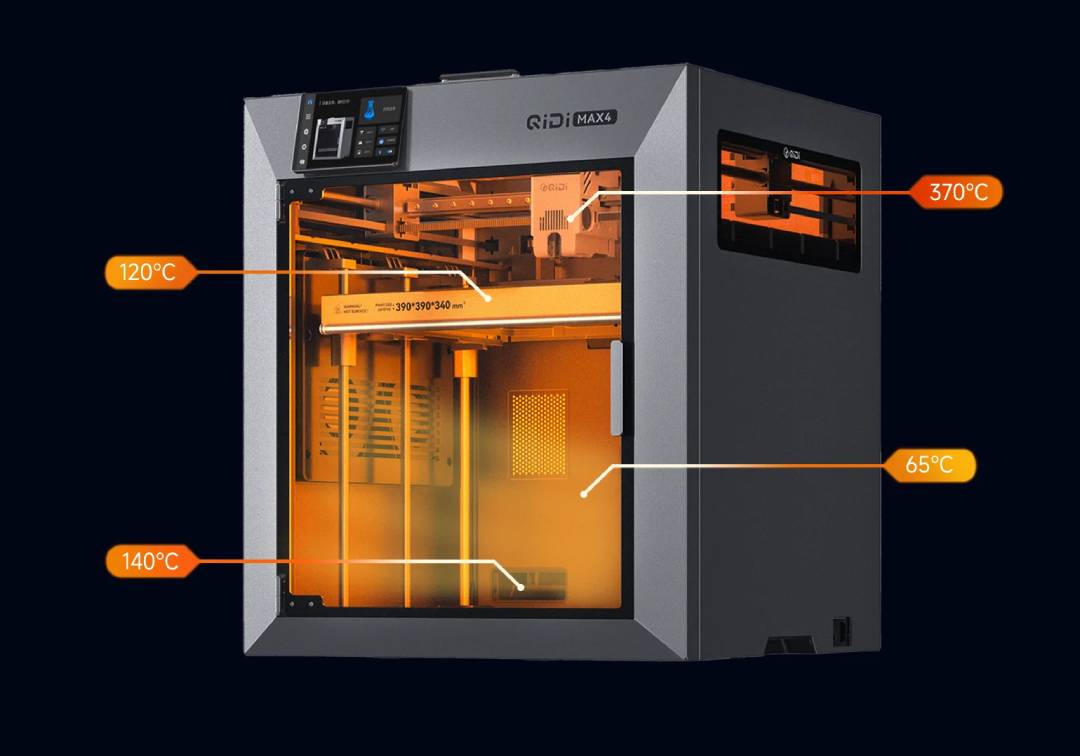
The actively heated chamber up to 65°C stabilizes thermal conditions when printing materials susceptible to shrinkage.
370°C hotend and 65°C chamber for engineering filaments
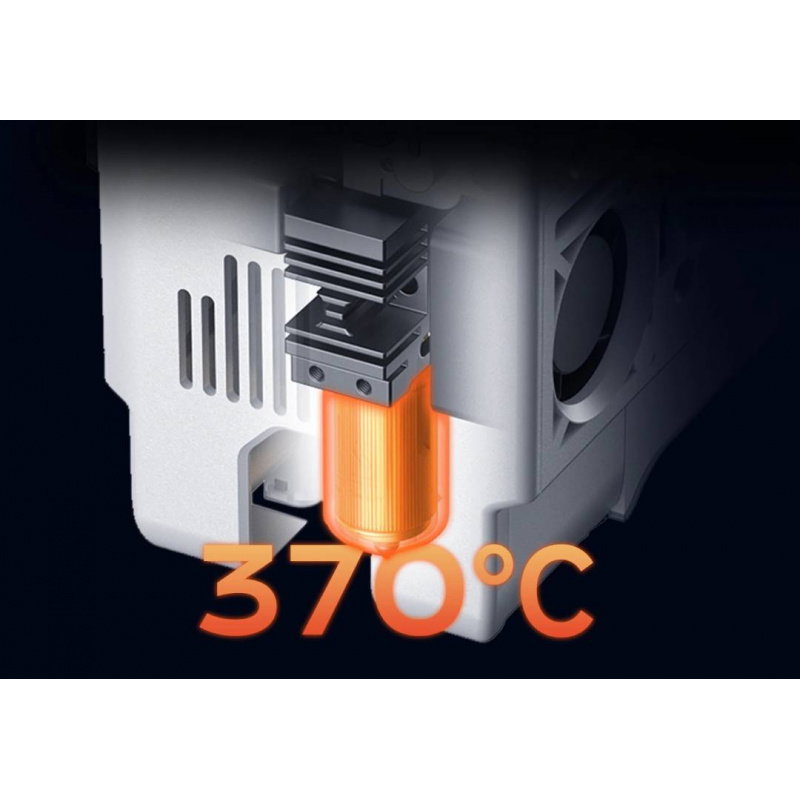
The QIDI Max4 is designed to work with materials requiring precise temperature control. The hotend heats up to 370°C , the build plate to 120°C , and the actively heated chamber reaches up to 65°C , creating a stable environment for materials susceptible to shrinkage and deformation. A direct extruder with dual hardened steel gears, a bimetallic nozzle, and a maximum hotend flow of 40 mm³/s allow for work with popular filaments, as well as technical and composite materials. The manufacturer lists PLA , PETG , ABS , ASA , TPU , PA, PC, PPS-CF, PPA-CF, PA6-CF, PA6-GF, and other carbon fiber- or glass-reinforced materials.
Cooling control and evenly heated QIDI Max4 table
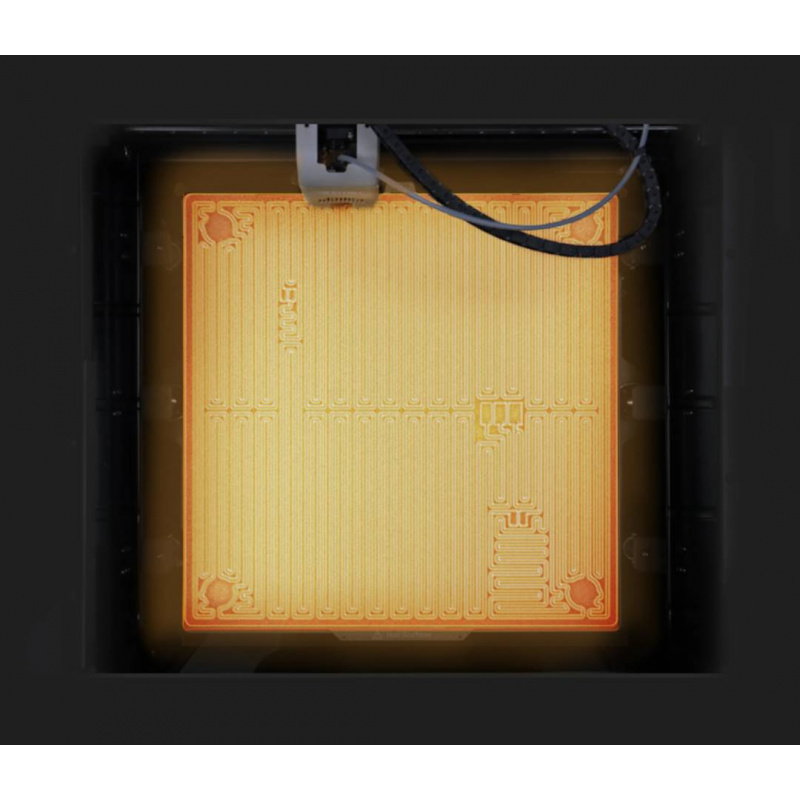
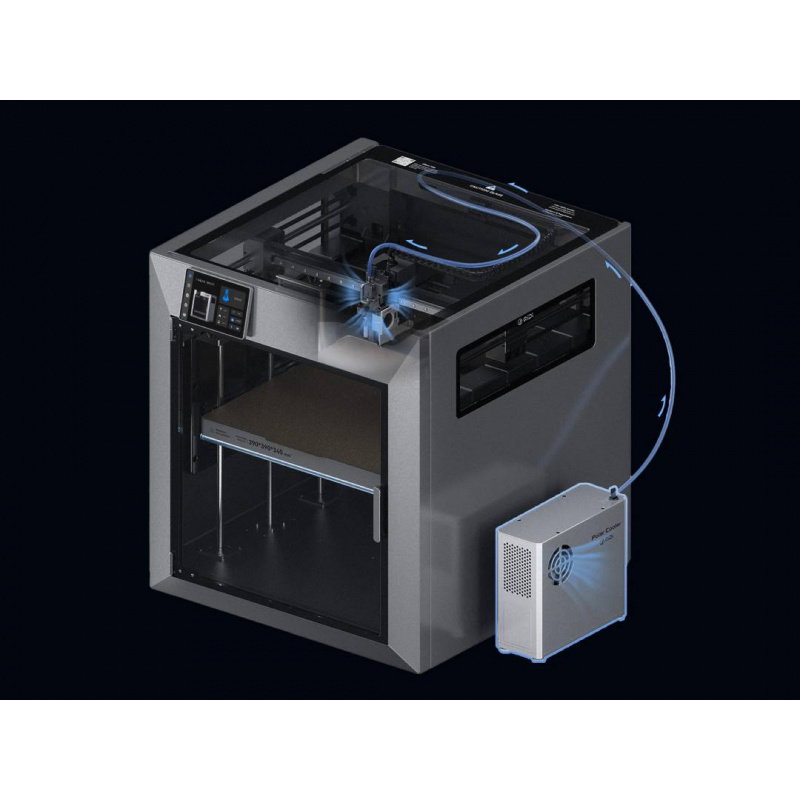
A large model requires even heat distribution across the entire build surface, so the QIDI Max4 heating bed, measuring 390 x 390 mm, is equipped with a full-surface silicone layer with densely spaced heating wires and thermal insulation . This design ensures a stable surface temperature, promotes first-layer adhesion, and reduces the risk of warping on large prints. The printer also utilizes an active cooling control system that works in conjunction with the chamber heating to maintain the proper thermal conditions for the printed material. The optional Polar Cooler directs cool air towards the extruder, reducing excessive filament heating when operating in the heated chamber.
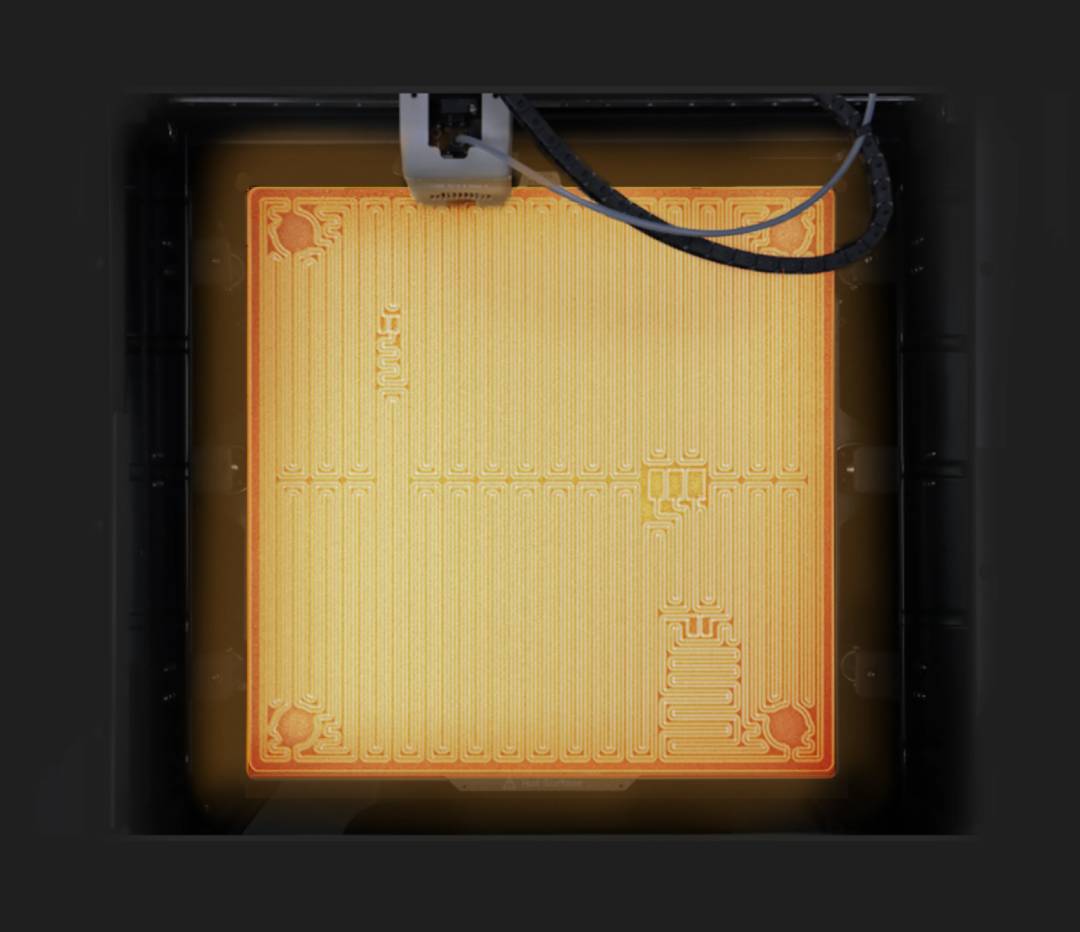
The heating table uses a full-surface silicone layer with densely spaced heating wires and thermal insulation, which ensures uniform heating of a large work surface.
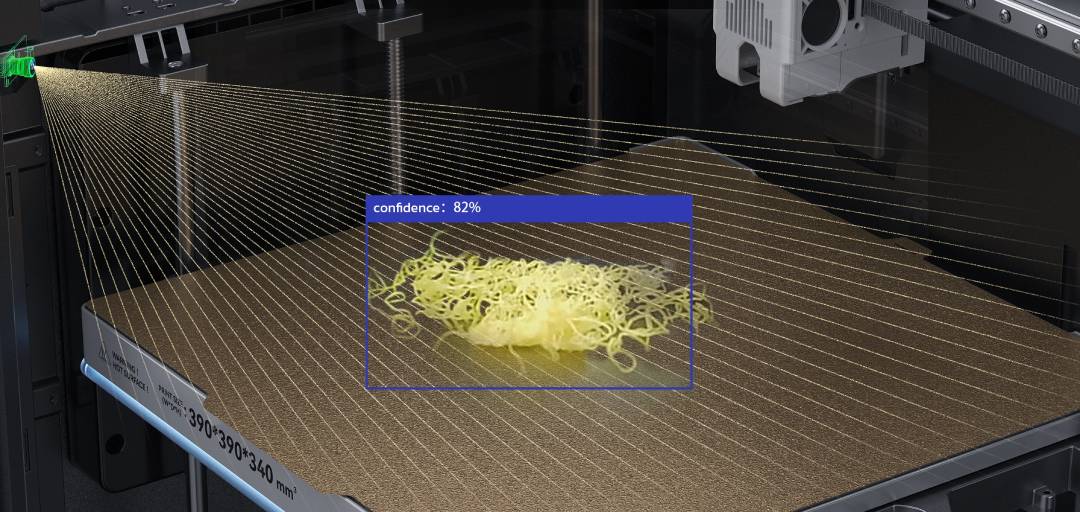
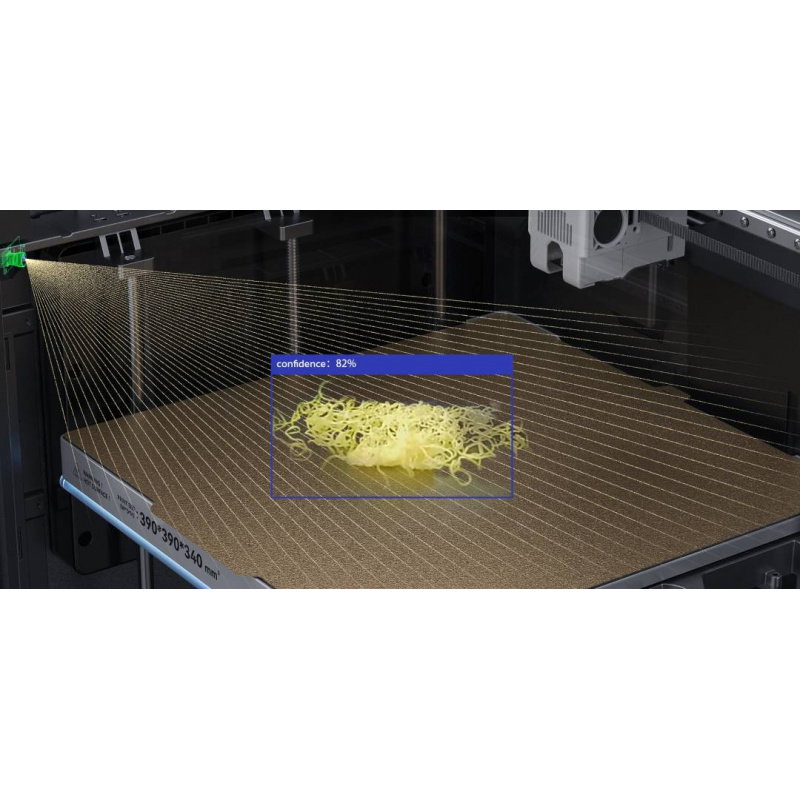
Up to 1080p AI camera allows you to observe the print, Timelapse and detect selected issues during printing.
AI Camera, 3-in-1 Filtration and Smart Printing
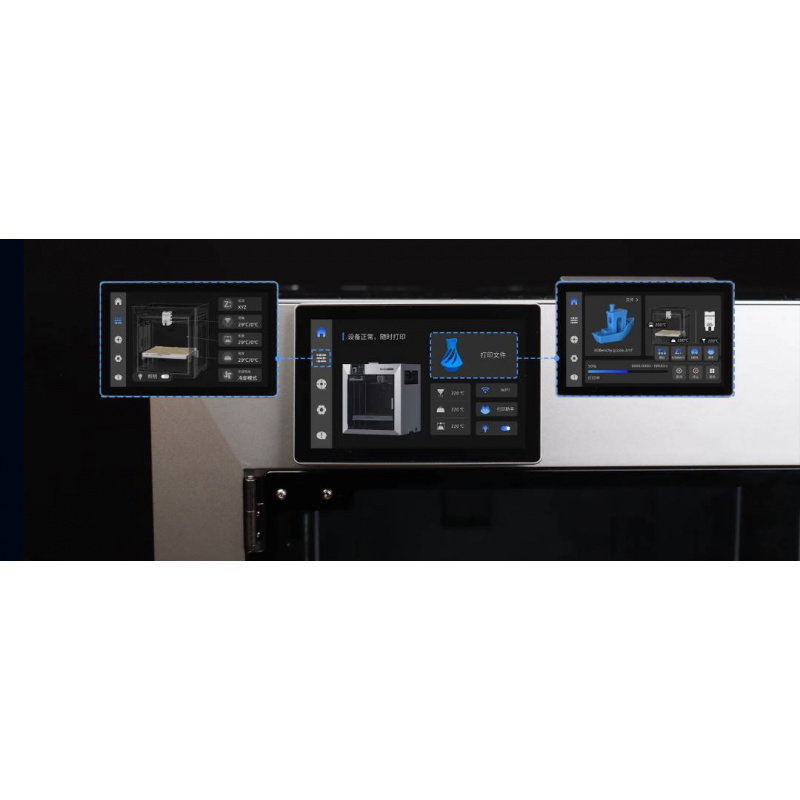
The QIDI Max4 is equipped with a camera with a resolution of up to 1080p , which allows you to monitor the process, create timelapse recordings, and use AI to detect common irregularities , such as the formation of spaghetti. A built-in filament end sensor allows you to detect material shortages, and the Power Loss Recovery function allows you to resume the job after a power outage . The air purification system consists of a G3 pre-filter, an HEPA H12 filter , and an activated carbon filter made from coconut shells , and the manufacturer claims to capture 99.5% of dust and particles . Operation is complemented by a 5-inch 800 x 480 px touchscreen , 32 GB eMMC memory, and communication via Wi-Fi, Ethernet, and USB.
QIDI Max4 and Max4 Combo - which version to choose?
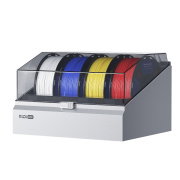
The QIDI Max4 and QIDI Max4 Combo are based on the same printer, so they offer the same build volume of 390 x 390 x 340 mm, high-temperature hotend, heated chamber, and other basic device features. The standard version is designed for users starting with a single spool, but remains compatible with the QIDI Box system and can be expanded with it in the future. The Max4 Combo includes the QIDI Box . This allows the kit to automatically work with multiple filaments and create multi-color and multi-material models from the start. The QIDI Box system also allows you to dry filament at up to 65°C during printing, automatically switch spools, and, when connected to four modules, support up to 16 materials. Therefore, the Combo variant is primarily aimed at those planning to use these features from the start.
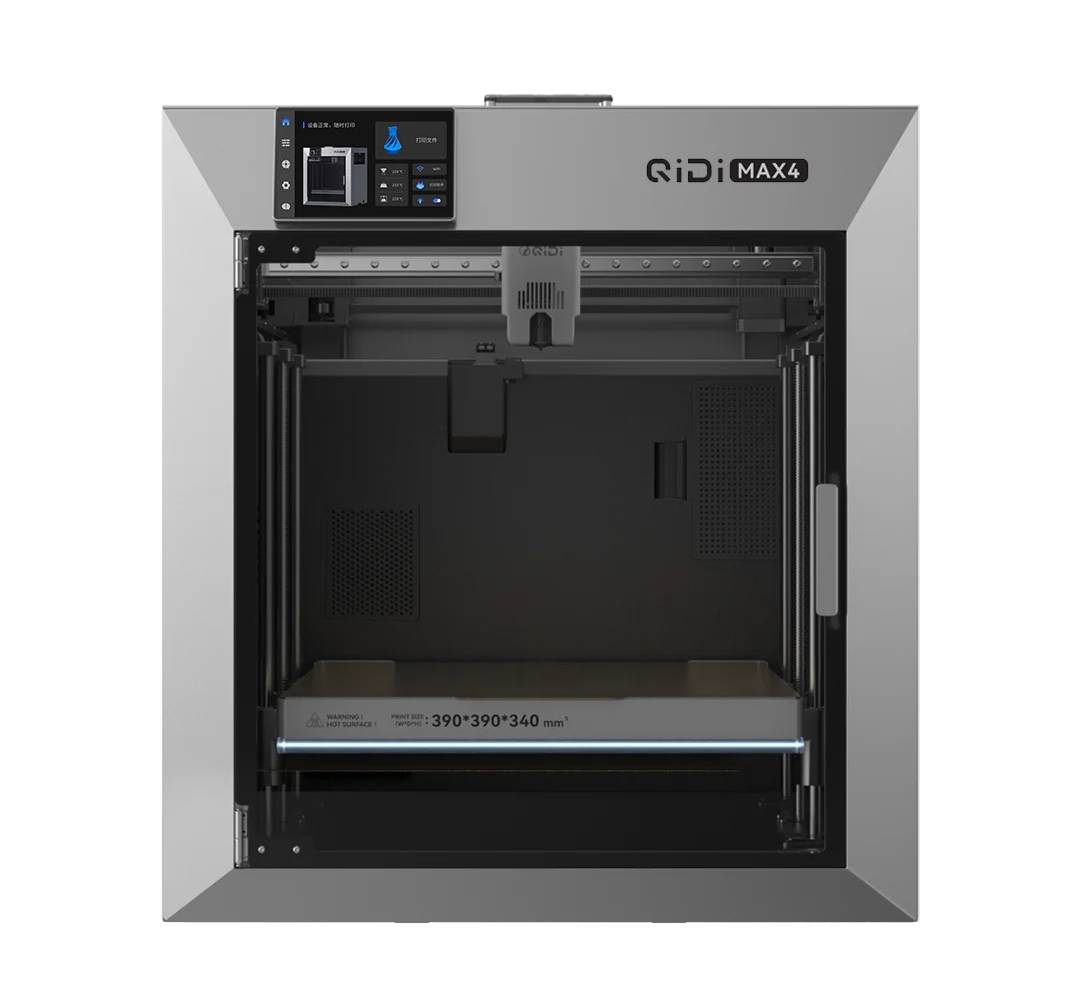
Compatibility with the optional QIDI Box allows you to expand the device with automatic multi-color and multi-material printing.
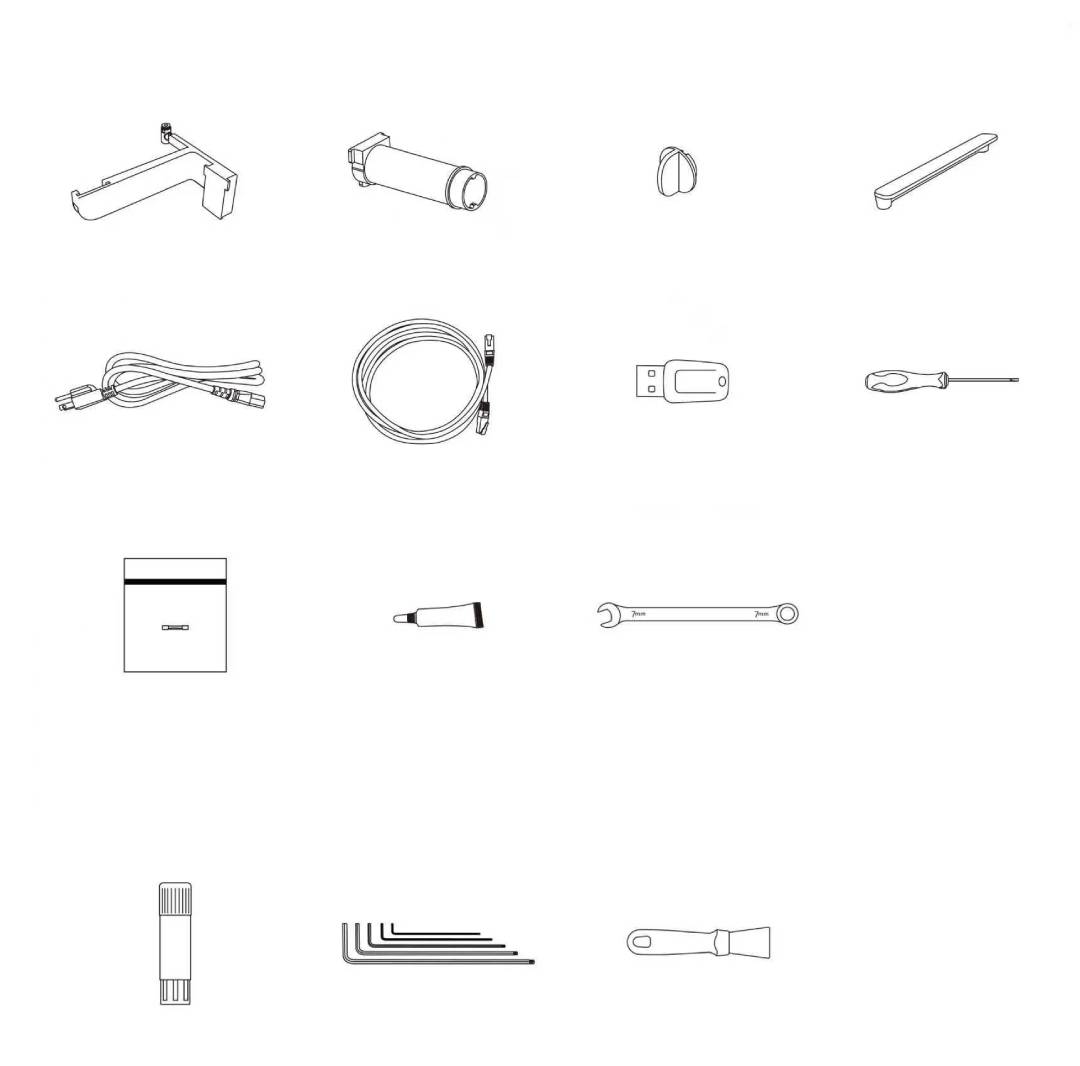
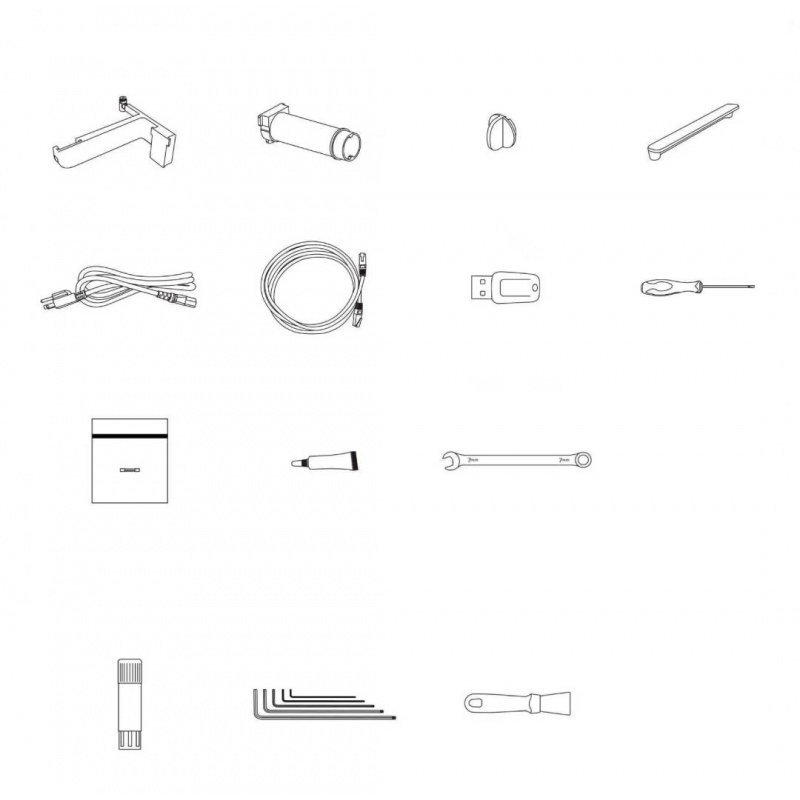
Elements included in the set.
Contents of the set
- QIDI Max4 3D Printer
- Double-sided magnetic PEI build plate
- Filament spool holder
- Filament holder extension with pneumatic head
- Spool holder cover
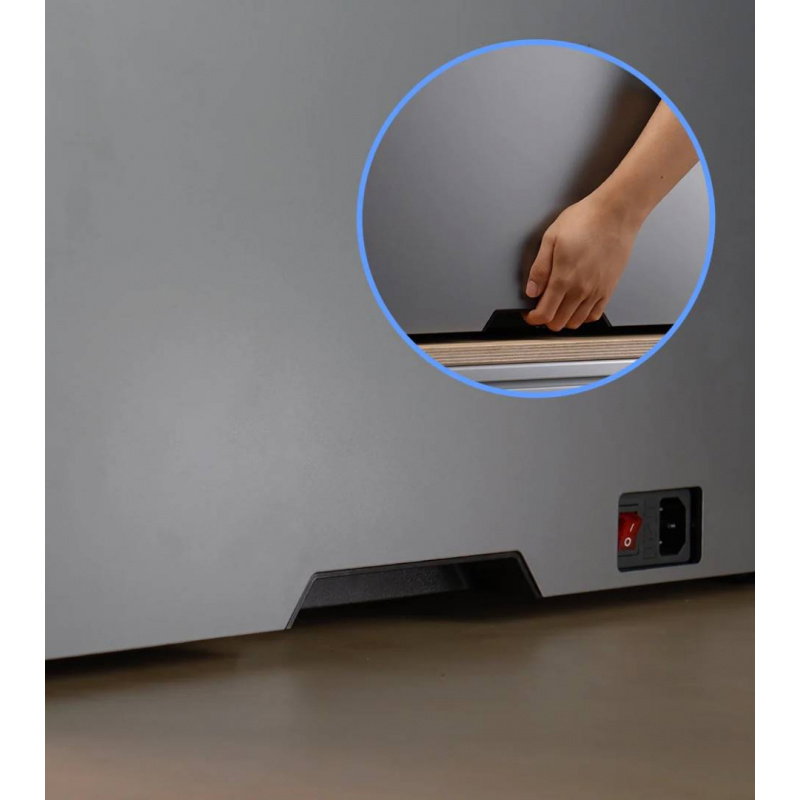
- Door handle
- Spare parts kit
- Lubricating oil
- 7 mm wrench
- Power cord
- Ethernet cable
- USB 2.0 memory
- Flat screwdriver
- Glue stick
- Allen keys H1.27, H1.5, H2, H2.5 and H3
- Spatula
QIDI Max4 Technical Specifications
| Printing technology | FDM / FFF |
|---|---|
| XY kinematics | CoreXY |
| Housing construction | glass and plastic |
| Chassis construction | steel |
| X/Y axis belts | 1.5GT, 10mm wide |
| X/Y axis motors | FOC closed-loop stepper motors |
| X-axis | high hardness linear guide |
| Y-axis | 12 mm steel linear shafts |
| Z axis | two independent motors with 2 mm pitch screws, four 12 mm steel linear shafts |
| Working field | 390 x 390 x 340 mm |
| Maximum head temperature | 370°C |
| Hotend | ceramic ring heater, multi-metal construction |
| Maximum hotend flow | 40 mm³/s - for manufacturer's test parameters |
| Temperature measurement | thermocouple |
| Extruder type | Direct |
| Extruder wheels | double wheels made of hardened steel |
| Extruder ratio | 8.9:1 |
| Nozzle | bimetallic |
| Standard nozzle diameter | 0.4 mm |
| Optional nozzle diameters | 0.2mm, 0.6mm, 0.8mm |
| Filament cutter | Yes |
| Filament diameter | 1.75 mm |
| Work platform | aluminum plate with silicone heating system |
| Worktop included | double-sided magnetic PEI board |
| Supported build plates | textured PEI, smooth PEI, Cool Plate |
| Maximum table temperature | 120°C |
| Chamber heating | independent active PTC system |
| Maximum chamber temperature | 65°C |
| Maximum head speed | 800 mm/s |
| Maximum acceleration | 30000 mm/s² |
| Automatic leveling | yes, Load Cell sensor integrated into the hotend |
| Input Shaping | Yes |
| Filament end sensor | Yes |
| Filament entanglement detection | yes, requires QIDI Box |
| AI camera | Yes |
| Camera | up to 1080p |
| Timelapse | Yes |
| Air filtration | 3 in 1 - G3 pre-filter + HEPA H12 + coconut shell activated carbon |
| Hotend cooling fan | 4-pin PWM with RPM feedback |
| Model cooling fan | 4-pin PWM with RPM feedback |
| Auxiliary model cooling fan | 4-pin PWM with RPM feedback |
| Motherboard fan | closed-loop control |
| Chamber circulation fan | high-performance turbo fan, closed-loop control |
| Extruder cooling | yes, Polar Cooler required |
| Supported filaments | PLA, PETG, ABS, ASA, TPU, PET, PA, PC, PVA, PLA-CF, PETG-CF, ABS-GF, ASA-CF, PA6-CF, PA6-GF, PAHT-CF, PPA-CF, PET-CF, PPS-CF and others |
| Multicolor printing | yes, after connecting the QIDI Box |
| Resuming work after a power outage | Yes |
| RGB status backlight | Yes |
| Screen | 5" touchscreen |
| Screen resolution | 800 x 480 px |
| Memory | 32GB eMMC |
| USB drive | USB 2.0 |
| Control interface | touchscreen, mobile app, PC app |
| Communication | WiFi, Ethernet, USB |
| WiFi band | 2.4GHz / 5GHz |
| WiFi Standard | IEEE 802.11 a/b/g/n/ac |
| Software | QIDI Studio, OrcaSlicer, PrusaSlicer and others |
| Supported model formats | STL, OBJ, 3MF, STEP / STP and others |
| Supported operating systems | Windows, macOS, Linux |
| Power supply | 110 V / 220 V to 240 V AC, 50 / 60 Hz - depending on regional version |
| Rated power | 150 W + 500 W chamber heating + 700 W table heating |
| Dimensions | 558 x 578 x 612 mm |
| Mass | 40 kg |
Useful links
| Name | Value |
|---|---|
| 3D - print surface | 390x390x340 mm |
| 3D - type of printout | FFF/FDM |
| 3D - hotend amount | 1 |
| 3D - filament diameter | 1.75 mm |
| 3D - printing speed | 80 mm/h |
| 3D - nozzle temp | 370 °C |
| 3D - table temp. | 120 °C |
| Pole robocze | Big |
| Wymiary pola roboczego - oś X | 390 mm |
| Wymiary pola roboczego - oś Y | 390 mm |
| Wymiary pola roboczego - oś Z | 340 mm |
| Plug&Play | Yes |
| 3D - Heated chamber | Yes |
| 3D - Camera | Yes |
| 3D - Multi-material support | NO |
| 3D - Supported Materials | Advanced |
| 3D - Communication |
|
| Width | 70 cm |
| Height | 75 cm |
| Depth | 71 cm |
| Weight | 50 kg |
 GLS
Shipping in 24 hours
from €8.07
GLS
Shipping in 24 hours
from €8.07
 Raben - pallet delivery
Delivery in 3–5 days, no inside delivery
from €96.75
Raben - pallet delivery
Delivery in 3–5 days, no inside delivery
from €96.75
The full delivery terms are on the page Delivery and payment.
30 days to return, without giving a reason
If the product does not meet your expectations, you have 30 days from receiving the parcel to withdraw from the contract. The product only has to be complete. The right of return belongs to consumers (a purchase unrelated to business activity).
Complaints
If the product turns out to be faulty, you can make a claim under the guarantee or the statutory warranty. We handle claims without delay, at the latest within 14 working days of receiving the report together with the goods.
Be the first to ask a question about this product!
Instructions and documents
GPSR data
Products from the same category
See all