- New
Over 500,000 customers already trust us. With us you get:
same-day shipping for products marked “24h shipping”
our own service centre in Poland
30 days to return and free delivery in Poland from PLN 500
4.9/5 on TrustMate and 4.9/5 on Google (almost 4,000 reviews)
VAT invoice, leasing and instalments for businesses
For businesses
individual quote for larger quantities
VAT invoice
For schools and universities
orders based on requests for quotation
help with choosing kits for your lab
Send an inquiry - we reply quickly.

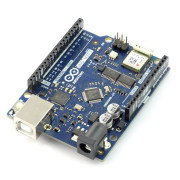
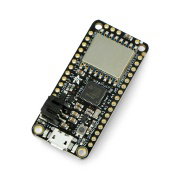
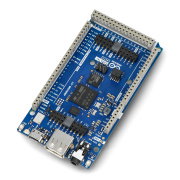
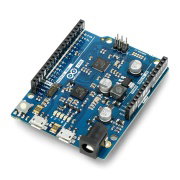
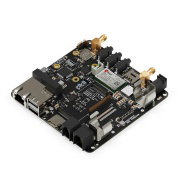
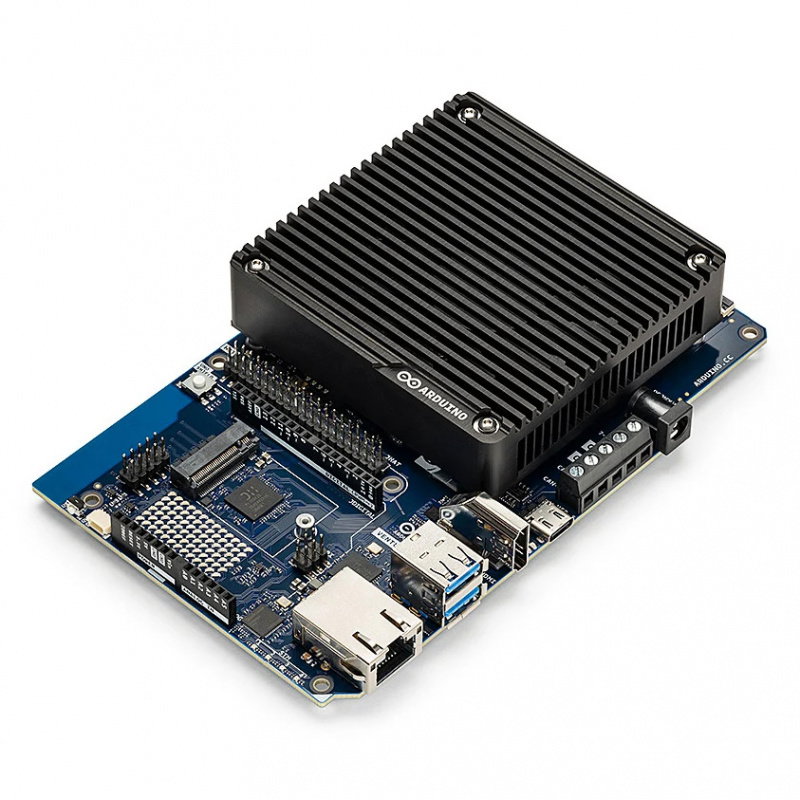
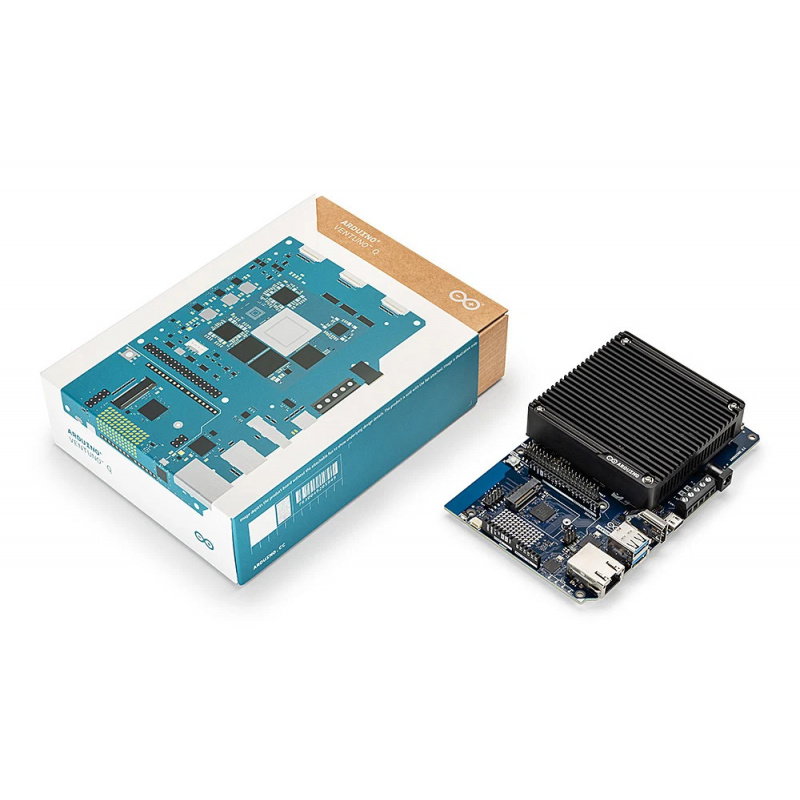
Arduino VENTUNO Q - 16GB RAM + 64GB eMMC - ABX00181
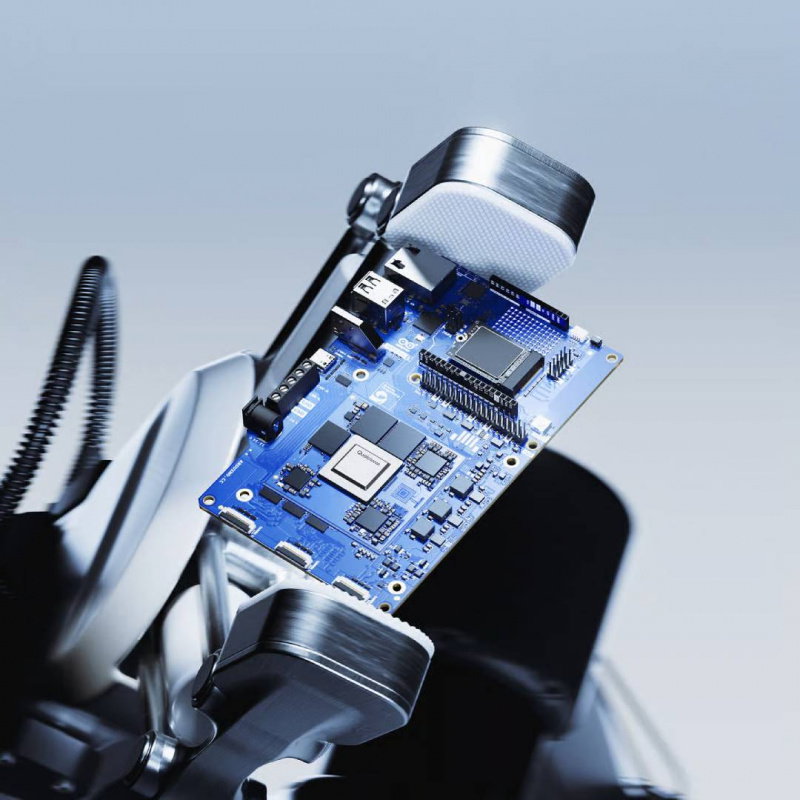
The Arduino® VENTUNO™ Q is a high-performance edge AI computer and robotics platform that combines a Qualcomm Dragonwing™ IQ-8275 processor with an STM32H5F5 microcontroller. It offers up to 40 TOPS, 16 GB RAM, 64 GB eMMC storage, ROS 2 support, three MIPI CSI interfaces , and real-time GPIO, PWM, and CAN-FD control . It's ideal for local AI models, machine vision, robotics, and industrial automation.
We could not load the price.
The promotional price does not combine with quantity discounts.
Product description: Arduino VENTUNO Q - 16 GB RAM + 64 GB eMMC - ABX00181
VENTUNO Q integrates AI computing power and deterministic actuator control on a single board. An octa-core Qualcomm Kryo processor , Adreno 623 graphics , and a Hexagon NPU with up to 40 TOPS of performance support vision models, local LLM, and multimodal applications, while an Arm Cortex-M33 microcontroller ensures sub-1 ms response time. The platform runs Ubuntu or Debian and Arduino Core on Zephyr . Extensive interfaces, including WiFi 6, Bluetooth 5.3, 2.5 Gbps Ethernet , and an M.2 connector for NVMe Gen.4 storage, create a flexible environment for edge computing, prototyping, and deploying off-the-shelf devices.
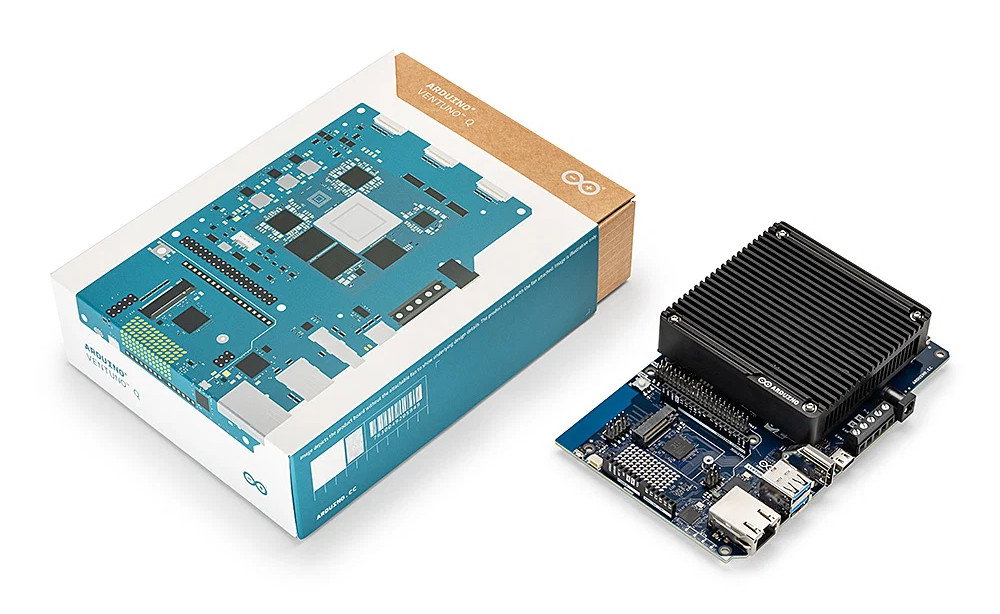
Arduino VENTUNO Q - 16 GB RAM + 64 GB eMMC - ABX00181.

Botland is an official distributor of the Arduino development platform in Poland. We offer a wide choice of boards, modules and accessories from this popular brand, along with tutorials and a knowledge base for users. All Arduino products presented here are original.
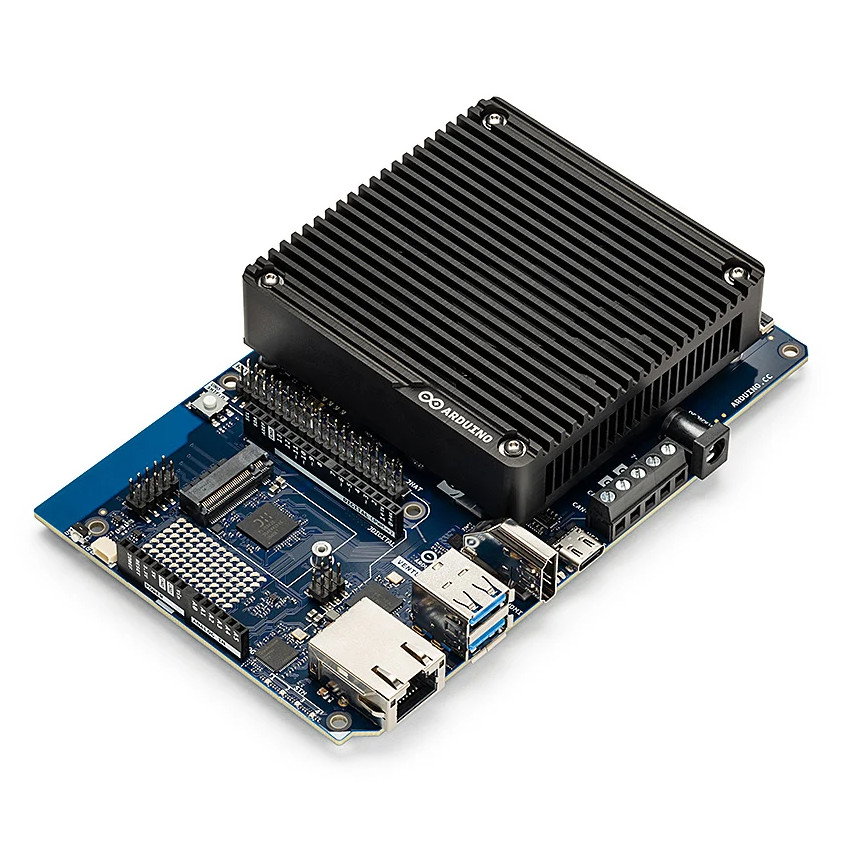
VENTUNO Q is suitable for applications in artificial intelligence and robotics.
Main features of the Arduino VENTUNO Q
- Up to 40 TOPS AI Performance : Qualcomm Hexagon NPU enables local execution of vision, language, and multimodal models
- Dual-processor architecture : the combination of an application processor and a real-time microcontroller allows for simultaneous data analysis and device control
- 16 GB LPDDR5 memory : large memory capacity facilitates the handling of complex AI models, high-resolution images and robotic algorithms
- 64GB eMMC : Built-in industrial-strength memory provides space for the operating system, libraries, models, and data
- Expandable with NVMe Gen.4 : M.2 slot lets you expand storage with a fast SSD
- ROS 2 support : the platform can work as a ROS 2 robotics board in mobile robots, manipulators and autonomous systems
- Deterministic control : STM32H5F5 microcontroller provides fast GPIO, PWM and CAN-FD support in motion and automation systems
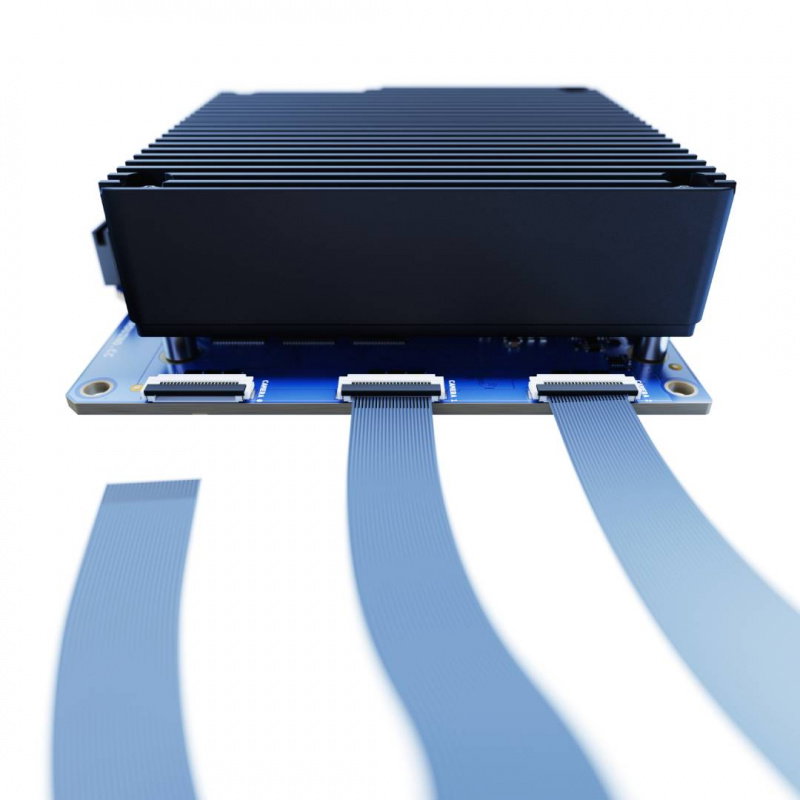
- Three MIPI CSI interfaces : enable the construction of multi-camera systems for object tracking, depth analysis and image inspection
- Wired and wireless connectivity : WiFi 6, Bluetooth 5.3, and 2.5 Gbps Ethernet for easy integration with networks and peripherals
- Support for local AI models : the platform allows you to leverage solutions such as Qwen, Whisper, Melo TTS, MediaPipe, YOLO-X, and PoseNet
- Broad hardware compatibility : Support for Arduino UNO, Raspberry Pi HAT, Modulino modules, and Qwiic devices speeds up prototyping
From data analysis to real-time action
VENTUNO Q is designed as a platform that not only analyzes data but also directly responds to events occurring in the physical world. The device can locally recognize objects, analyze images, process speech, or run language models , and then control motors, relays, and industrial devices. This allows the development of edge AI systems to encompass the entire process from data acquisition and inference to execution of a specific action.
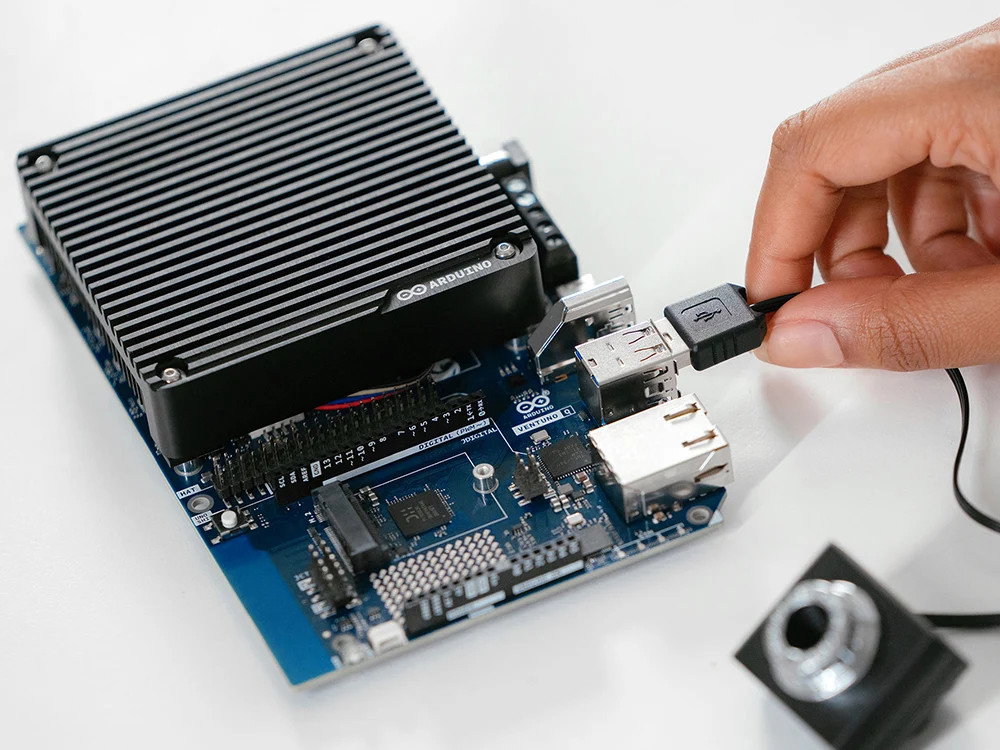
The platform can locally recognize objects, analyze images, or process natural language, and then instantly control motors, relays, and industrial devices.
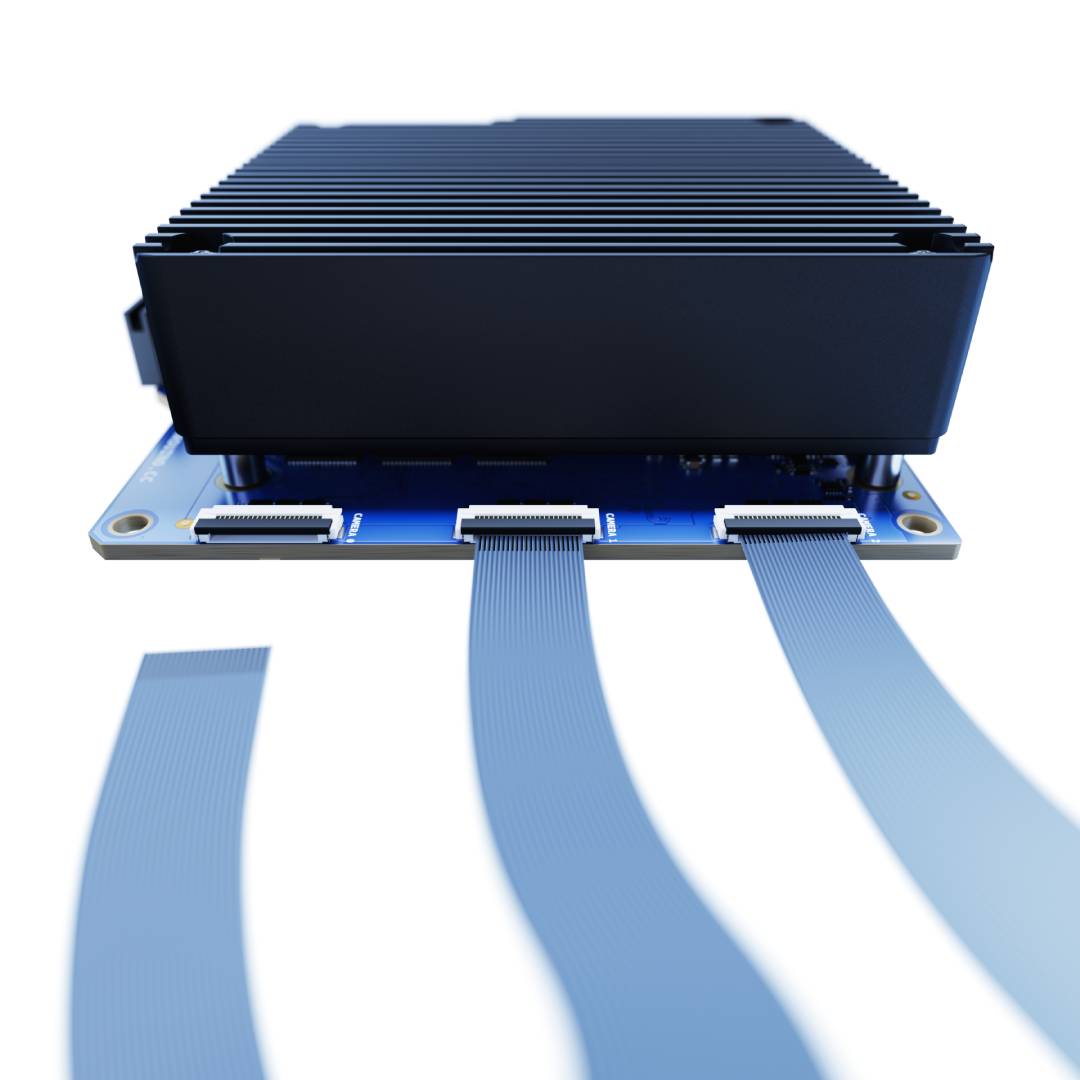
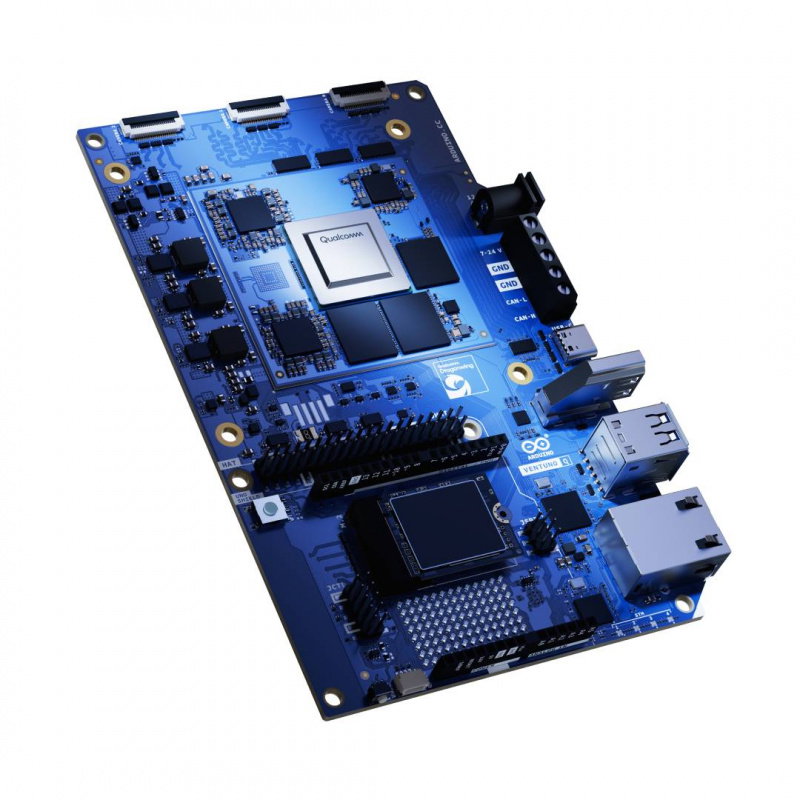
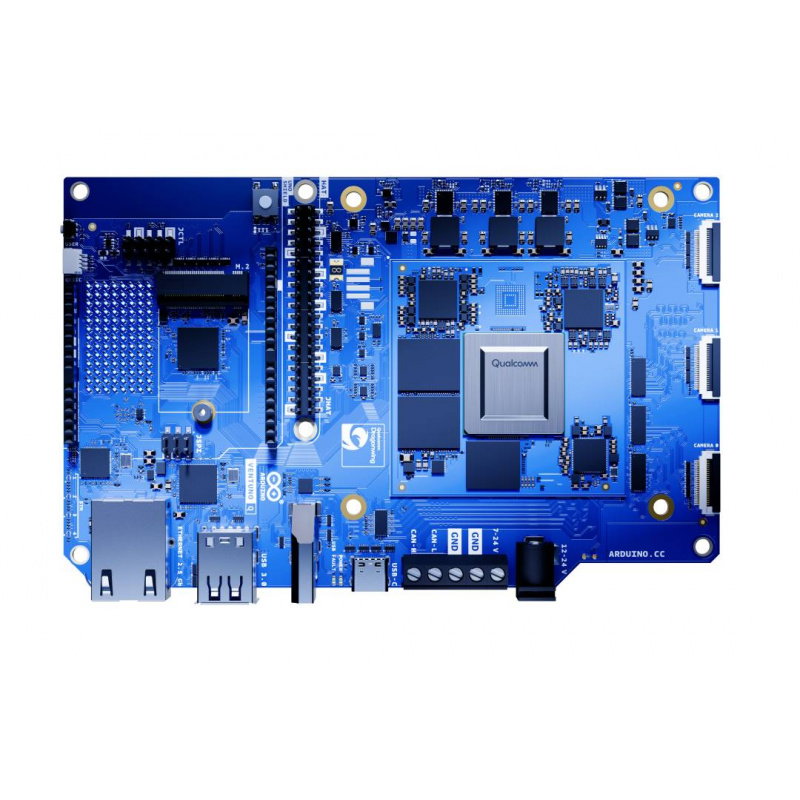
The board has three 4-lane MIPI-CSI interfaces.
Artificial intelligence integrated with device control
VENTUNO Q enables the creation of devices where AI is not limited to presenting results on a screen. High-speed camera interfaces, support for computer vision models, and deterministic control outputs provide the real-time AI control required in robotics and automation. The platform can form the basis of an autonomous mobile robot , an intelligent manipulator, an interactive kiosk, or an industrial quality control system.
Dual-processor edge AI architecture for robotics and automation
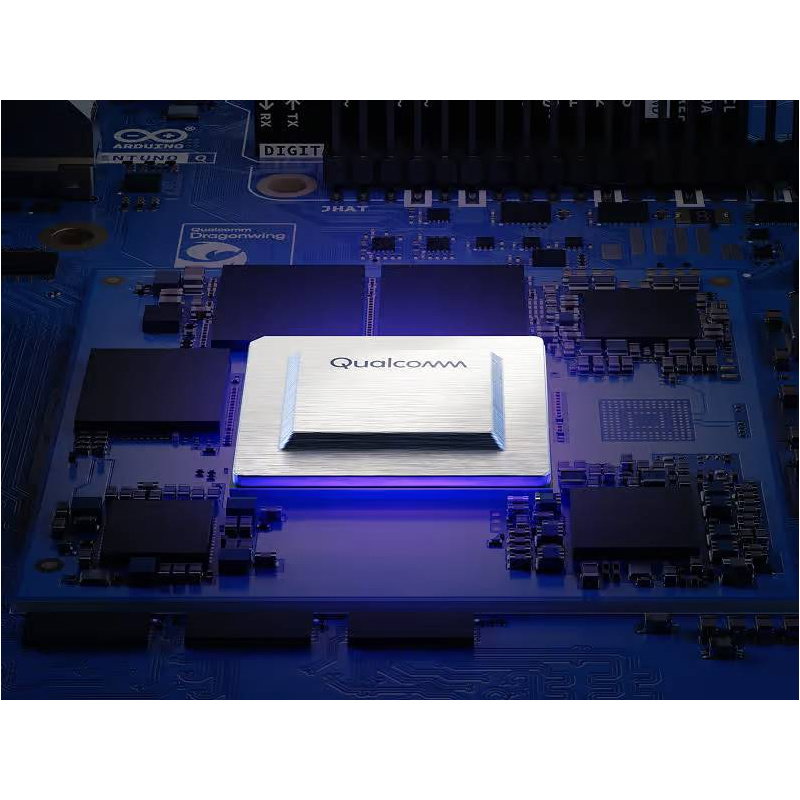
The architecture, which utilizes two independent computing chips , divides tasks between the Dragonwing IQ-8275 and an STM32H5F5 microcontroller. The application processor is responsible for the Linux system, neural networks, image processing, and complex application logic, while the microcontroller provides stable device control with a response time of less than 1 ms . This solution creates a dual-processor edge AI platform that combines high computational performance with the precision required for robotics using computer vision . The VENTUNO Q can be an alternative to NVIDIA Jetson or Raspberry Pi -based platforms in projects that require real-time control in addition to AI acceleration. The integrated design reduces the need to connect a separate single-board computer with an additional microcontroller. This simplifies communication between components, reduces latency, and facilitates the construction of a complete device.
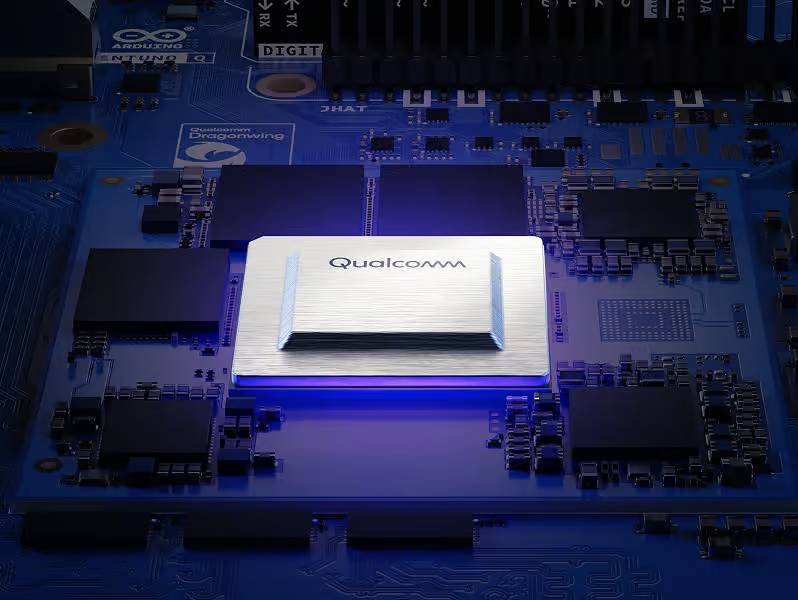
The Dragonwing IQ-8275 processor combines an NPU, CPU, and GPU for complex neural network inference.
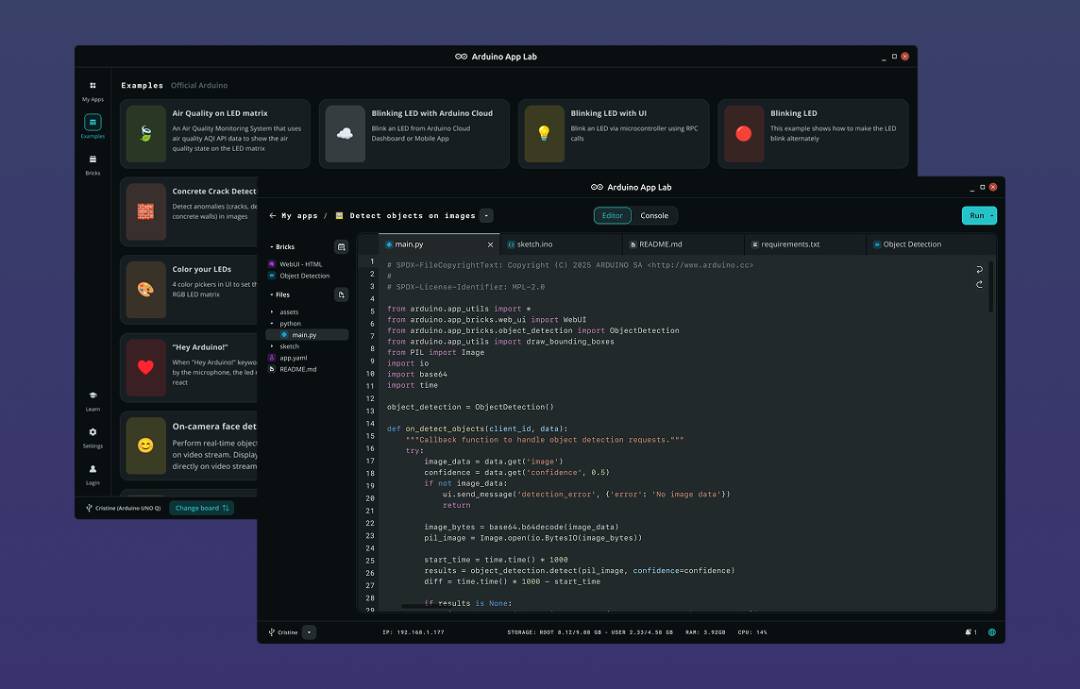
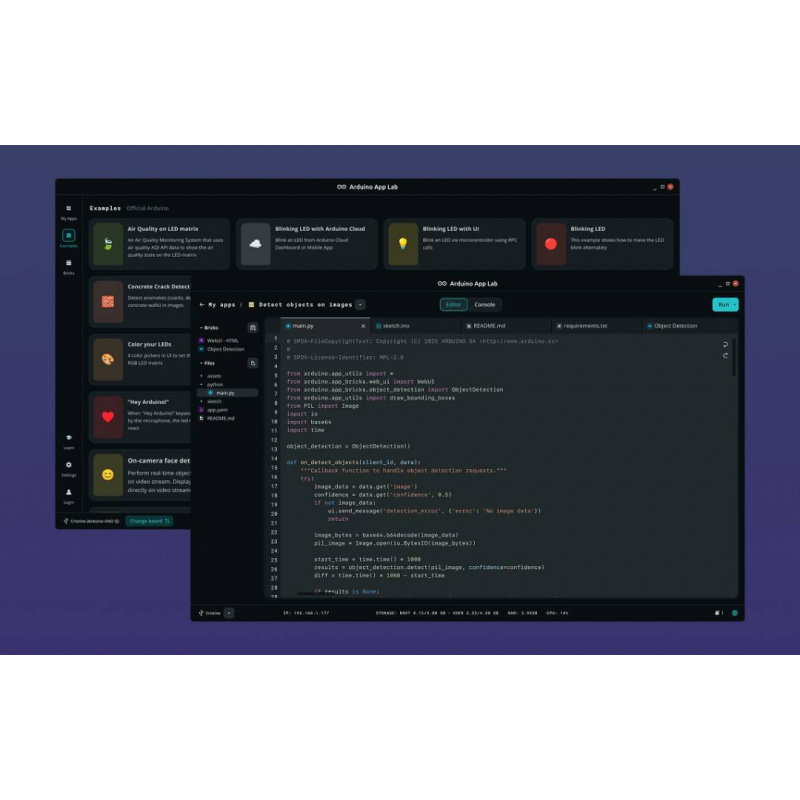
Arduino App Lab combines embedded programming, Linux application development, and edge AI development, providing a single, consistent environment for the entire application stack.
Arduino App Lab - one environment to learn, create and implement
Arduino® App Lab combines the programming of Arduino sketches, Python scripts, and artificial intelligence models in a single environment. App Lab allows you to develop both Linux code and software for microcontrollers and actuators . Modular Bricks make it easy to add AI, multimedia, and robotics capabilities without having to build the entire infrastructure from scratch. The platform can run directly on the VENTUNO Q as a single-board computer or on an external computer connected via USB Type-C or a network. You can also use standard Linux tools like VS Code, PyCharm, Docker, SSH, and Python virtual environments . This makes the platform suitable for both learning and professional development of edge AI applications.
Broad hardware compatibility for faster development
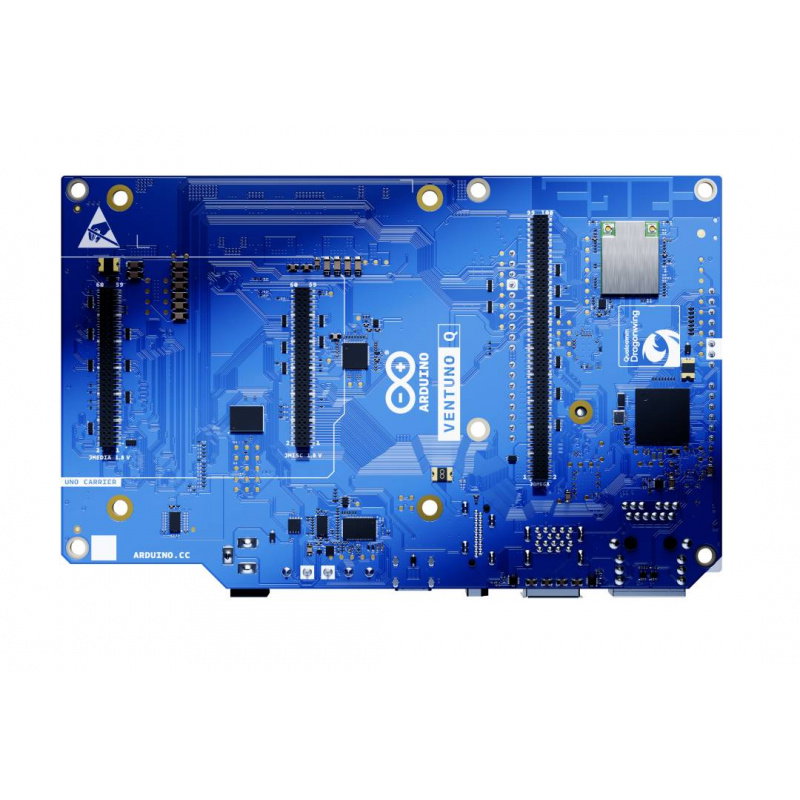
The VENTUNO Q supports Arduino® UNO™ shields , including motor controllers, sensors, displays, and communication interfaces. A standard 40-pin GPIO connector ensures mechanical and electrical compatibility with Raspberry Pi HAT accessories , while the Qwiic connector allows for solderless connection of Modulino modules and compatible sensors . This allows existing components to be used when building new prototypes. JMEDIA, JOMEGA, and JMISC connectors provide connections for cameras, displays, audio systems, CAN-FD buses, and complex control systems. This allows designers to create multi-camera vision systems, motion controllers, and solutions that fuse data from multiple sensors without using multiple independent platforms. Broad compatibility shortens the time from concept to working prototype.
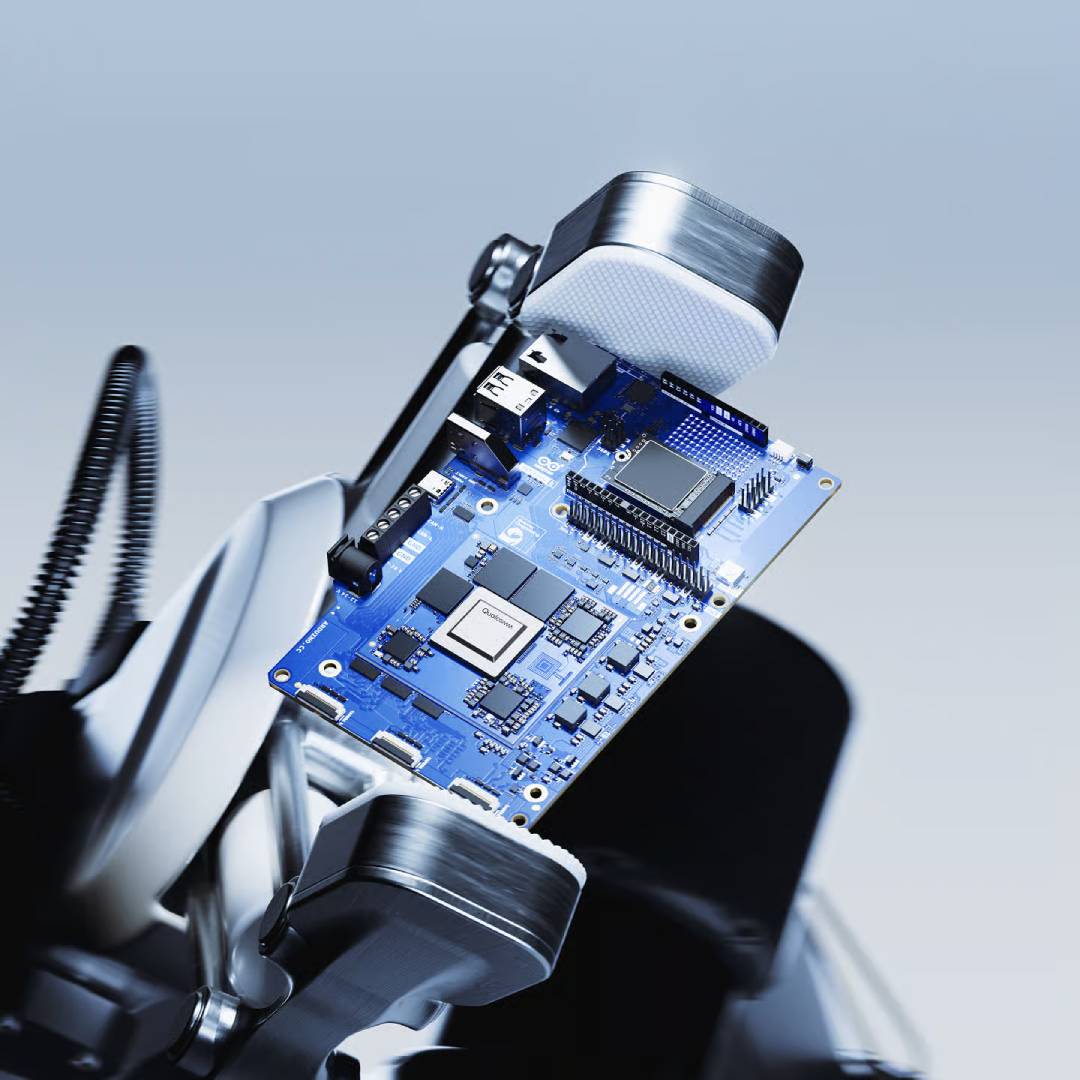
VENTUNO Q is designed for systems that move, perform precise operations, and reliably respond to events in the real environment.
Arduino VENTUNO Q Technical Specifications
| Application Processor MPU | Dragonwing IQ-8275 |
|---|---|
| CPU | 8-core Qualcomm Kryo |
| GPU | Qualcomm Adreno 623 |
| NPU | Qualcomm Hexagon |
| NPU Performance | up to 40 TOPS |
| ISP image processor | Qualcomm Spectra 692 |
| MPU operating system | Ubuntu or Debian upstream |
| MCU microcontroller | STM32H5F5 |
| Microcontroller core | Arm Cortex-M33 |
| MCU clock frequency | 250 MHz |
| MCU Flash Memory | 4 MB |
| MCU RAM | 1.5 MB |
| Microcontroller system | Arduino Core on Zephyr |
| Working memory | 16 GB LPDDR5 |
| Built-in memory | 64GB eMMC |
| Memory expansion | M.2 connector for NVMe Gen.4 media |
| WiFi | WiFi 6, 2.4 GHz, 5 GHz and 6 GHz bands, built-in antenna |
| Bluetooth | Bluetooth 5.3, built-in antenna |
| Ethernet | 1x RJ45, 2.5 Gb/s |
| USB camera support | Yes |
| Camera interfaces | 3x MIPI CSI connectors, multiplexed with 2x MIPI CSI on JMEDIA connector |
| HDMI output | 1x, shared with MIPI DSI on JMEDIA connector |
| DisplayPort output | via USB Type-C in DP Alt Mode |
| Display interface | MIPI DSI lines on the JMEDIA connector |
| Audio | 2 channels for microphone input and Headphone OUT, Ear OUT and Line OUT outputs on JMISC connector |
| Powered by USB Type-C | 5V DC, 3A maximum |
| Power supply via 5.5 x 2.1 mm socket | from 12 V to 24 V DC |
| Power supply via screw connector | from 7 V to 24 V DC |
| Powered by JOMEGA | from 7 V to 24 V DC |
| USB Type-C | 1x port with host and device mode switching, power support, and image output |
| USB Type A | 2x USB 3.0 |
| Additional USB interfaces | 2x USB 3.0 on JOMEGA connector |
| CAN-FD with integrated physical layer | 1x on screw connection |
| CAN-FD without physical layer | 3x on JOMEGA connector |
| CAN-FD for UNO overlays | 1x without physical layer on UNO connectors |
| Supported technologies and environments | ROS 2, Edge Impulse, Qualcomm AI Hub, App Lab |
| Dimensions | 160 x 100 x 25.8 mm |
Useful links
| Name | Value |
|---|---|
| UC - Microcontroller | STM32H5F5 |
| UC - Core | Cortex M33 |
| UC - Flash | 4 MB |
| UC - RAM | 16 GB |
| UC - External memory | eMMC 64GB |
| UC - freq | 250 MHz |
| UC - Ethernet | yes |
| UC - WiFi | yes |
| UC - USB | 5x USB |
| UC - Bluetooth | yes |
| UC - HDMI | yes |
| UC - Connector |
|
| UC - Camera interface | yes |
| UC - CAN interface | yes |
| Width | 15.5 cm |
| Height | 21.5 cm |
| Depth | 5.5 cm |
| Weight | 0.501 kg |
 GLS
Shipping in 24 hours
from €8.07
GLS
Shipping in 24 hours
from €8.07
 Raben - pallet delivery
Delivery in 3–5 days, no inside delivery
from €96.75
Raben - pallet delivery
Delivery in 3–5 days, no inside delivery
from €96.75
The full delivery terms are on the page Delivery and payment.
30 days to return, without giving a reason
If the product does not meet your expectations, you have 30 days from receiving the parcel to withdraw from the contract. The product only has to be complete. The right of return belongs to consumers (a purchase unrelated to business activity).
Complaints
If the product turns out to be faulty, you can make a claim under the guarantee or the statutory warranty. We handle claims without delay, at the latest within 14 working days of receiving the report together with the goods.
Be the first to ask a question about this product!
Instructions and documents
GPSR data
Products from the same category
See all
- Promotion