



New arrivals
On Sale
Communication
Today, it is difficult to imagine the world without communication in modern electronics. Remote data transmission is a basic function that integrates devices with each other. It is becoming especially crucial in the production department. Every modern and robotized factory must be equipped with extensive industrial automation systems that control machines and actuators, measure basic parameters of production processes, monitor their quality and integrate general production management. Of course, the industrial world is not the only example where communication plays a significant role. A good example is how we connect devices to each other in everyday life - e.g. headphones with a phone via Bluetooth. We have prepared many product subcategories in our offer, thanks to which you can build a data connectivity for various projects and needs. If you have any questions, please contact our technical department. We will be more happy to help you and advise on choosing the equipment to best suit your needs.
Subcategories
 GPS / GSM / Bluetooth locators
(14)
GPS / GSM / Bluetooth locators
(14)
 USB Bluetooth adapters
(3)
USB Bluetooth adapters
(3)
 Antennas
(44)
Antennas
(44)
 Remote controllers
(16)
Remote controllers
(16)
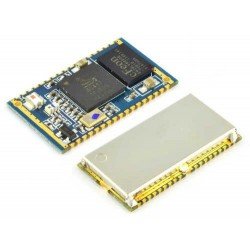 Bluetooth modules
(43)
Bluetooth modules
(43)
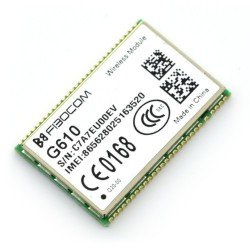 GSM modules
(9)
GSM modules
(9)
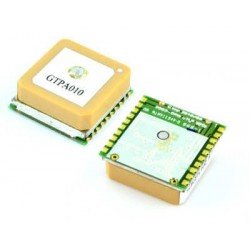 GPS modules
(28)
GPS modules
(28)
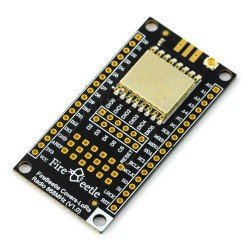 Radio modules
(28)
Radio modules
(28)
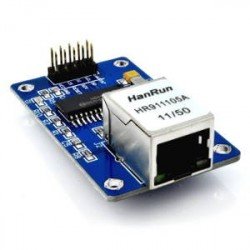 Ethernet modules
(11)
Ethernet modules
(11)
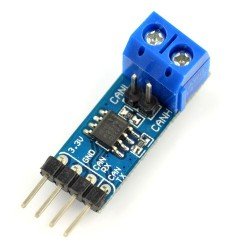 CAN-bus modules
(15)
CAN-bus modules
(15)
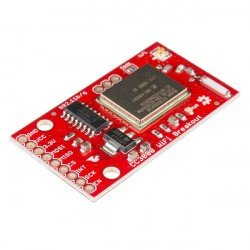 Wi-Fi Modules
(94)
Wi-Fi Modules
(94)
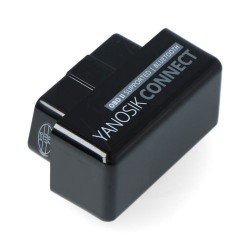 Automotive diagnostics
(2)
Automotive diagnostics
(2)
 RFID modules & tags
(36)
RFID modules & tags
(36)
 XBee
(3)
XBee
(3)
 LoRa/LoRaWAN
(53)
LoRa/LoRaWAN
(53)
 Meshcore
(9)
Meshcore
(9)
 Meshtastic
(15)
Meshtastic
(15)
Products



See also
Wired or wireless?
There is no simple answer to this question, because in reality you need both. Usually, what affects the type of a connection are three main factors: range, bandwidth and environmental conditions. Daily necessities such as your smartphone, tablet or laptop use the Wi-Fi wireless network. On the other hand, it is better to use a wired connection when it comes to desktops, servers, printers, media streams, connected TVs and TV set-top boxes. Both Wi-Fi and wired connections have advantages and disadvantages. The general rule is quite simple - for mobile devices it is better to use wireless connectivity for obvious reasons. Cable would restrict mobility for devices such as drones, robots or smartphones. There are of course exceptions, such as exploratory and underwater robots, where the environment imposes the use of a wired communication. A wired connection also works best if the devices operate at a small range or are generally installed in a fixed location. Then the use of a cable is a much cheaper and simpler solution. For this purpose, mainly serial links are used: RS232, RS485, RS422 or USB.
What is wired connection?
Wired connection is the transmission of data at a distance from point-to-point using a communication channel, such as copper cables, optical fibers or storage media. The data is sent as an electromagnetic signal, most commonly electrical voltage. Telephone networks, cable TV, Ethernet cable connection are the most important examples of wired connection. Analogue transmission is a method of transmitting voice, data, image, signal, or video information over a continuous signal, the amplitude, phase, or other methods. Historically, data has been trafficked non-electronically e.g. visually, acoustically and mechanically. The first applications of electromagnetic transmission were telegraph (1809) and telephone (1906), which operate on digital signals. Computers are wired to peripherals via parallel ports and serial ports such as RS-232 (1969), Firewire (1995) and USB (1996). In our Botland store’s offer you can find all modules supporting these standards. The products come from trusted suppliers and have the best value for money. Check it out yourself!
What is wireless transmission?
Wireless transmission is a data transmission method that use free space (air or vacuum) as a transmission medium. No cable in the form of an electrical conductor (wire) or optical fibre is required for transmission. Wireless transmission is carried out by directional or non-directional electromagnetic waves, with the range of the frequency band used varying from a few hertz (low frequency) to several hundred terahertz (visible light), depending on the application and technology used. Wireless transmission methods are mainly used in applications where wired transmission technologies are not applicable or too expensive, such as satellite communication or radio relay. Further applications can be found in consumer electronics as well as in the industrial sector. Well-known examples are Bluetooth, WLAN, ZigBee, NFC, Wibree, LoRA or WiMAX in the radio frequency range as well as IrDA and optical directional radio (FSO) in the infrared or optical frequency range.