



On Sale

Li-Ion batteries
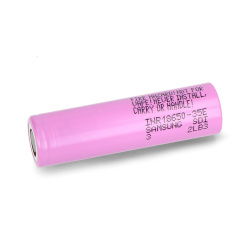
Li-Ion batteries have a liquid electrolyte, which distinguishes them from Li-Pol batteries, which use gel or solid cells. It has two electrodes, one of which is made of metal oxides and the other of carbon. Lithium-ion batteries are commonly used in electronic equipment, including modern smartphones and mobile laptops. They are also one of the most popular energy sources for robots and electronics. The first lithium batteries appeared on the market in 1970, but the breakthrough for lithium-ion batteries came in 1979. However, the commercial lithium-ion battery was not available until 1991. It was used in Sony brand cameras, followed by a rapid increase in interest in this power source and other electronics companies followed in the footsteps of the Japanese company. Today Li-Ion batteries are used much more often. They are mainly appreciated for high cell voltage of 3.6V.
Products

See also
Lithium-ion batteries - additional information
Thanks to the excellent ratio of the amount of stored energy to mass, they are now used in all types of electronic equipment, such as laptops or mobile phones. Robotics and electronics engineers also like to use them as an energy source. Li-Ion cells can easily power many of your projects.
Li-Ion batteries - Advantages and characteristics
Lithium-ion batteries have a big advantage that lithium-polymer batteries lack - they have a uniform, standardized housing shape . Polymer batteries are distinguished by their freedom of shape, but this makes it difficult, for example, to prototype new devices. However, the standard shape of a lithium-ion battery can be easily modeled in a graphics program. Lithium-ion batteries are often used as stationary energy storage for renewable energy sources (these are characterized by unstable operation). Currently, this type of energy sources are used in electric cars such as Tesla Roadster or Nissan Leaf. Replacement of lithium-ion batteries due to their service life is very rare.
Advantage of Li-Ion batteries over other solutions
The decisive advantage of Li-Ion batteries over the recently used NiMH batteries is approximately twice the energy capacity (comparing cells of the same size and weight), as well as longer battery life. Another great advantage is the lack of the so-called memory effect, known from older models of mobile phones, in which, after purchase, the phone had to be discharged and fully charged three times for the battery to function properly and as efficiently as possible. Lithium-ion batteries are usually sold as a single cell of various sizes (depending on energy capacity). In addition, lithium-ion batteries in many devices are connected to a system that constantly monitors the depth of discharge. This solution further extends the life of lithium-ion batteries.
Lithium-ion cells (Li Ion) - Check what we offer?
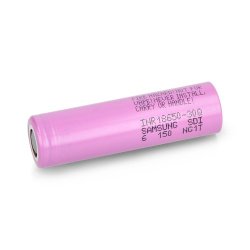
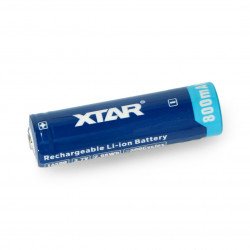
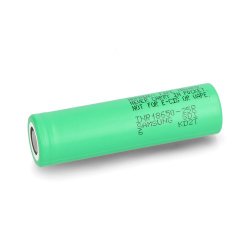
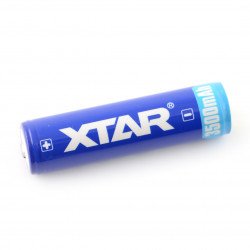
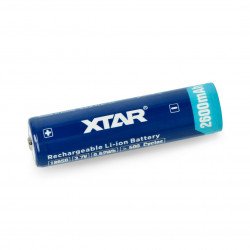
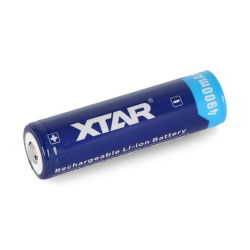
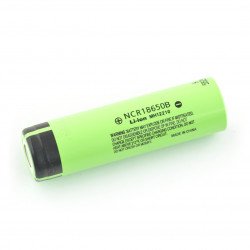
Our offer includes batteries with an output voltage of 3.7 V and (depending on the model) with capacities of 800 mAh, 2100 mAh, 2200 mAh, 2500 mAh, 2600 mAh, 3001 mAh, 3400 mAh, 3500 mAh. When used properly, a lithium-ion battery is an effective and safe power source. Our assortment includes only products made by renowned manufacturers - Sony, XTAR, Samsung, OEM and Panasonic. If you have any questions or doubts regarding the selection of lithium-ion batteries, please contact our experienced advisors.
Li-Ion batteries - FAQ
Rechargeable batteries and Li-Ion batteries should be stored away from sunlight, heat and moisture. The storage place should be ventilated, dry and maintain a relatively constant temperature. The ideal battery storage temperature is around 15°C, but at least room temperature should be sufficient.
The safe value of charging current is usually half the capacity. If we do not know this value, the batteries should be charged with the lowest possible current. It is worth trying modern and safe chargers for Li-Ion batteries .
Do not charge the Li-Ion cell when the temperature is lower than 0°C or higher than 45°C. Lithium-ion cells and batteries perform best when at room temperature, so charging at a temperature between these limits will provide the best charging and extend battery life.