



New arrivals

On Sale


Standard servos
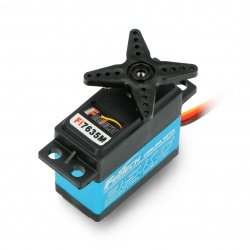
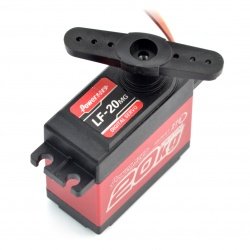
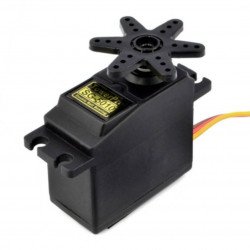
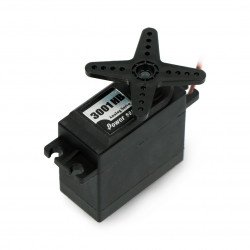
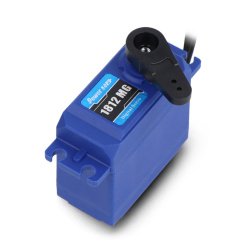
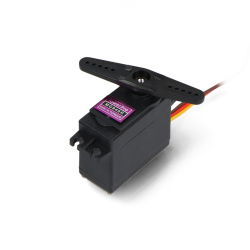
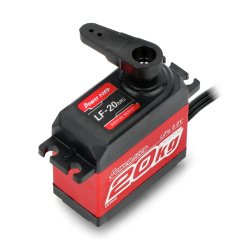
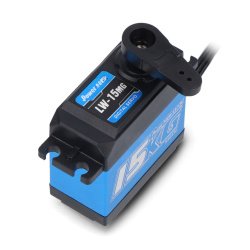
Servomechanisms are devices that use the feedback phenomenon. The motion reaction of the servo can be caused by factors such as the change in speed, temperature or speed of the object with which the servo works. Basically, each servo consists of components such as a DC drive motor, a potentiometer regulating the operation, an internal electronic system that controls the motor operation, a gear transmission, and a gear and electronics cover.
Products




How to connect and power the servo?
Most modeling servos are equipped with a three-core cable terminated with a female plug with three pins with a pitch of 2.54 mm - standard for the control signal, supply voltage and ground. Remotely controlled vehicles often use batteries with a rated voltage adjusted to the needs of the vehicle's electrical components. After charging, the output voltage of the unloaded battery is slightly higher than the rated voltage, but as the battery discharges it will decrease. A significant drop in voltage, and therefore battery efficiency, will be noticeable when the vehicle cannot reach the same speed as with charged batteries and will have difficulties, e.g., in making a turning maneuver, for which the servos are responsible. If you do not want to use battery power in your project, a stabilized DC power supply will also be a good solution, but remember to select the appropriate supply voltage so as not to damage the servo! Regardless of the power supply method, it is worth knowing that the current consumption of the servo increases with the increase in its mechanical load - a small, unloaded servo consumes approximately 10mA of current, while larger servos, when controlling an increased load, may consume a current exceeding 1A. Our offer includes servos with torque up to 62.0kg*cm and supply voltage from 4.8V to 12.0V.
Servo control
The internal structure of the servo is a motor whose shaft is mechanically coupled to the potentiometer axis, which electrically reflects the position of the motor shaft. The voltage on the potentiometer pins is read by the control system, which results in providing a control signal with a filling corresponding to the angle of rotation of the motor shaft, while the standard rotation range of most servomechanisms covers an angle of 180° - 90° in the clockwise and counterclockwise directions, but Our offer also includes servomechanisms with rotation angles from 120° to even 360°. The signal supplied to the servo is a characteristic sequence of control pulses. These pulses appear at intervals of 20 ms and their time width is from 1 to 2 ms. Applying a signal with a pulse width of 1.5ms sets the servo motor shaft in the neutral position. A variable-width pulse generator (PWM) built into hardware, e.g. in Arduino, is one of the best ways to control servomechanisms.
Standard type servos - FAQ
A servomechanism usually consists of a DC (direct current) motor or actuator, gear, potentiometer and control system. The whole thing is placed in a housing that protects the servo against damage.
Servomechanisms are used in various devices, machines and robots that contain moving automatic elements. Servos are used, for example, in moving models or industrial machines.
A servomotor is another name for a servomechanism, i.e. a motor with a feedback system. This system allows precise control of parameters such as rotational speed and direction of rotation of the engine.
A servo motor is an executive element that is part of a servo mechanism.