



New arrivals
On Sale
Low-power solar panels
Low-power solar panels are an excellent alternative to other energy sources. Skillful use of inexhaustible (at least in our lifetime) deposits of solar energy allows for the construction of many useful devices that can operate for many years in places without access to mains power - even where it is not possible to replace the battery or battery. In this category you will find low-power solar panels dedicated to powering small devices in a modern and environmentally friendly way.
Products


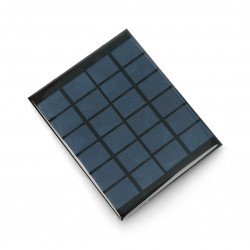
Photovoltaics in practice
If you intend to use low-power solar panels in practice, you should take into account - already at the initial stage of the project - certain key properties of this type of energy sources. First of all, it is necessary to take into account considerable daily variability in the design, which concerns the power obtained from the solar panel. Depending on the weather (cloud cover), as well as the time of day and geographical location, the available power generated by the cell varies within a wide range. For this reason, in order to obtain a stable supply voltage, it is necessary to use good DC/DC converters. On the other hand, it is worth providing a buffer power supply in the system - a battery that will store surplus energy during periods of good sunlight, so that the system (constituting the load on the panel) can use this reserve at night or in worse weather conditions.
Small solar panels in the Botland store offer
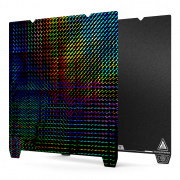
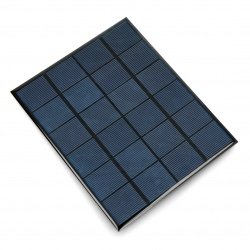
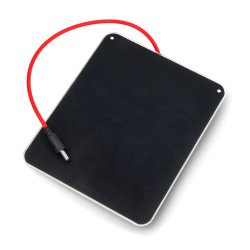
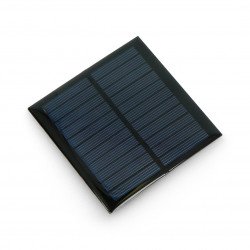
In this category you will find a very wide range of low-power solar panels with dimensions ranging from a few to just over 25 cm, differing in both the rated voltage generated and the level of output power obtained. The smallest of them - a 0.4 W cell - produces a voltage of 5.5 V and is equipped with soldering pads for connecting wires. We also have another version of this cell, equipped with a short output cable with a USB A socket. Larger cells - e.g. with dimensions of 13.6 cm x 11 cm - are able to generate a power of 1 W (at a voltage of 6 V), and the largest panel available in this category delivers as much as 5 W of power and, in addition, has an extremely useful form of a flexible sheet that can be easily mounted on various types of surfaces.
Ready-made solar system in mini size
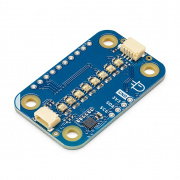
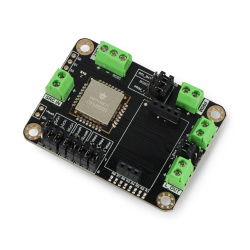
An extremely attractive solution, perfect for starting your adventure with photovoltaics, is a small DFRobot module with a 2 V/160 mA cell. A tiny board measuring only 30 x 30 mm allows you to charge a lithium-polymer cell (1S, i.e. 3.7 V) with a current of up to 100 mA via a micro USB cable or using a low-power, waterproof solar panel included in the set (50 x 50 mm). ). What is very important, the board contains all the systems needed for reliable operation, including the integrated SPV1050 solar controller and a USB charger.
Low power solar panels - FAQ
Low-power solar panels for charging mobile phones should have electrical parameters adapted to the receivers. Typically, solar panels of this type have a power ranging from a few to a dozen (maximum several dozen) watts. Another issue when choosing a solar panel to charge your phone or other mobile devices is conversion. The higher it is, the more effective the solar panel for charging smartphones will be.
Solar panels with high power are usually installed on solar farms. Their use significantly reduces the cost of building such installations. This is due to, among others, due to large size and relatively heavy weight. The most powerful solar panels have an efficiency ranging from 21% to 23%. In turn, the power of the panels is 500 W, 600 W, 700 W and even 800 W.
NO. Photovoltaic panels, or more precisely the photovoltaic cells from which the panels are made, require access to sunlight. Solar panels do not produce electricity at night, which is why in many photovoltaic installations the inverter automatically turns off and therefore does not consume electricity. As soon as the first rays of the sun hit the working area of the photovoltaic panels, the electricity production process is automatically resumed.