



New arrivals

On Sale
Relay modules
Relay modules
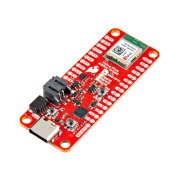
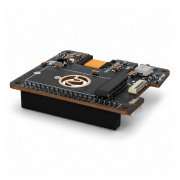
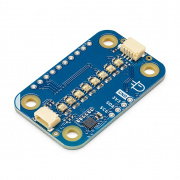
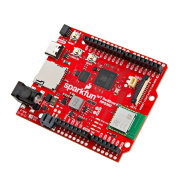
This section of our store is full of different types of relay modules with many channels (even up to 16 on a single board) and supporting various interfaces - from Bluetooth to SPI or Wi-Fi and also with opto-isolation. Every DIY enthusiast and electronics technician will find in this section something for themselves and their model or system. Check what we have prepared for you and dive into the world of relays for Arduino, Raspberry Pi and other microcomputers.
Products
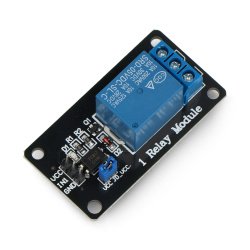


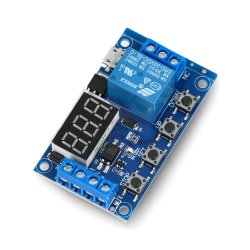
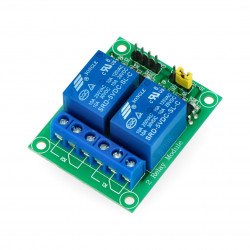
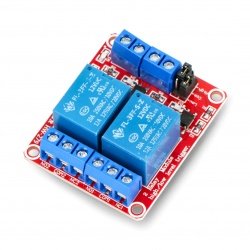
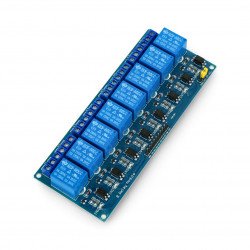


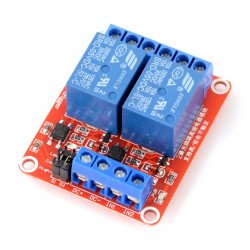

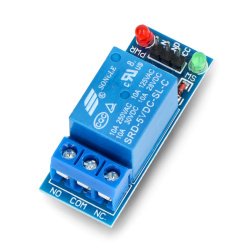
What are relay modules and how do they work?
The relay modules offered in our store are electrical and electronic devices whose task, when appropriate conditions are met, is to suddenly change the state in one or more output circuits. In addition, they are used to control devices and are used in alarm systems.
The relay responds to a change in the input physical quantity, such as voltage, current, pressure or temperature, in such a way that when it exceeds a certain level, the signal changes stepwise, usually due to the command "on" or "off". Relay modules equal to each other include: maximum switching power.
Relay modules - application
By their operation, relays allow higher amplitudes or voltage levels to produce effects in circuits. There are overflow and underflow relays that respond to a change in the measured quantity above or below a specified level.
An example is an overcurrent relay, which will operate when the current flowing through it exceeds a certain value. We offer relay modules ready to be implemented into the designed system or model.
Optoisolation
Our relay modules that we present to you are equipped with opto-isolation. What is opto-isolation? It's nothing as complicated as it may seem. Optoisolation is the separation of individual circuits using signal control.
This is possible thanks to the use of an optocoupler, which sends control signals in such a way as to electrically isolate these circuits. The opto-isolation process allows you to protect selected system elements - usually the most expensive ones in our system.
The difference between a contactor and a relay
What is the difference between these two systems if the principle of their operation is the same? It depends on the systems in which they are used. Contactors are devices for switching high-current systems - for example electric motors, and relays are used for low-current systems or zero-potential signals - for example in programming logic controllers.
This also results in a much greater durability of relays than contactors (several million switches on relays, up to several thousand on contactors).
Our offer includes only relay modules from renowned manufacturers. Individual models differ, among others, in: supply voltage (e.g. 12V DC), switch-on time, maximum switching current (relay contact current).
Relay modules - FAQ
A relay module is an electronic or electrical element whose main task is to suddenly change the state in a circuit or circuits. This change is initiated by meeting certain conditions. The relay module is designed to change voltage, temperature, pressure or current in steps. This usually happens thanks to the use of commands such as disable or enable. Individual models of relay modules differ from each other, among others: maximum contact voltage and maximum switching power.
Relay modules are distinguished by their versatile use. They are used, among others: as lighting controllers and switches for various types of devices and electrical equipment, including engines. In addition, they are used as a controller for various executive systems. Other applications are alarm systems and access control systems. The relay module can work with a Raspberry Pi minicomputer or an Arduino microcontroller.