



New arrivals





On Sale

Displays and screens
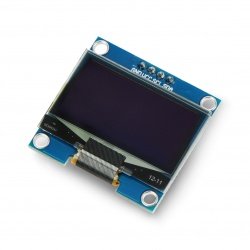
Displays and monitors have been going through a real revolution over the last decades, and finally evolve into the advanced forms we associate today. They are nowadays one of the most popular solutions in the field of output devices presenting information in the form of characters (numbers, letters, special characters). When it comes to displays produced in LCD, TFT and IPS technology, they are also used to input data. We are pleased to announce that in our Botland shop we make every effort to include devices from the best manufacturers at the best prices. You can find LCD, TFT, IPS, OLED, e-paper and segmented displays and RGB LED matrixes. Most products have a built-in driver that allows you to easily connect the display to a micro controller. Check our offer, where we have prepared a wide selection of models with detailed specifications. We are sure that you will find what you are looking for!
Subcategories


Products



See also
Segment displays - simple, practical and timeless
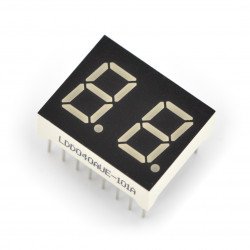
Segment displays can display letters, numbers and other characters based on segments in the shape of vertical (or inclined) and horizontal lines forming the shape of the number "8", very often with an additional segment in the form of a dot in the lower right corner of the display. The individual display segments are LED diodes connected to each other in a common cathode or common anode system. To control displays in a hardware way, the 4511 chip in CMOS technology can be used for displays operating in a common cathode system, and for displays connected in a common anode, the 7447 chip made in TTL technology can be included in the circuit.
LED matrices - a perfect combination of functional and visual values
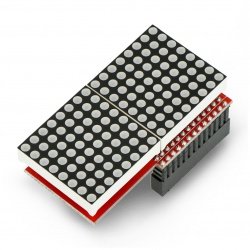
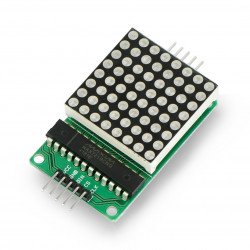
LED matrices consist of LEDs arranged in the form of a two-dimensional array. They can display various messages, signs and animations. From the electronic side, the LEDs are arranged in the matrix in two ways - the cathode is the rows and the anode is the columns, or vice versa, where the cathode is the columns and the anode is the rows. This connection system reduces the number of microcontroller pins needed to control the matrix. LED matrices can display images in many colors by using combinations of just three colors - red, green and blue - in appropriately mixed proportions. LED matrices are often used as electronic advertising banners, as commercial and bus stop information, as well as as decoration of interiors and building facades. Also check the details of our offer in the liquid crystal display section.
LCD displays - Convenient reading of information on the control panel
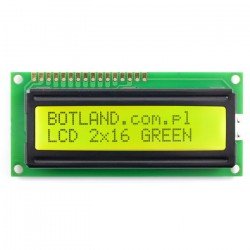
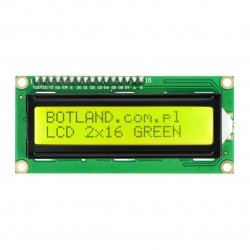
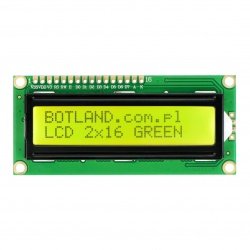
LCD liquid crystal displays use liquid crystal material technology, the particles of which move relative to each other in specific temperature ranges and form appropriately, creating a crystalline network. Thanks to a more extensive internal structure, LCD displays allow the user to obtain information in a more extended range than when using a single LED, depending on the complexity of the application. LCD displays can display numbers, letters, special characters and graphic symbols. If you are a beginner in embedded systems and want to program a display, then a 2x16 character LCD display will be a very good option for you to start with. This display has a built-in HD44780 integrated circuit equipped with data and command registers, which constitute an intermediary link between the display and the microcontroller, and pins compatible with the Arduino platform, for which the LiquidCrytal.h library dedicated to operating LCD displays is available online. An LCD display can be the perfect complement to an electronics project, and an LCD screen is the most popular solution on the market.
Displays and screens - FAQ
The choice of display depends on the goals of the electronics project. First, choose the type you are interested in - LCD, TFT, IPS, OLED, e-paper, segment display, or maybe an RGB LED matrix? Pay attention to the supply voltage, operating temperature range and, of course, the dimensions of the module itself.
Raspberry Pi can be connected to a classic PC monitor, but Botland's offer includes dedicated displays for RPi . No worries about connection - communication is ensured by modern HDMI and microUSB ports and additional cables included in each set, the sets also include a power supply.
The LCD display consists of two glass plates with a special liquid between them. It rotates or "twists" the plane of polarized light. This effect is influenced by the creation of an electric field. The glass plates are covered with a very thin metallic layer. You can find a small guide to the different types of displays on the Botland Blog .