



New arrivals


- Coming soon

On Sale
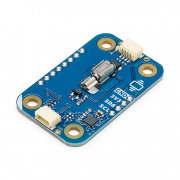
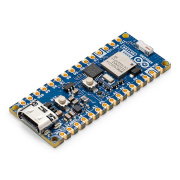
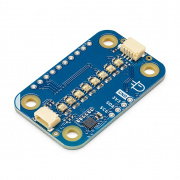
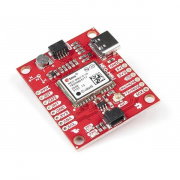
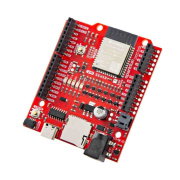

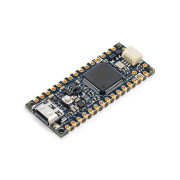
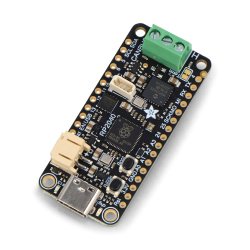
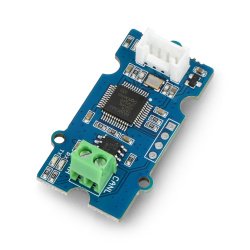
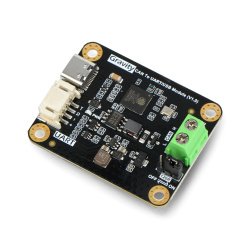
CAN-bus modules
CAN, or Controller Area Network - Can Bus, is a serial communication bus that was created in the 1980s at Robert Bosch GmbH. This project aimed to improve the operation and performance of the ABS system and engine control in cars. From the automotive industry the CAN bus quickly moved to other areas and spheres of our life. Today it is used, among others, in industrial automation and construction. CAN bus does not have a separate master unit, so we include it as a multi-master bus. The bus transmits specific messages, which are then received by all devices, so the communication is broadcast. CAN bus is characterized by automatic operation, hardware error handling and initiated messages that are recognized by identifiers. CAN bus systems are very popular elements, which are used in many technologically advanced and complex projects. In our offer there are CAN bus systems in various variants. You can choose the model best suited to your project in terms of technology.
Products

See also
CAN bus (CAN bus) - The most important information
CAN communication ( CAN system) has become one of the most popular standards of industrial communication networks - in Poland it is in second place after the valued Profibus standard. Using the CAN bus , control devices transmit signals to robots (or automata).
The basis of operation of the CAN network (controller area network)
It is also perfect for communication (data transmission) between sensors, controllers and recorders . It is characterized by stability and high data transfer speed, but remember that the speed decreases significantly with the length of the cable. In other words, as distance increases, speed decreases.
CAN networks are useful in the automation of production lines, various machine systems, for controlling furnaces, cold stores and printers. It is worth knowing that the CAN bus topology is the pillar on which the operation of the CAN network is based.
CAN bus - Modules, converters and overlays - What do we offer?
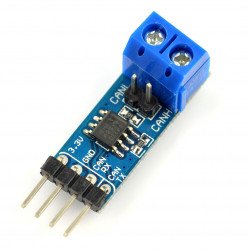
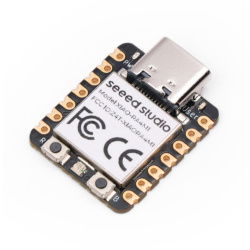
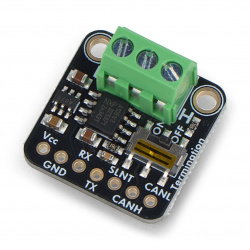
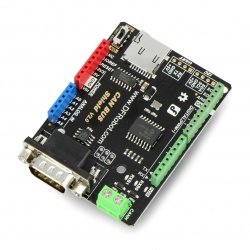
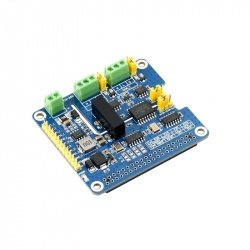
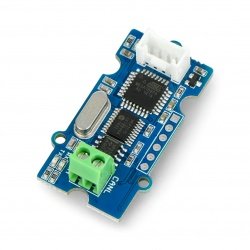
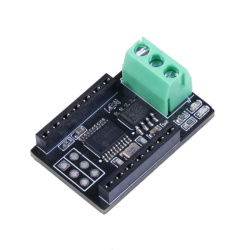
Our offer mainly includes modules that allow you to easily connect your microcontroller to the CAN bus . Overlays for popular boards (microcontrollers) are often perfect for many applications - we have a wide selection of overlays for Arduino.
Often, communication with the device takes place via the SPI interface, and the shield has the microcontroller pins placed on top. The CAN communication bus is still most often used in the automotive industry - there is, among others, an Arduino shield available, adapted to work with a standard OBD-II car connector and containing instructions for an example of connecting the device. The device can be used, among others, for error control and checks, for example, whether the airbags are activated.
It is worth remembering that when using the CAN bus and boards using ATmega microprocessors, due to their lower efficiency, the functionality of the bus will be reduced. We also offer modules with CAN interfaces - communication in them is usually carried out via a USB connector and a UART-RX, TX serial interface. On Windows or Linux systems it will appear as a virtual COM port. If you have any questions or concerns regarding the CAN bus, please contact us by e-mail, telephone or via the form available on the website.
CAN bus - FAQ
CAN is a multi-master serial bus standard for connecting electronic control units (ECUs), also known as nodes. Two or more nodes are required for CAN communication. They were used, among others, in motorcycles and cars. We have more information on the Botland Blog .
CAN-BUS is the original serial bus for communication between modules. It was created by Robert Bosch in 1983. Then the idea was implemented, among others, by Intel and Philips, and over time CAN-BUS appeared in Mercedes cars from 1991.
CAN H and CAN L come together. These are the transceiver's differential signals. The purpose of the CANH and CAN L "test" is to determine the physical integrity of the CAN (Controller Area Network) bus by checking the low (CAN-L) and high (CAN-H) line voltages. When the dominant bit is transmitted, the CAN High voltage increases and the CAN Low voltage decreases.