



New arrivals


On Sale


Motion sensors
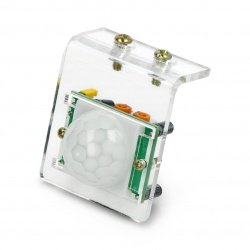
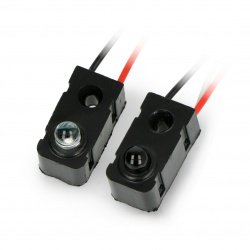
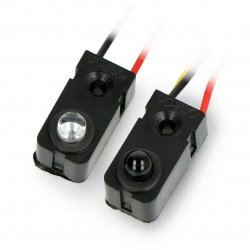
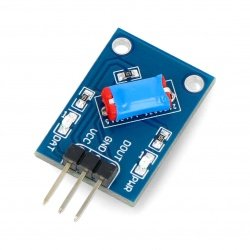
Motion sensors (motion detector) are devices that are used to automate the operation of electrical equipment. Today, such a solution is already available in most homes. It is widely used for industrial purposes. Motion sensors are installed in production lines and more. In the case of individual use, it will be especially useful to purchase motion detectors in a situation where we want to have a modern apartment or create an intelligent home. Motion detectors are basic motion recording devices that are required for many Internet of Things projects. Then this inconspicuous element, which is the motion sensor, is absolutely necessary for the efficient functioning of the solutions used. The motion sensors we offer are of the highest quality and easy to use. We present various types of products in this category. If you are interested in programmable electronics, you will surely be pleased because the sensors are compatible with other systems, such as Arduino, Raspberry Pi. In case of any problems, we will be happy to help and encourage you to contact our technical department.
Products






See also
Technical parameters of motion sensors
First of all, the task of motion sensors is to detect movement in the rooms where they are placed. They detect infrared radiation and then activate a light or sound signal informing about the detection of movement in a given room.
The operating range, depending on the selected model, ranges from 2 to even 11 meters. It depends on the purpose of the sensor and the function it is to perform - whether it is for home use only or for alarm systems operating in enterprises.
Motion sensors – additional information
Our offer includes sensors whose sensor is powered with voltage from 4.5 to 24 V. In addition, the reaction time to movement is lightning fast, which allows you to quickly respond to a threat. We also have various housings for motion detectors, which are made in 3D technology. The sensors category also includes twilight sensors (light and color sensors) mounted, among others, on the staircases. The twilight sensor is perfect for automatically turning on the lighting. Additionally, it can measure the intensity of sunlight in a given area.
Motion detectors / motion detector - Application
Motion sensors have a wide range of applications - from individual to commercial ones. A perfect example of using a device such as a motion detector is a home alarm. Nowadays, burglaries are common, and having an alarm with a motion sensor can protect us from damage. Immediately after detecting movement, the home alarm is activated and notifies the appropriate services about the threat. There are also lighting systems used in single-family homes that also operate based on detected motion. This way, we also save on electricity bills because the lamp does not stay on all the time, but only illuminates the way when it senses our movement. We also offer microwave sensors whose operating principle is based on the Doppler effect.
The motion detector is an easy-to-install element that will make your life more efficient. Additionally, our store offers vibration or impact sensors, which also trigger a signal based on vibration detection. Motion detectors are not the only sensors worth having in your workshop. Sensors of this type, and basically the way they work, are not correlated with the ambient temperature. This means that the heat source does not interfere with its operation. We offer, among others: sensors with mounting holes, thanks to which they can be easily attached, e.g. to the ceiling. Selected models are resistant to electromagnetic waves (electromagnetic waves may interfere with the operation of selected motion sensors).
How to install motion sensors?
The method of connecting the sensor depends not only on its type (including the supply voltage range), but also on the device to which we intend to connect it. Selected motion sensors intended for, among others: they require a preamplifier to connect to Arduino . In turn, other sensors can be directly connected to the 230V AC home electrical installation. More information can be found in the description of the specific sensor.
Motion sensors - FAQ
A motion sensor or motion detector does exactly what its name implies - it detects nearby movement. It is often integrated as part of a system that performs an automatic task or alerts about movement in a given area. Motion sensors use infrared, ultrasound or electromagnetic waves.
This is one of the most common questions we are asked. To understand the differences between PIR sensors and microwave sensors, we recommend this article on Botland Blog . Check costs, sensitivity, detection range and recommended places for use (corridor, open garden or driveway, etc.).
Motion sensors have home, workshop, commercial and general security applications. They include, for example, automatic lights (popularly: "photocells"), burglary alarms and, finally, individual electronic designs for any application we can imagine.
We would rather say: the camera may have a motion sensor. The movement detected by the PIR detector (passive infrared detector) reacts to the heat of the human body, animal or objects at a given temperature. Motion detection is therefore integrated with the camera's recording function, for example to save space in the device's memory.