


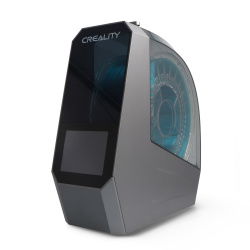
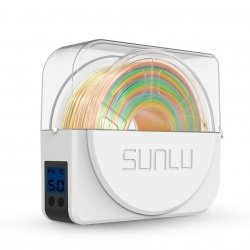
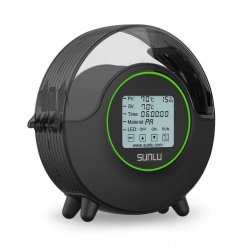





































































































































Laminators are devices designed to permanently protect documents, drawings and photographs from adverse weather conditions. Thanks to this they are resistant to water and moisture, dirt and UV radiation. Laminating is a process that preserves the properties and appearance of paper, and at the same time protects it well and prolongs its durability and life. The foil is also resistant to kinks and scratches, thanks to which there are no visible traces of passing time on it either. Laminators are often used in office environments, in companies and large enterprises. Sometimes we also decide to buy a similar device for our home, for example when we want to protect children's memorable photos or drawings. Laminators are available in different variants. They are both simple devices of small size, handy and very well suited for everyday use. The more frequent the use of the laminator, the better parameters it should have. Therefore, for companies and offices we recommend large laminating machines, which also have an interesting function of creating spatial 3D forms. It is a good choice for artists and design studios.

- Sale
- Sale
- Sale
- Sale

Laminarka - Laminatory do folii
See also
- Power supplies 12v 10a
- Outdoor LED lighting
- Syma drones
- Zortrax Filaments
- Anet 3D printers
- DJI Mavic drones
- Siemens LOGO!
- Esperanza compressed air
- 24v relays
- Wireless mice
- DJI Inspire drones
- Conductive paint
- Fluorescent filament
- 2-core cables
- DJI Phantom drones
- Encoders
- Intel modules & kits
- Hexbug toys
- Tablets
- PLA Pro filaments
- DJI Mavic drones - drones and accessories
- RPi Wi-Fi cards
- Magnetic balls
- Car fuses
- Compressed air to clean the keyboard
- Photo traps
- Intel starter kits
- Android Box Smart TV
- Banana Pi
- 2D printers and pens
- Headphones
- GPS trackers
- Aqara - home automation
- Intel expansions & hats
- Smart ABS filaments
- Resistors SMD 1206
- STM32 books
- Vacuum forming
- Books about Raspberry Pi
- Chargers
- String bags (zip bags)
- Dobot 3D printers
- Photon
- Intel - module accessories
- AGM batteries
- BCN3D 3D printers
- Car handles
- BeagleBone power supply
- Refill filaments
- Electrolytic capacitors SMD
- Tantalum capacitors SMD
- Sensors and alarms
- Flsun 3D printers
- Alarm sirens
- Khadas VIM
- Zortrax 3D printers
- Doorbells and peepholes
- Motor capacitors
- RC cars and models
- Flexible filaments
- Arylic sound modules
- Goofoo 3D printers
- Trilab 3D printers
- Bluetooth Speakers
- Control equipment
- Linear actuators
- PowerBank mobile batteries
- LED lighting
- Webcams
- Spare parts
- Urbicum 3D printers
- Mycusini 3D printers
- ATMAT 3D printers
- Weight meters
- Raspberry Pi 2B+
- TinkerGen
- Makeblock 3D printers
- DJI educational robots
- Silk Filaments
- Orange Pi
- MakerPi 3D printers
- Transport cases
- Sparky
- Abilix Krypton
- 3D printer Artillery
- Air conditioning and heating
- Gas soldering irons
- SkriWare - educational robots
- Air purifiers
- Exta Free - sensors and modules
- USB Numato Lab GPIO drivers
- LittleBits
- Netronix RFID modules
- Rock Pi
- Spresense Sony
- Clementoni
- AST lighting drivers
- CubieBoard
- WowWee
- Coolseer home automation
- AMK - automation and control
- Smartwatches
How does the lamination process look like?
Lamination is a process that often takes place at high temperatures. The individual devices therefore differ in their operating conditions, namely the temperature value. There are laminators that are designed for cold lamination. They have been specially developed to take into account the properties of certain materials that do not show heat resistance. During lamination, the paper is glued to one or two films, which takes place under the pressure of the rotating rollers. Hot lamination is a much more common and cheaper method. A sheet of film is bonded to the laminated element both under pressure and under high temperature. However, it should be remembered that in this case the choice of the film is crucial. They have different recommended temperatures, so it is worth paying attention to this during lamination. Moreover, the films also have different thickness and type of finish, i.e. matt and glossy. Some films have special properties, so they also have a specific purpose. These include antistatic films, which are resistant to dust absorption.
3D lamination
A modern form of lamination is three-dimensional vacuum forming. Special machines are used for this process, in which a sheet of thin material is heated to a high temperature and then pressed into the previously prepared form, which is done under vacuum. The material must be relatively thin to be able to reproduce the smallest details, only then will we achieve a spectacular effect. The big advantage of this technology is the short cooling time, thanks to which we can use materials which do not have high thermal resistance. 3D laminators allow to create three-dimensional shells with interesting shapes. It is a technology used, among others, in advertising, architecture, art and prototyping various types of equipment, devices and accessories. Such laminators are also used in the confectionery industry, where they create spectacular cookies and pralines of unusual shapes and forms.
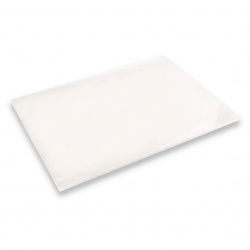
In Botland you will complete a ready-made laminating kit. We have both simple and technologically advanced machines, as well as the necessary accessories, without which this process cannot be carried out. Among our proposals are laminators for cold and hot lamination and for vacuum forming. We also have lamination films in various sizes and thicknesses. These are foils with a matt and glossy finish, white and transparent sheets. Choose a device for private or commercial use. Protect documents, photos and drawings as well as create 3D spatial forms by implementing ambitious projects in contemporary advertising, art and technology.