






































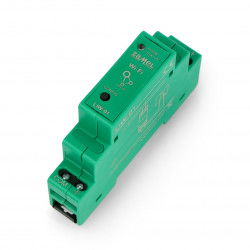

Mobile devices such as smartphones and tablets are powered by batteries. These are usually built into the device itself, but have a limited capacity and therefore a relatively short life between charges. A discharged phone needs to be recharged by connecting it to a mains-powered charger. However, this is not always possible. PowerBanks come to the rescue. These devices are nothing else but mobile batteries dedicated to charging mobile devices. All you need to have with you is a PowerBank and an appropriate charging cable which you plug into your phone to start charging your device.
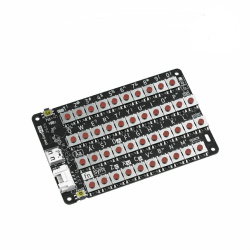
- New
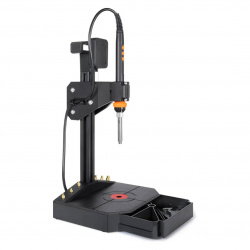
- New
- Reduced price
- Sale

- Reduced price
- Sale
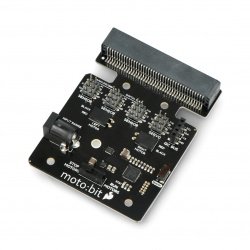
- Sale
- Sale

PowerBank mobile batteries
See also
- Conductive paint
- Power supplies 12v 10a
- Fluorescent filament
- DJI Inspire drones
- 2-core cables
- 24v relays
- DJI Phantom drones
- Syma drones
- Zortrax Filaments
- Outdoor LED lighting
- Siemens LOGO!
- Esperanza compressed air
- 4-core cables
- Wireless mice
- Anet 3D printers
- DJI Mavic drones
- PLA Pro filaments
- DJI Mavic drones - drones and accessories
- RPi Wi-Fi cards
- Magnetic balls
- Compressed air to clean the keyboard
- Car fuses
- Intel modules & kits
- Membrane keyboards
- Hexbug toys
- Tablets
- Encoders
- Odroid cases
- Keyboards for Arduino
- Raspberry Pi CM3
- Banana Pi
- 2D printers and pens
- Intel starter kits
- Android Box Smart TV
- Photo traps
- GPS trackers
- Intel expansions & hats
- Aqara - home automation
- Pololu micro motors - MP series
- Smart ABS filaments
- Headphones
- Resistors SMD 1206
- String bags (zip bags)
- Vacuum forming
- STM32 books
- Books about Raspberry Pi
- Chargers
- Dobot 3D printers
- Odroid accessories
- Photon
- Intel - module accessories
- Refill filaments
- BeagleBone power supply
- Electrolytic capacitors SMD
- BCN3D 3D printers
- AGM batteries
- Car handles
- Tantalum capacitors SMD
- Flsun 3D printers
- Sensors and alarms
- Alarm sirens
- Arylic sound modules
- Laminators
- Zortrax 3D printers
- Doorbells and peepholes
- Motor capacitors
- RC cars and models
- Flexible filaments
- Khadas VIM
- Linear actuators
- Bluetooth Speakers
- Control equipment
- Trilab 3D printers
- Goofoo 3D printers
- Webcams
- Urbicum 3D printers
- LED lighting
- Spare parts
- ATMAT 3D printers
- Weight meters
- TinkerGen
- Raspberry Pi 2B+
- Mycusini 3D printers
- DJI educational robots
- Makeblock 3D printers
- Fingerbot - home automation
- MakerPi 3D printers
- Transport cases
- Silk Filaments
- Orange Pi
- Sparky
- Abilix Krypton
- 3D printer Artillery
- Air conditioning and heating
- SkriWare - educational robots
- Gas soldering irons
- Air purifiers
- LittleBits
- Exta Free - sensors and modules
- USB Numato Lab GPIO drivers
- Rock Pi
- Spresense Sony
- Netronix RFID modules
- Clementoni
- AST lighting drivers
- CubieBoard
- WowWee
- Coolseer home automation
- AMK - automation and control
- Smartwatches
Energy to charge your mobile devices in your pocket
With a mobile battery you can charge your phone or tablet anywhere in the world. Devices such as PowerBank are ideal during a trip, a longer train or bus journey (not all of them are equipped with power outlets). Thanks to it you will always find a charger for your phone, regardless of whether you have access to the power grid or not. Choosing a large enough PowerBank, we can be sure that our smartphone will be charged for days.
Convenient power source with powerful batteries
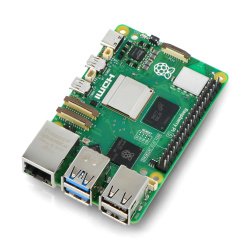
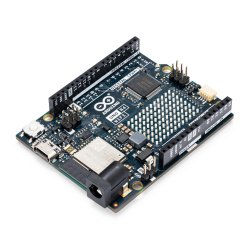
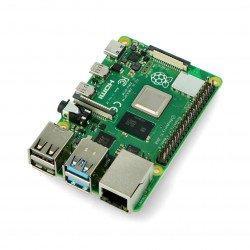
PowerBank is a compact device for charging phones, as well as other devices charged via USB. At the output of this kind of mobile battery you will find a standard USB port, giving a voltage of 5 V and a current reaching even more than 2 A. This allows you not only to connect PowerBank to your phone, but also to power many other devices using it. Besides the obvious applications - charging phones, tablets, watches, etc., with its help you can charge some netbooks (compact laptops) with USB-C port for powering, and even power Arduino modules or single board computers such as Raspberry Pi.
How to choose a PowerBank
PowerBank is characterized by a number of features and parameters that we must keep in mind when choosing a specific device. On the one hand, as a mobile battery, it has a certain capacity. The larger it is, the more charge it will store, so you will be able to charge your phone more times or power your Raspberry Pi longer before you need to charge the PowerBank itself. The devices available in the Botland store range in capacity from about 1000 mAh to 20000 mAh. The former value is equivalent to charging a modern smartphone once or twice. In turn, the second will allow you to easily charge such a device for two weeks. We also need to choose the output parameters of the device to the phone. It is mainly about the output current. Many phone models allow charging with a higher current, so it is good to buy a PowerBank with a current of at least 2 A.